I am not Sarah Elizabeth!
Call me Izzie, please.
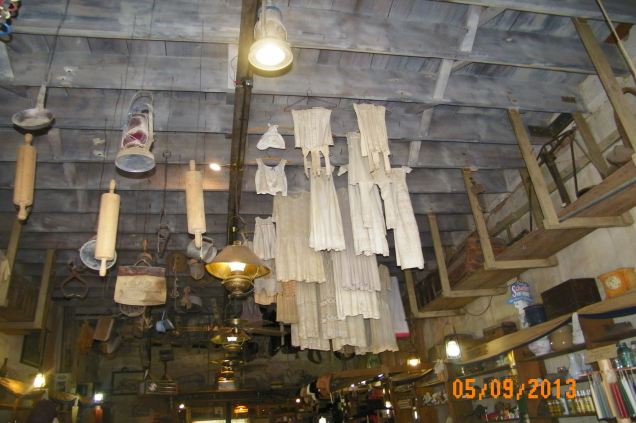
I hate these tedious tatting lessons.
My dresses always have dark dots in the lace
and my finger tips feel like pin cushions.
Thimbles are the silliest things
impossible to maneuver.
I’d rather be a Samuel.
Sammy in knickers and suspenders
rolling a hoop and playing catch.
And my chest.
I’m soon to be found out.
And mother shall issue those dreaded words,
“It’s corset time.”
I’d rather hang from the rafters,
ride bareback and swig spirits
than be straight laced
wearing one of those things.
I hate being a girl!
Word Count: 100 Written for Rochelle Wisoff- Fields’ Friday Fictioneers — prompt photo appears on Wednesday and posts can be early. Apologies to the purists as I “arranged” my lines in more poetic form today. It is after all, NaPoWriMo (national poetry writing month). Photo Credit: Mary Shipman
extinction has become
a way of life push ‘em back, push ‘em back way back
thieves in the night
spread into the world
Serengetti, oceans blue
chrysalis and hives
letter writing, long white gloves
walking unplugged and fountain pens
family dinners, darning socks
rotary dial and porch talk
push ’em back, push ’em back way back
civility disappears in spews
listening usurped abducted
mouths agape without ears
warnings ignored
das Ende, el fin
fine, mwisho
push ’em back, push ’em back
way back, yeah team
NaPoWriMo Day 27 — using day 26’s prompt to write a poem with a refrain. Confession: I was a high school cheerleader. “Push ’em back, push ’em back, way back” was used when the other football team was getting too close to the goal line. That “refrain” popped into my head and then I started thinking about all the things that have disappeared in my lifetime — far too many to mention here. And I realized, extinction has become a way of life — how strange to put those two words together! “the end” is offered in different languages. It is after all, a worldwide problem. Thought the Japanese word for “the end” was quite interesting, containing the English word “wish.”
most of the world is time when we’re not here, not born yet, or died –
I am infinitesimally small.
Those who knew me at birth
cared for me, walked with me,
left this earth too soon by my count,
melded into the universe.
The sun however,
still shines upon me
although days are shorter
and final miles fewer.
At my back,
the sun projects my future,
step by step in front of me
a syncopated seer.
Shadowed possibilities
become realities,
one foot forward
into the new.
In front of me
she warms my face
till glances backward
see my past,
following me,
stepping where I was
but a moment before,
a speck of time
a dab of humanistic paint
upon a pointillist canvas,
soon to intersect
with those before my time.
Written for dVerse Tuesday Poetics. We are to respond to a poet in dVerse, or a poet of our choice. We may or may not use an actual line from their poem. The first line here is from Hummingbird Pauses at the Trumpet Vine by Mary Oliver. In Response to Mary Oliver [2] is two because when I started writing poetry in February 2015, my first attempt was a response to another poem by Mary Oliver — rewritten in January 2016. I enjoy her writing — and she is a kindred spirit in terms of being a Massachusetts resident from Provincetown, where we spend two glorious weeks each fall. Today is also used for NaPowWriMo Day 26.
Her garden suffers from end-of-season neglect. Nutrients wane as days shorten. Young trees, now mature, cast their presence in shadows. Flower petals and fronds wither to veined brittle frames of their former beauty. They bend closer day by day, to the earth from which they came. Winter’s cold reality approaches, as sure as the moon changes face. Life hovers on a thread.
She sits patiently
window blurred with veins of frost
waits for children gone.
Susan Judd is hosting dVerse for Haibun Monday and provides us with her beautiful photography and the descriptive phrase “beauty in decay” as a prompt for writing today. If you’re not familiar with dVerse, stop in for a visit. It’s a great gathering place for those who enjoy poetry! Also using for NaPoWriMo day 25. 30 poems in 30 days, that’s April – National Poetry Writing Month.
Tomorrow, I shall be loquacious
an incandescent individual
not taciturn or bellicose.
One who is the debutante
dressed in white tulle
written up on the society page.
Today and tomorrow’s morrow
I will be me.
Written for NaPoWriMo Day 24. We are to write a “mix and match” poem. List fancy and unfancy words and then let your imagination take you from there.
Born into a mystical place of she-wolves, Tohi was granted one wish from her sungod.
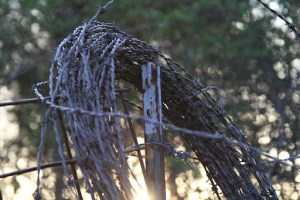
And so it was that she arrived in a New World. She watched humanoids thrash in cold waters, struggling to reach land. Found walls with no doors. Saw fences and miles of barbed wire, shredding dreams to shards of despair.
Tohi wept, tears that grew from soft rains to rivers of grief. Graveyard plots grew in numbers and the ground was sodden until it could hold no more. And she became the final witness, as this New World became the Last.
Weep for your children
for they see the hatred sown
and will reap its fruit.
The first three paragraphs are written for Friday Fictioneers, hosted each week by Rochelle Wisoff-Fields. She provides a photo prompt and asks that folks create a story, flash fiction, in 100 words or less (word count: 96). The haiku that concludes the post is written for NaPoWriMo day 23. Taken together, prose + haiku, they become a haibun. Tohi is the Cherokee word for peace. Photo Credit: Madison Woods.
Jack Spriggins,
I’m here to settle up.
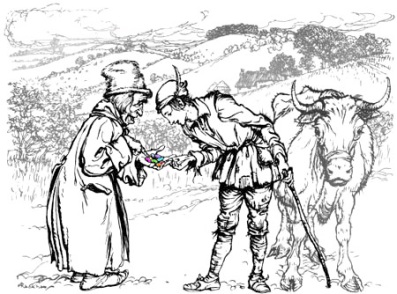
I took yer cow some days past,
gave you beans to plant in exchange.
You said it’d be a good swap fer me
since I had young’uns to feed.
Well sir, the cow, she turned up dry
and the missus is still howlin’.
Neighbors down the road apiece
talkin’ about an oversized grave.
You buried a giant back here?
Shoveled it deep and high as can be.
I reckon this here’s the hill I’m lookin’ at,
and I can see, it’s paved with gold.
Best make good yer swap, Mr. Spriggins,
and share the wealth you got.
Else I predict yer goose is cooked
and you’ll take a fall from way up there.
And that new wife of yours named Jill?
I reckon she’ll come tumblin’ after.
I learned a long time ago,
stolen goods are not the way
to livin’ happily ever after.
Originally written for NaPoWriMo’s day 21 prompt: a poem in the voice of a “lesser” character within a fairy tale. Rewritten for dVerse Open Link Night, where Victoria is tending bar. dVerse is a virtual pub for poets. Stop by to exchange ideas, post and read wonderful poetry!
EXPLANATION OF POEM: Jack and the Beanstalk is a famous English fairy tale originally written in 1734 as The Story of Jack Spriggins and the Enchanted Bean. Plot: Jack’s cow goes dry. On the way to sell her at market, he meets an old man who trades Jack some “magic beans” for his cow. Jack climbs the resultant beanstalk, finds a castle, a giant, a goose that lays golden eggs and a magic harp. He steals the wealth, is chased by the giant, axes the beanstalk and the giant falls dead to the earth. Jack and his mother live happily ever after.
There is also a reference here to the traditional 18th century English nursery rhyme: Jack and Jill went up the hill to fetch a pail of water.
Jack fell down and broke his crown and Jill came tumbling after.
I am eight syllables of rhyme.
A wannabe decimista
addicted to my barista,
tap dancing through life double-time.
Old age is not a paradigm.
I wore polka-dot underwear
during yesterday’s love affair
with life, eating savory tarts,
cotton candy and red hot hearts.
Life’s too fun for a rocking chair.
Gayle hosts dVerse today and asks us to write a Decima: 10 liner, 8 syllables per line, ABBAACCDDC rhyme scheme. Popular in Puerto Rico, many times decimas are created and sung on the spot in competitions. Think duelling banjoes only with words! Performers are called decimistas. Humorous decimas usually satirize an individual’s weakness or something silly they did. Photo: me a number of years ago at the Boston Pops 4th of July concert. I do love life! 🙂 Also used for NaPoWriMo Day 21.
Patisseries,
le chocolat and savory too.
Do not knead de pain,
only le fruit
from le menu please.
Modeste? Ordinaire?
Moi?
I choose le joi de vivre.
Life can be
as the saying goes
a piece of cake
or, in my way of thinking,
le gateau and
the entire boulange!
A “Kenning” poem written for NaPoWriMo Day 20. A kenning is a riddle-like metaphor….a circumlocution. In this case — life is like a boulanger (a bakery) — step right up and choose! 🙂 I last took French in 1965 — intersting the phrases I remember. And for those of you who are Christmas lovers, I can still sing the first verse of Rudolph the Red Nosed Reindeer in French. Ah, my teacher would be proud 🙂 Photo credit: Jendo Reversal
O ye daughters and sons of liberty,
these stairs do creak
neath the weight of history’s tale.
Paul Revere didst wait that eve
to see the revolution’s wick,
waving light from Old North’s spire.
Two lanterns carried high
two horsemen urged on with alarm,
signals all to freedom’s dreams.
Gather ye now and every year,
honor patriots of battles past
and those who hero now.
Raising voices strong
in songs of country’s pride,
our enduring land of liberty.
A “folk poem” for dVerse. Written April 18, 2016, exactly 241 years after the occasion immortalized in Henry Wadsworth Longfellow’s poem, The Midnight Ride of Paul Revere. The Lantern Ceremony has been held for the past 139 years at Boston’s Old North Church, an active Episcopal congregation to this day. Paul Revere was a member and arranged for the sexton Robert Newman and vestryman, Captain John Pulling Jr., to climb the steeple stairs pictured here and signal with two lanterns, if the British were approaching by the Charles River. This sparked Paul Revere’s infamous ride to warn militia and ultimately, the first shots of the American Revolution. Also counting as NaPoWriMo Day 19.
Photos: my spouse climbing the steeple’s stairs at Old North. We are fortunate to be members of this historical church and attended the April 18, 2016 Lantern Ceremony: fife and drum corps, historical reenactment, recitation of Longfellow’s poem, a featured speaker, lighting of two lanterns at the altar. The lanterns are then processed through the church and carried up the steeple as they were that night. The ceremony concludes with the singing of America and America the Beautiful. I can truly say it is a magnificent evening — for me, more moving and inspirational than the 4th of July. And I love the 4th of July! If you’re ever in Boston on April 18th, I urge you to get tickets in advance and attend! Last photo is taken from Copps Hill after the ceremony last week.
Videos: Both from the 2015 ceremony — they are always similar except for the featured speaker and those honored to be the lantern bearers up the steeple. The first is from outside the church. The second (church is lit by candlelight and this is an amateur video so it is somewhat dark) shows the rousing conclusion of the ceremony — with just the first verse of America — all verses are sung.








 lillian the home poet