I Remind Myself . . .

Goodness blooms this time of year.
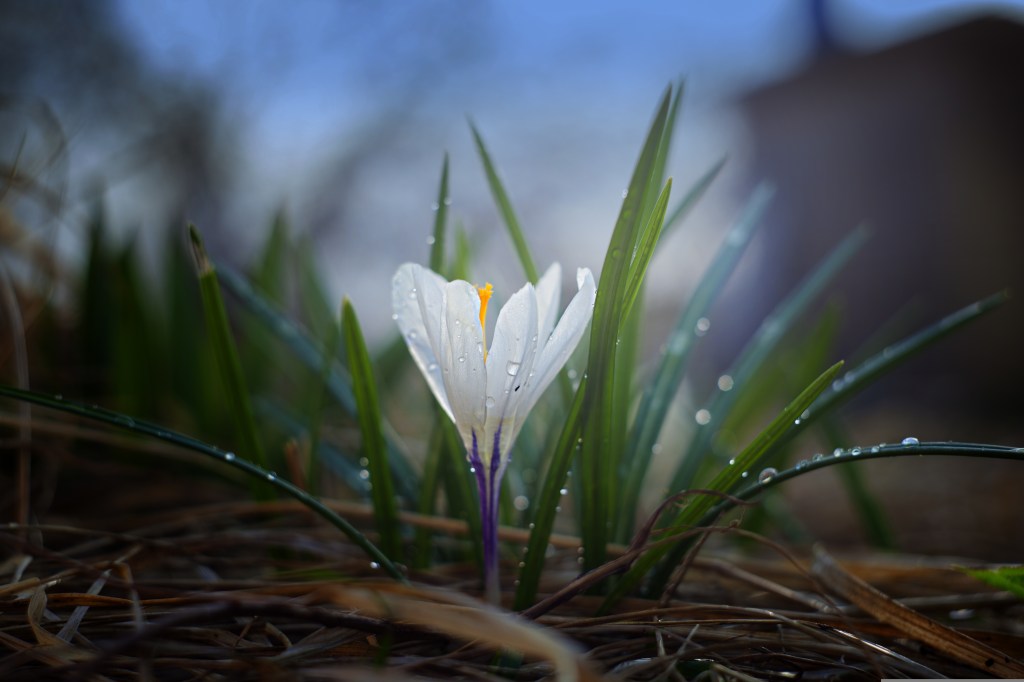
Pushy crocus show off first
then tulips admire daffodil ruffles,
hyacinths invoke delicious inhales.
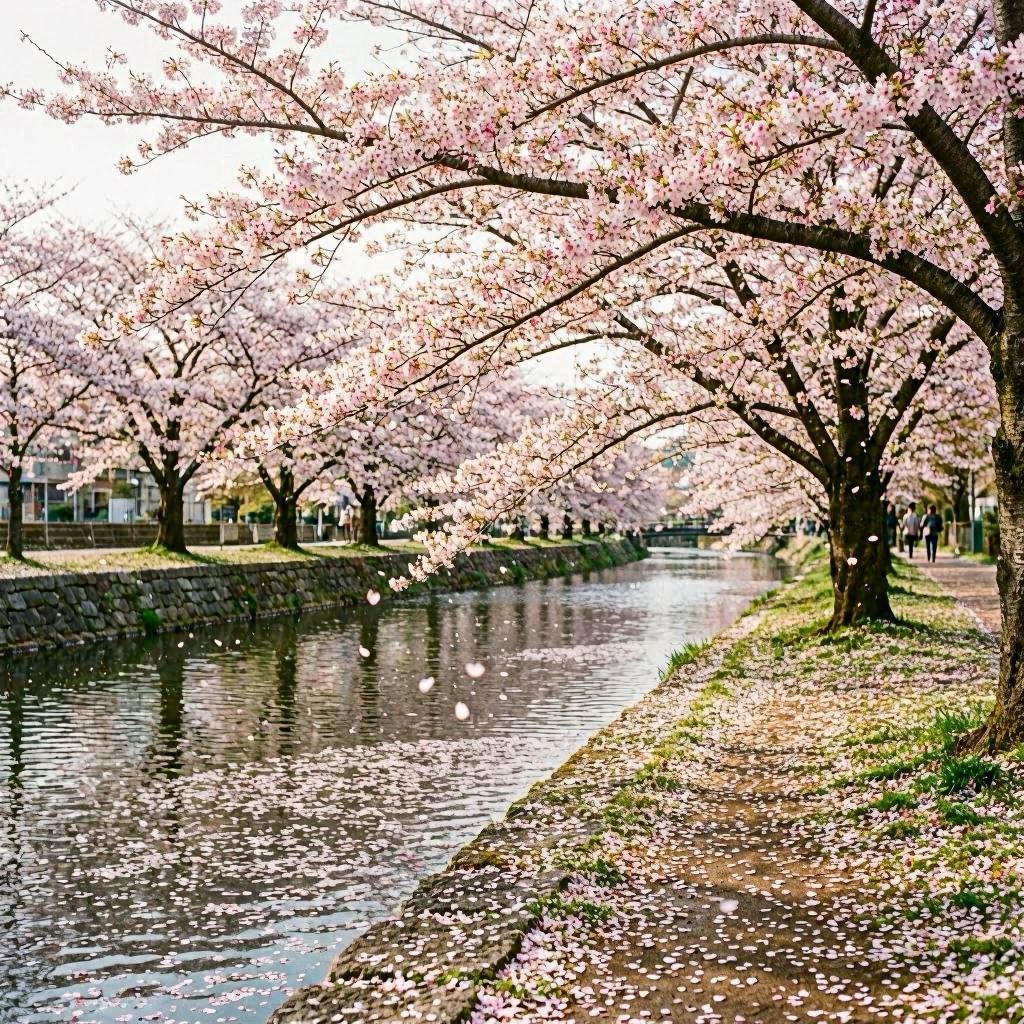
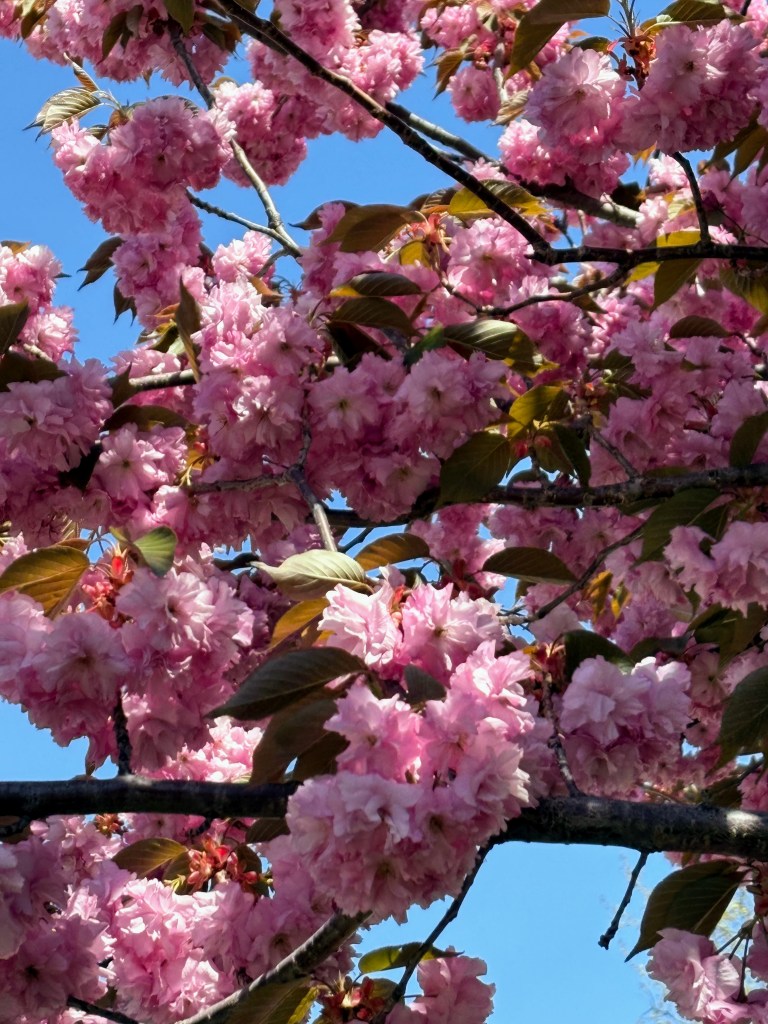
Trees begin to dress for the occasion.
Don magnolia flowers, cherry blossoms,
crab apple trees defy their name.
We shed coats, walk more sure-footed
on warming sidewalks and greening lawns.
Infants’ arms wave more freely,
cumbersome snowsuit padding gone.
Robins appear, geese begin to nest.
Mountains’ winter toppings melt,
cascade in waterfalls to brooks below.
Streams rush over rocks,
gurgling their spring symphony.
And I, I smile as I step outdoors
reveling in another year of life.

Tussie Mussie Life

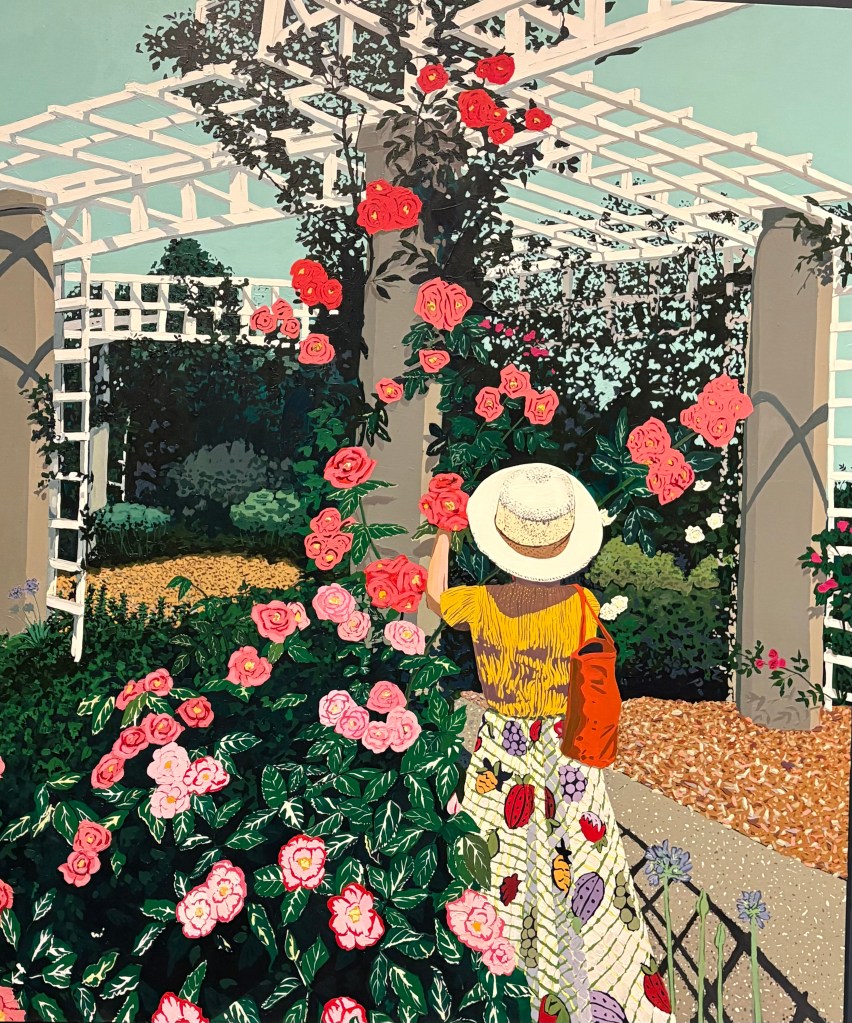
She bloomed in every setting.
Rose patterned everyday dresses,
cherry cheerful flannel pajamas,
fruit speckled summer skirts.
Wisteriaed wall paper
wooed her to sleep each night.
Bougainvillea borders
bedecked her breakfast nook.
She lived up to her name,
Lily lived a lovely cheerful life.


Written for Quadrille Monday at dVerse, the virtual pub for poets around the globe. Today I’m hosting at the pub and asking folks to write a Quadrille (a poem of exactly 44 words, sans title) that includes the word “bloom” or a form of the word.

Image: Hopie in the Garden, painted in 2021 by Hilary Pecis, on display at Boston’s Museum of Fine art in their Framing Nature: Gardens and Imagination exhibit.

Explanation of Tussie Mussie: During Queen Victoria’s reign (1837 – 1901) a small bouquet of flowers called a tussie mussie was a common accessory. Flowers were considered more modest adornment than jewelry for young women.

On the Banks of the Charles

I meander the riverside. Meanwhile the
globe spins frenetically, as much of the world
is amok in violent rhetoric. Walking offers
views of spring. Geese nesting, itself
testament to the season’s rebirth. To
see the female sit patiently upon her nest, your
reminder. Hope lives within the imagination.

Written for Meet The Bar Thursday at dVerse, the virtual pub for poets across the globe. Today we’re asked to write a Golden Shovel Poem.

What is a Golden Shovel Poem? It’s a poetic form where the last word of each line in a new poem, when read vertically from top to bottom, creates a line from another poet.

What line from another poet have I used in my Golden Shovel Poem?
“The world offers itself to your imagination” from Mary Oliver’s poem Wild Geese.

Photo taken on my walk yesterday, along the banks of the Charles River here in Boston.

A Villanelle Walk

Come walk this path with me
through wooded quiet calm.
It will lend its peace to you.

Canopy of green leaves gleam
as sunlight filters through.
Come walk this path with me.

Morning’s quiet coolness
will ease and soothe the soul.
It will lend its peace to you.

Some call it forest bathing,
five senses engaged in meditation.
Come walk this path with me.

Immerse ourselves knowing
Earth’s beauty nurtures best.
It will lend its peace to you.

Escape the city’s frenzy
find nature’s solemnity.
Come walk this path with me,
it will lend its peace to you.

NAPOWRIMO Day 22. Prompt is to write a Villanelle. Photo from a vacation we took some years ago.

Villanelle: A French verse form consisting of five three-line stanzas and a final quatrain. The first and third lines of the first stanza repeat alternately in the following stanzas. And these two lines form the final couplet in the quatrain. It’s a poetic sudoku!

‘Tis True, Mr. Wordsworth

Daffodils interrupt doldrums
break through badgering news.
They brighten my day,
my thoughts, my views.

They do indeed flutter and dance,
providing a joyful scene.
They grace the banks of the Charles,
greet me with bright ruffled faces.

They are sunshine
atop green leafy stems.
How can I be lonely
as they smile at me?

NAPOWRIMO Day 17. Prompt: Write a poem in which you respond to a favorite poem by another poet. My poem is in response to William Wordsworth’s famous poem, I Wandered Lonely as a Cloud. See below for his complete poem.

Photos taken two days ago on my walk along the Charles River, from the Boston side. (Cambridge, Harvard and MIT are on the other side).

I Wandered Lonely as a Cloud
by William Wordsworth

I wandered lonely as a cloud
That floats on high o’er vales and hills,
When all at once I saw a crowd,
A host, of golden daffodils;
Beside the lake, beneath the trees,
Fluttering and dancing in the breeze.

Continuous as the stars that shine
And twinkle on the milky way,
They stretched in never-ending line
Along the margin of a bay:
Ten thousand saw I at a glance
Tossing their heads in sprightly dance.

The waves beside them danced; but they
Out-did the sparkling waves in glee:
A poet could not but be gay,
In such a jocund company:
I gazed—and gazed—but little thought
What wealth the show to me had brought:

For oft, when on my couch I lie
In vacant or in pensive mood,
They flash upon that inward eye
Which is the bliss of solitude;
And then my heart with pleasure fills,
And dances with the daffodils.

The Message of Sunrise

There is a calming
an acute listening
as I sit enveloped in darkness
waiting, watching.

Darkness dissipates.
Low-lying orange-red layer
ombres into blue-black sky.
Then . . .

. . . ever so slowly . . .
a sliver . . . an arc . . .
an entire glowing orb.
Nature’s metaphorical reminder.

Even in the darkness
hope does rise
and become
reality.


NAPOWRIMO Day 16. Prompt: write a poem in which you describe something that cannot speak, and what it has taught you or told you.

Images are photos I’ve taken over the years at our beloved Provincetown at the very tip of Cape Cod. Same rental, on the ocean, for 25 years. Sunrises from the deck never disappoint.

Sunflower Tanka

I stand tall and proud.
Yellow petals round my face
mirror my namesake.
I sway in summer breezes,
turning always to the sun.


NAPOWRIMO, Day 9. Prompt is to write a poem in the voice of an animal or plant. Photo taken some years ago in Provincetown, on the very tip of Cape Cod.

Tanka: a Japanese poetic form with 5 lines in the following syllabic pattern: 5-7-5-7-7. Some say it’s a Haiku that has more to say!

She’s a Seductress

Mother Nature’s flirtatious ways.
Lightning flashes, crocus buds,
lilac blooms that scent the air.
Dew droplets on pink rose petals,
fall colors as she bares her leaves.
A silent caress of soft falling snow.

Most audacious of her alluring ways?
Her cunningly sly, seductive wink.
Unlike a camera aperture’s click,
more like a Texan gal’s slow drawl.
Her alluring, magnetically titillating
total eclipse of the sun.


NAPOWRIMO Day 4. April is National Poetry Writing Month!

Prompt for today: “Craft your own short poem that involves a weather phenomenon and some aspect of the season. Try using rhyme and keeping your lines of roughly even length.” Sorry folks: I don’t do rhyme. But I did write about a weather phenomenon: a total eclipse of the sun.

Photo of lilacs taken some years ago at Harvard University’s Arnold Arboretum on their annual Lilac Sunday.