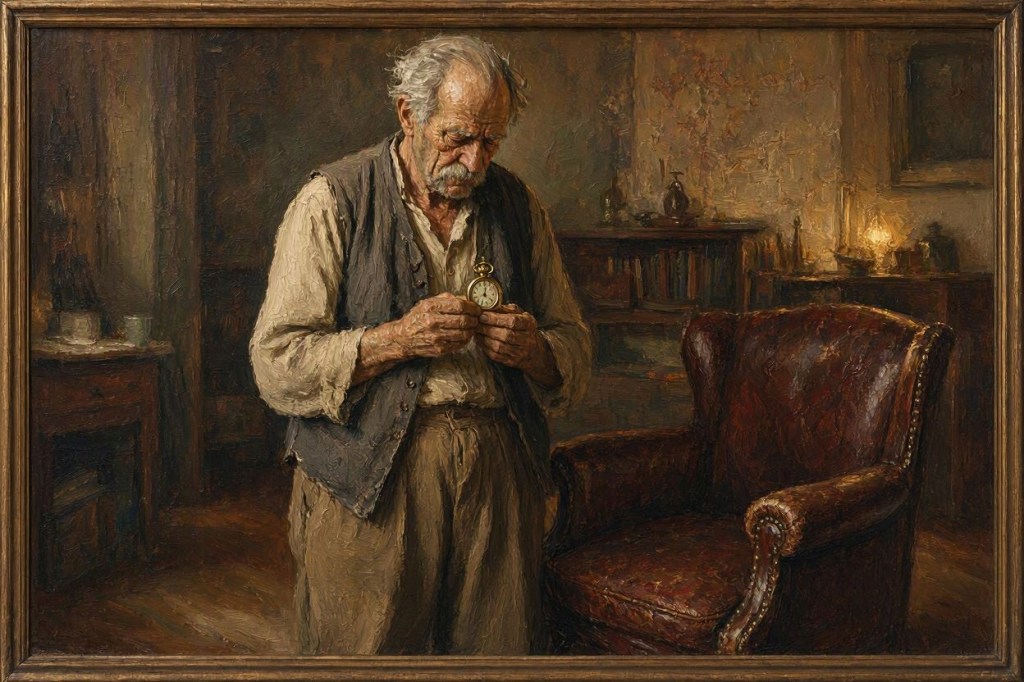
Time is constant. Determined mathematically, a fundamental dimension. Time zones and watches set. Seconds tick by. But can time be relative? Can it have voids?
Does time stop, race ahead, appear, disappear? Can it be measured differently? Through distance, visual changes, mental acuity, ambulatory ability, skin texture, hair color. Can it be lost in sepia toned photo collections missing documentation of a generation? Obituaries, birth announcements perennial blooms, seasonal shifts. Age appropriate gifts packed away, idioms of the day, skirt lengths and medical advancements – all measurements of time.
Time gifted me memories. Stripped me of loved ones and muscle tone. Encouraged gratitude and forgot rebuffs. My mind often dreams at night. I am the ingenue leaping freely across the divide of time. At sunrise I awaken, stand up, bend down, groan a bit, shove dry cracking feet into well worn slippers. Shuffle to the coffee pot. Time keeps ticking and I’m still in the parade. Who knows what’s round the next bend? Time ticks one tock at a time, or does it? All we can do is lean in.
Written for Tuesday Poetics at dVerse, the virtual pub for poets around the globe.
Today Mish asks us to consider the literary devise of juxtaposition. She writes “the contrast between subjects, settings, ideas or moods not only highlights their differences but can also uncover unexpected similarities or connections.” One example she provides is from Dickens in Tale of Two Cities: “It was the best of times. It was the worst of times. It was the age of wisdom. It was the age of foolishness.”
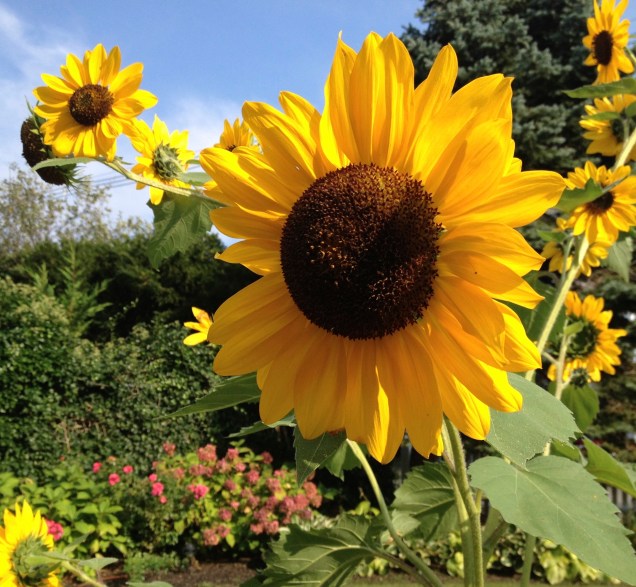
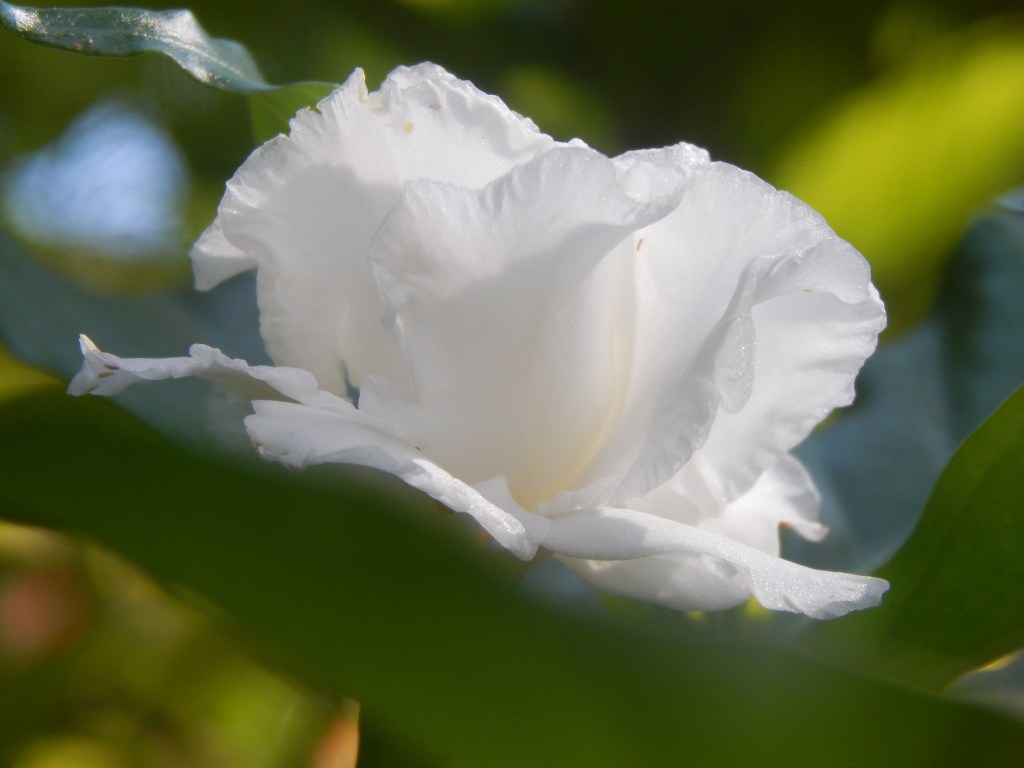
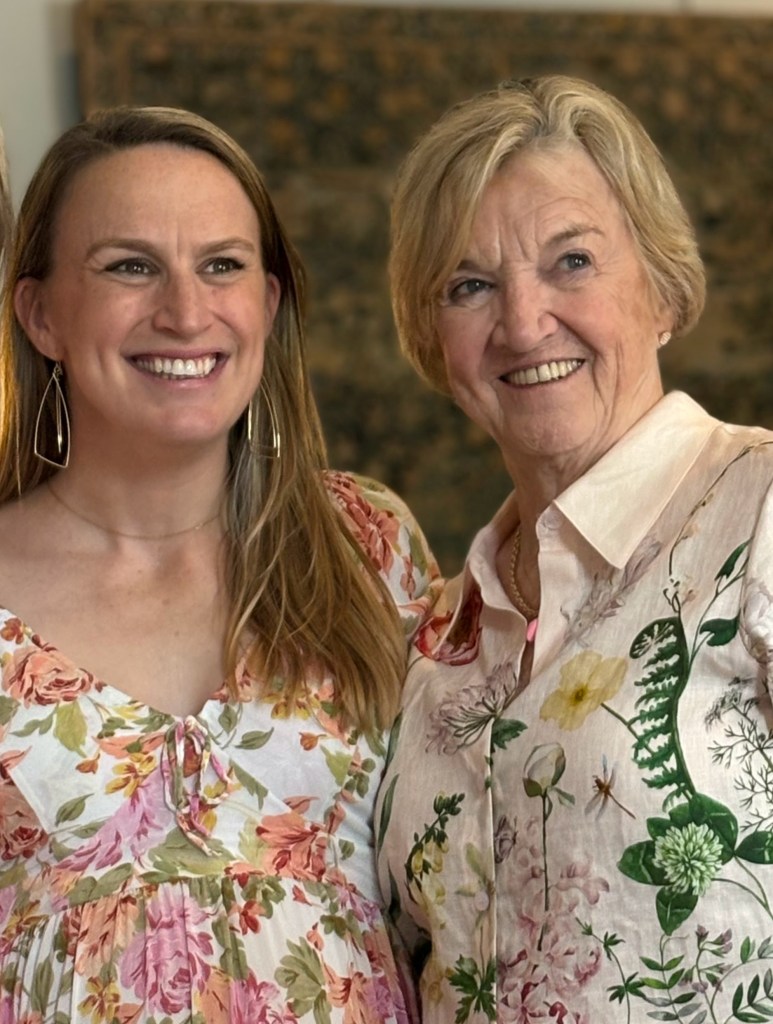
In addition, Mish provides us with a series of images. We are to choose two (I’ve chosen three) that we “feel could create a contrast” and then “use them as a foundation to build your poem.”
I must add here, lest you wonder. This is not all me in this poem. I’m still kicking up my heels, traveling, enjoying family and life with the love of my life.
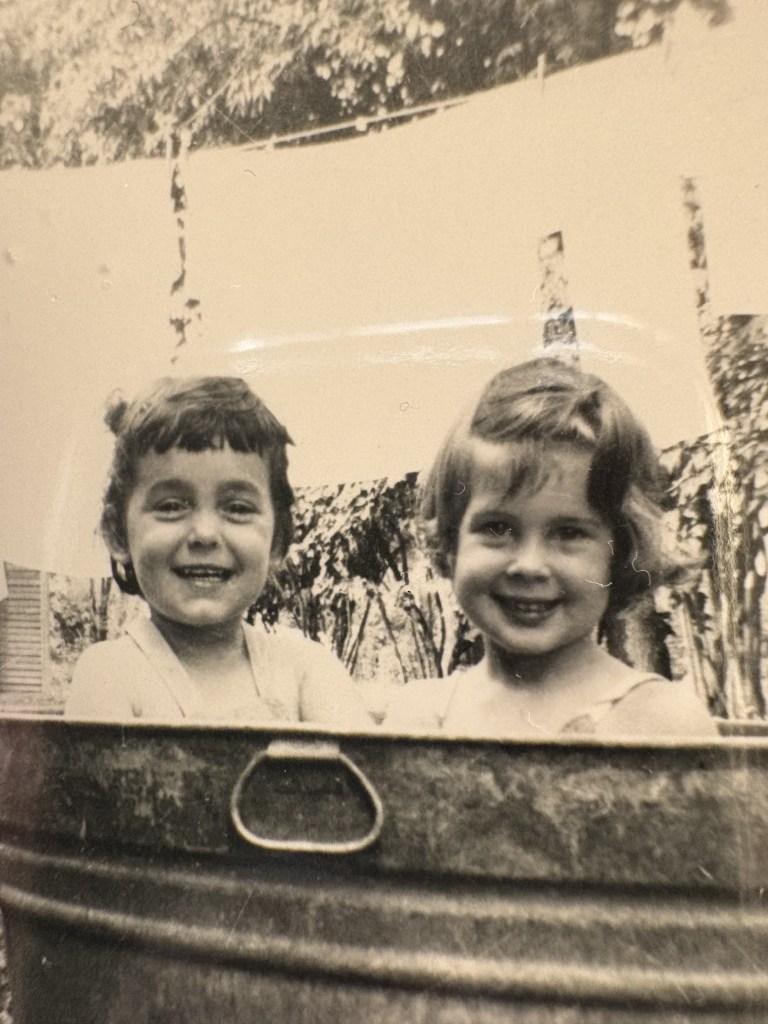
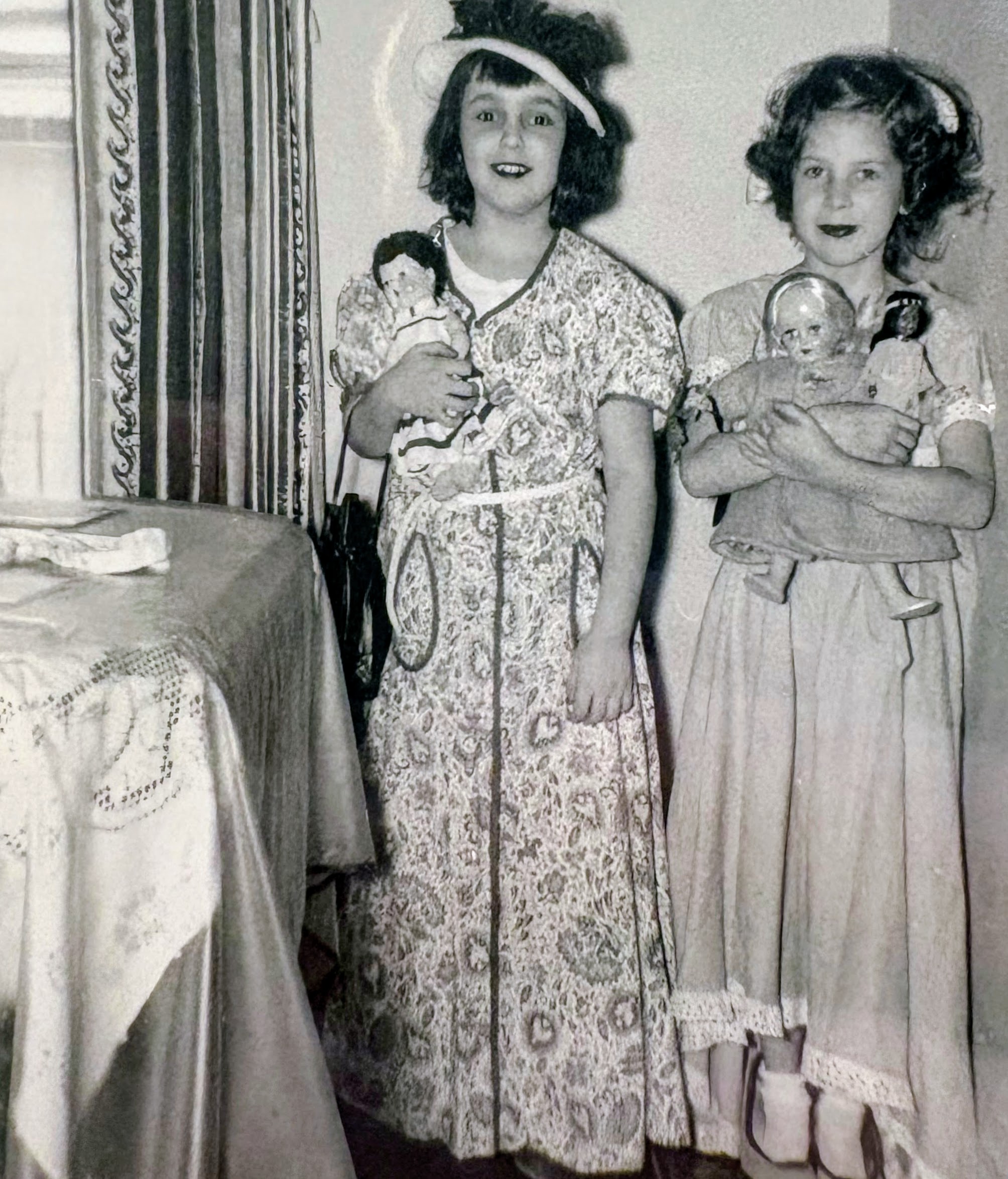
I recall being always happy in the early years of my childhood. Playing house with dolls, parading down Melrose Avenue in dress-up clothes, riding my tricycle, running through sprinklers and drinking from the garden hose – all with my best friend, June. As we progressed to first and second grade we climbed Mrs. Jester’s apple trees, held hands as we walked back and forth to West Elementary School, made chalk drawings on the sidewalk and played hopscotch too. I loved sleepovers at June’s house, looking with wonder at her sister Auberdene’s dressing table filled with lipsticks and perfumes. We’d sit in June’s living room and watch Roy Rogers and Gene Autry on the black-and-white tv while eating a lunch of grilled cheese sandwiches. Once every summer, my mom bought a box of popsicles and doled them out to June and I and other kids on the block. Everyone fought over the red ones. I always had the yellow ones to myself. I guess nobody else liked banana.
childhood memories friendships frozen in photos long faded by time
Writing this to say Happy Birthday on June 15th to my dearest childhood friend, June Zitka Trentacosti. June is on the left in both these photos.
Birds of a feather argumentation our game, friendship scores the win.
College debate partners from 1965 to 1969. Friendship scores over years and miles – that’s the real trophy in 2026. Just back from a wonderful visit with Karen in Sarasota, Florida.
Shared on dVerse, the virtual pub for poets across the globe.
How do people learn to parent? Do we learn it as we go? Is it a task with diminishing returns?
We erect loving fences round our infants. Envelop them in our arms, nurture them at the breast, cocoon them in swaddled sleep. At varying degrees we watch, hover, interfere or cheer, as they crawl, toddle, run, stumble, fall and get back up again. Fences open as we send them to school. Teachers flick reins with encouragement to lope, gallop, join the race, keep up the pace. Soon fences disappear completely. Children gone more than they’re at home. Is parenting a conundrum? Love and attachment grow stronger every day even as we encourage independence, even as their days with us are numbered. Suddenly they’re adults raising their own as we look on from another place. We hope the path they walked with us was well tread, remembered fondly. We relish our memories as we wait for their muscle memory and that thing called familial love to occasionally nudge them back into our sphere again.
Written for dVerse, the virtual pub for poets around the globe. Today Punam reminds us that in India, May is a month where there will be art exhibits across many cities. She provides us with several artworks that can motivate an ekphrastic poem, or we can be inspired by one of the following names of some of these art shows: 1. Nothing Twice 2. Chance Remains of Another Time 3. Open Fences
Photo is us with our granddaughter who is now 18! How time flies!
Goodness blooms this time of year. Pushy crocus show off first then tulips admire daffodil ruffles, hyacinths invoke delicious inhales. Trees begin to dress for the occasion. Don magnolia flowers, cherry blossoms, crab apple trees defy their name. We shed coats, walk more sure-footed on warming sidewalks and greening lawns. Infants’ arms wave more freely, cumbersome snowsuit padding gone. Robins appear, geese begin to nest. Mountains’ winter toppings melt, cascade in waterfalls to brooks below. Streams rush over rocks, gurgling their spring symphony. And I, I smile as I step outdoors reveling in another year of life.
Our first home in Illinois had no front yard. Stepped off the front porch at your own peril, into the dug-out pit for a new college gym. Construction equipment clanged and buzzed constantly digging, laying pipes and beams. Inside, we served visitors spaghetti suppers on our auction bought wiggly table top screwed into four tall two-by-fours. Rotary telephone hung on peeling plastered wall, rarely used for expensive long distance calls. We watched Johnny Carson’s Tonight Show on our nine-inch black and white television. As the old song goes, “Those were the days my friends.”
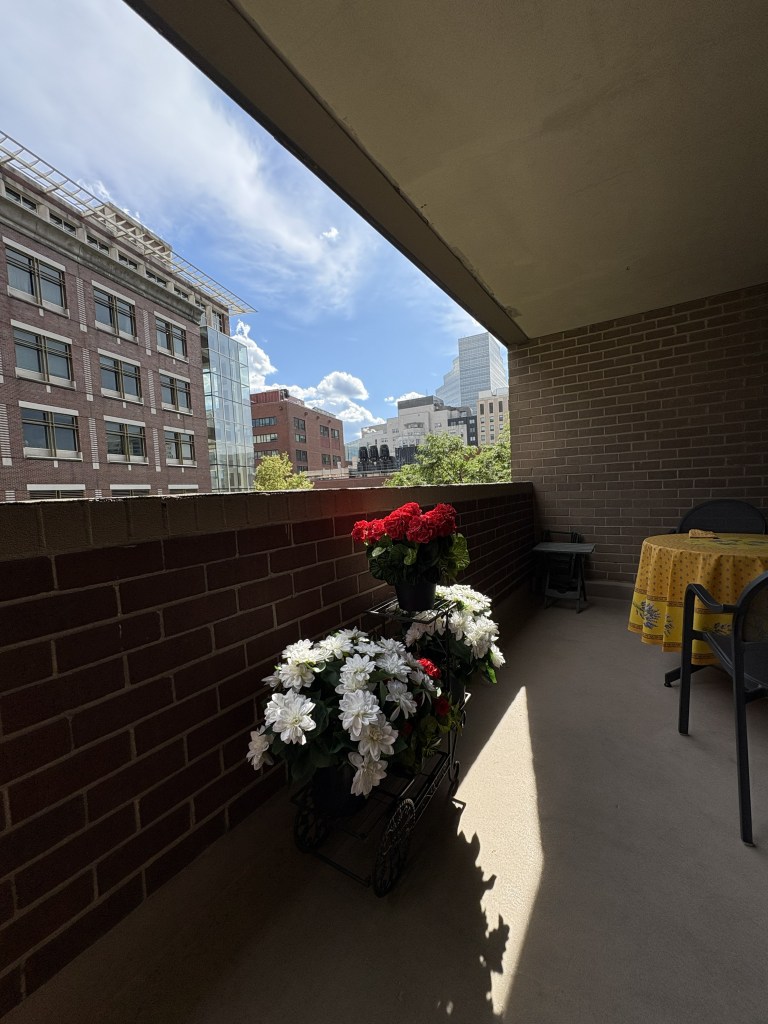
Fifty-six years later, it’s high-rise condo life. Outside our windows, Boston’s city scape includes trees, few green areas, buildings in every direction. When guests or family arrive, we serve delicious meals with wine at our lovely oak claw-foot dining table. Large screen television streams movies, 24/7 news, sitcoms of every genre. Our handheld “telephone” is a clock, calendar, address book and weather man. It streams music on Spotify. Reaches friends nearby and across the globe with audio and video calls.
Gratefully happy then. Thankfully happy now. So is the old adage true? Things are not better, they’re not worse, they’re just different. What say you?
NAPOWRIMO Day 29. Prompt: In your poem today, compare your everyday present life with your past self, using specific details to conjure aspects of your past and present in the reader’s mind.
Lessons from ancient cultures, wisdom in Native Americans’ ways. Guiding principles to live in harmony passed down from generation to generation.
Debwewin is Truth. Represented by the turtle. The tortoise carries lessons of life on its back. Years piled upon years.
It walks slowly, sometimes laboriously, feet firmly planted in earth’s reality. Its purpose was, still is, forward movement.
Honest plodding, slogging, traipsing at times. Memories, achievements, failures, goals. All stored and carried through life’s journey. No regrets. This is me. In this place. Now.
Everything past, a part of my weight, my girth, my being, my soul.
Written for Tuesday Poetics at dVerse, the virtual pub for poets around the globe. Today Mish is hosting, providing us with a very special prompt that explains The Seven Grandfather Teachings, a set of Anishinaabe guiding principals for living a good life in harmony with nature and others . . . all of creation.
Mish explains: “These ancient teachings have been passed down for generations through stories and ceremonies. Many Native American organizations have adopted these sacred laws as a foundation. Because they are the basis for a worldview rooted in respecting each other and the natural world, these values are often represented by a specific animal. We’re asked to write a poem influenced by the Seven Grandfather Teachings in any way that we would like. We may choose to focus on one or embody them all.“
I’ve chosen to write about Debwewin, Truth, represented by the turtle. “The turtle carries the teachings of life on his back. Slow and meticulous. Understand the importance of the journey. Be true to yourself. Speak your truth.“
These days seem to preclude a circle of love. Iced out. Proliferation of guns. Political strife. Mathemeticians associate Pi with a circle 3.14159 and on and on . . . seemingly out of reach.
Some cite three-hundred-sixty degrees. Others lecture three points required. So many different opinions can the circle be truly delineated?
How to create a circle of love then, much less define the shape itself. Perhaps when two people embrace? When a family of four gathers round a campfire?
Elderly person sitting alone waits for a visit, never to come. But guardian angels gather round faces remembered, comfort in faith.
Circles take effort to make. One person reaching out. More than mathematical equations, perhaps circles are matters of the heart?
NAPOWRIMO Day 27. Prompt: Write a poem in which all the verses contain the same number of lines (whether couplets, triplets, quatrains, etc.) and in which you give the reader instructions of some kind.
In our family, the tradition since our children were very young, has been to sing The Circle of Love as our table grace before our suppers. Hence, the pondering on what is a circle; and how to make a circle. Click here for a recent poem about our Circle of Love tradition. Image by Speedy McVroom from Pixabay