Ode to the Aperture

Aperture, open-shut
time frozen in space,
minute details embraced.
Butter-colored flower filaments
crowned by mustard-yellow pollen.
Violas waving in purple-lemony shades.
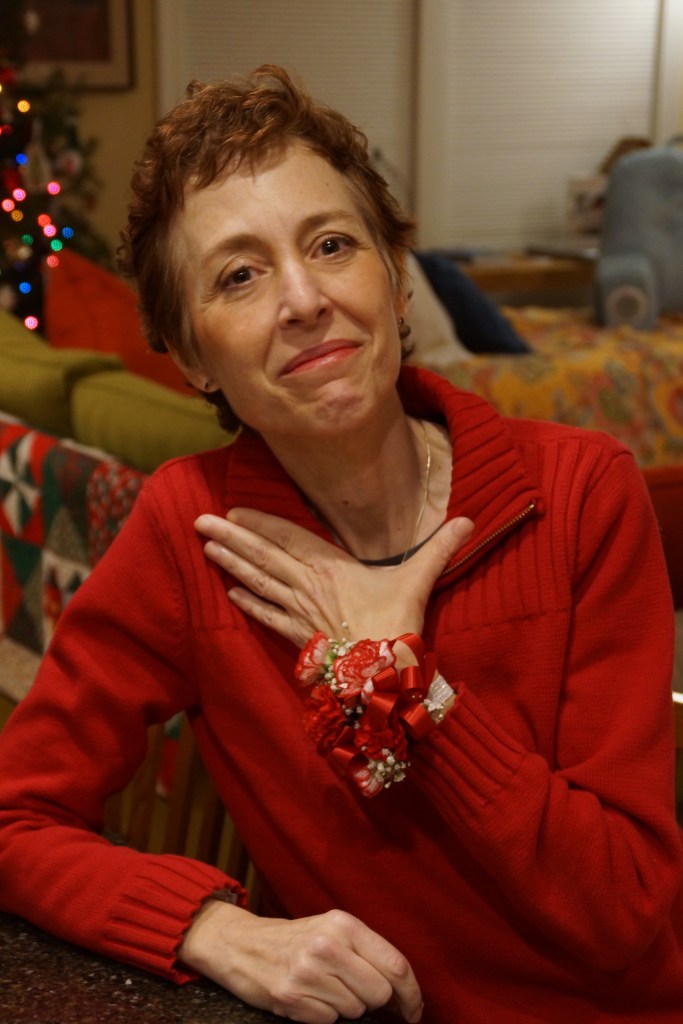
Mother smiling back at me,
weeks before she died.
Father sits, infant twin
one-hundred years ago.
All long gone, but with me still.

Written for Quadrill Monday at dVerse, the virtual pub for poets around the globe. Today Merril asks us to use the word “embrace” (or a form of the word) in our poem of exactly 44 words, sans title. Pub opens at 3:00 Boston time. Drop by! All are welcome.

Aperture refers to the opening of a camera lens’s diaphragm through which light passes. Around 1880 photographers realized that aperture size affected depth of field.

I have old black and white framed photographs on our living room shelf (some of them shown above). They are family treasures.

We take photography for granted these days….clicking away with our iPhone, deleting what we don’t want. Storing the rest in cyberspace. I remember when I had to take a roll of film to the drug store; wait a week or two to pick up my photos; and then be so disappointed in the quality of so many. What a world of convenience we live in! And thank goodness for the photographers of olden days!

Hope for a New World

Swirl me.
Topple me through this rabbit hole.
Emerge me under a lemon sun
squeezed dry beyond sour memories,
yet lifegiving.

Twirl me in tuille skirt.
Pirouette my toes until . . .
I tour jeté into the light.
Abbracadabra these Covid spikes.
Disappear them to reappear nowhere.

Vamp up the timpani as brass blares.
Let me wave my arms
conductress supreme.
Through the finale of all finales,
with oxymoronic cadenza.

Cadenza me into a new world opus.
Melodious, and most importantly,
pandemicless, fomentless, argumentless,
povertyless, violentless, hatredless,
bLESSed be this world.

Cadenza, (Italian: “cadence”), unaccompanied bravura passage introduced at or near the close of a movement of a composition and serving as a brilliant climax, particularly in solo concerti of a virtuoso character.
Cadenza | music | Britannicawww.britannica.com 
I take poetic license with the word. Here, the cadenza continues the piece, leading into a new world: thus an oxymoronic finale.

Just sitting here thinking . . .

Reflecting today – don’t know why exactly.
Just am.
Wondering . . .
who has known me my entire life?
Requires they be older than me.
Parents, brother, grandparents,
aunts, uncles, five cousins.
But all departed from this earth.
Have I known me all my life?
Earliest memories,
not gleaned from photographs?
Me at age five.
So no,
I haven’t known me all my life.
Turns out, no one on this earth has.
Odd.
Life is just odd.

Written for dVerse, the virtual pub for poets around the globe. I’m hosting OLN today. That means folks can post any one poem of their choosing: no prompt, form or topic requirements. Pub opens at 3 PM Boston time. Come on over and imbibe some words!

Photos in collage: Left to right top row – me with mom and dad; my folks and my brother Chuckie (I called him that all his life) in summer; me and my brother before his high school graduation.
Left to right middle row: mom and dad; my gramma the year before she died; me as an infant.
Left to right bottom row: my brother and I not too many years before he died suddenly at age 51; my brother and I with our grandparents; me, mom, dad and Chuckie at my baptism. He was nine years older than me.

The ravages of war are sometimes steeped in silence . . .

Orderly spaced headstones
gleam pristine in morning sun.
Blood stains and broken bodies,
beneath the verdant green.

Stilled smile in photo frame
clutched to breast each night.
Bereft widow lies in bed,
his voice only within her head.

Stanley, called to World War II,
assigned to stressful desk job.
Safe, his thankful family thought,
gentle soul far from battle.

But war destroys in different ways.
Pressure built. Commands grew harsh.
Time, country, lives at stake.
Stanley broke . . . mind imploded.

Other soldiers moved forward,
Stanley retreated inward.
Into the mind’s maze.
once in – no way out.

His world, one room. His eyes vacant.
No words. Only rare mutterings.
His way lost in the war,
once a brilliant mind, is where?

Weekly family visits
in his once was home.
Devoted family tried
tried to talk, to share.

You bring me to be with you
but Iamnot here

I amnotanywhere
Iwillneverbeeagain


The cacophony of war –
sometimes evident
in the silence we see.

Written for dVerse, the virtual pub for poets where today Bjorn asks us to consider the poetry of war.
My first thought when I read this prompt, was of Arlington Cemetery. And I thought of the hushed silence in that sacred space. And then I thought of my husband’s Uncle Stanley who came back from World War II a different person. I am of the mind that war is hell . . . no matter one’s role in it.

Image from Pixabay.com

Survival Tale

In 1978, US law declared the bald eagle a protected species and the results have been phenomenal. Between 1963 and 2006, the number of nesting pairs increased from 417 to 9,000. These magnificent birds live from twenty to thirty years and tend to mate for life. Their nests can be from seven to ten feet wide, ten feet deep, and weigh as much as two tons.

Winters are an important season for eagles. They must consume enough food and expend as little energy as possible to maintain their body heat. January brings scores of eagles to Iowa for winter nesting. When our children were young, if the weather was good, we’d take a January Saturday and travel to the quad cities area. We’d drive along the Mississippi in hopes of spying eagles soaring above their nesting areas. Bird watchers were indeed fortunate if they could spy an eagle through their binoculars, legs extended with talons ready to land upon a winter bared tree.

snow drifts impede path
human footsteps nowhere seen –
eagle’s glory reigns  

Written for dVerse, the virtual pub for poets, where today Frank is hosting. He asks us to write a haibun that is somehow related to eagles. Factual information in the first paragraph of my haibun is gleaned from a pamphlet by the Iowa Department of Natural Resources. Haibun: two to three paragraphs of prose followed by a haiku. The haiku must be traditional in terms of including a seasonal reference.

As We Dream . . .

Call me to lie down in the fragrance.
         – D. Margoshes, Seasons of Lilac

Bare brittle branches and snowless grey pallor,
this winter’s reality.
Night dawns starless as we slip into dreams.
Our bed afloat in riotous blossoms,
spring collaged in wildflowers
cacophony of colors and scents.
There is but one season with you by my side.
Calendared through so many years,
this season of love.

Written for dVerse, the virtual pub for poets around the globe. Today Laura asks us to write a poem inspired by a final line from a poem. She provides us with a number of lines and we are to choose one. We may use that line as an epigraph, but are not required to do so. The line can not be in the body of the poem; nor can it be the title of the poem.
Epigraph: a line from another source, inserted between the title and content of one’s poem. It should somehow complement the poem.
Photo: from a visit to Ireland’s Blarney Castle a number of years ago.

Inebriated on Words

Point the way through wild thyme,
curling seductive fiddleheads.
Engulf me in hyacinth scented air.
I crave to satisfy my senses.

Perhaps words can fulfill this lust?
Become the enticement I desire?
Smooth curved letters
connecting script to feelings . . .

. . . forgive me while I imbibe.

It’s Quadrille Monday at dVerse, the virtual pub for poets across the globe. Today Lisa is tending the pub and asks us to use the word “way” in our quadrille (a poem of exactly 44 words, sans title). Pub opens at 3 PM Boston time. Come imbibe! Image from Pixabay.com

Six Characters to a Page

i.
Acrobat by trade,
she tumbled her way
through the three-ringed circus
everyone else called life.

ii.
She was not a cook,
the Cuisinart soufflé pan
Calphalon pots and
ten-speed blender,
simply signs of her optimistic soul.

iii.
Potter by trade
she worked the wheel.
Hands wet, shaping clay –
wishing her life was as easy to mold. 

iv.
He lives his life as a barnacle would,
clinging tenaciously to faith
in an eroding world.

v.
Architect by trade
he drew blueprints for his life.
Meticulous plans.
Until she walked in one sultry night,
right angles upset by curves.

vi.
Waste not, want not.
She’d heard that all her life,
lived by it too.
Christmas wreath upon her head,
ready for the Easter parade.

Written for dVerse, Open Link Night.

The Power of Words

We are a patriarchal society,
our language too often is male dominant.
Male designations within professions:
fireman, policeman, chairman.
Finally adjusted over recent years,
fire fighter, police officer, chair person.

But the very basic words to describe me,
to describe those of you like me,
remain, however subtly, patriarchal.
They contain the male
as if we cannot stand alone,
be independent as ourselves.

We are a woMAN, a sHE.
We are woMEN, feMALES.
And even as we age,
we face MENopause.
Are we not important
unto ourselves?

As long as our bodies exist,
all huMANs bear testament
to the power of their mother,
the ultimate her.
Not MANifest in huMANity,
but etched upon us as we entered the world,
our most basic connection to her.

That impression upon our belly
evidence of her supreme power,
the miracle of birthing.
Place your hand upon your belly.
Do it now as you read. Do it.
Do you understand?

You are forever connected to her.
This connection, too miraculous
to be mundanely called a navel,
worse yet, a belly button.
Scientifically it is the umbilicus,
but that term bears no reference to her.

Long after she passes to another place
her presence remains with us.
Umbilicus or mumbilicus?
Place your hand upon your belly and you decide.
And when you miss her most,
know she is always there with you.

Written for dVerse, the virtual pub for poets around the globe. Today Merril asks us to write a poem about connections. Image: Pregnant Woman by Edgar Degas, cast in 1920, on display at the Met on Fifth Avenue, in gallery 814. Image is in public domain.

** I’ve been interested in the herstory of language and its power to affect change for many years.