Resistance

Hear the guttural call
a loon in the midst of porous fog.
Tall ships tack ‘gainst angry waves
sails unfurled defying blowhard wind.
Sturdy spruce dig in, roots entangled,
stand valiantly in permafrost.

Voices merge, rise from depths,
like dawning sun they swell.
Their magnitude undeniable,
push their way
gain strength and energy,
overcome darkened skies

You cannot dim her torch
it shines her promise for the many.
Those who passed her by in awe
eyes raised, hearts knowing
hope lives and shall
forevermore.

imageedit_2_8205069262

People . . .

Some exhale fresh air
with every breath.
Others spew pollution
from every pore.

Some sow smiles
like Johnny planted trees.
Others hurl thunderbolts
of anger and fear.

Some believe in we
live in the our.
Others tout two,
us versus them.

Some stand tall
no matter their stature.
Others think small
no matter their height.

Some people hope
as they pray for the others.
Willing the others
compassion for all.

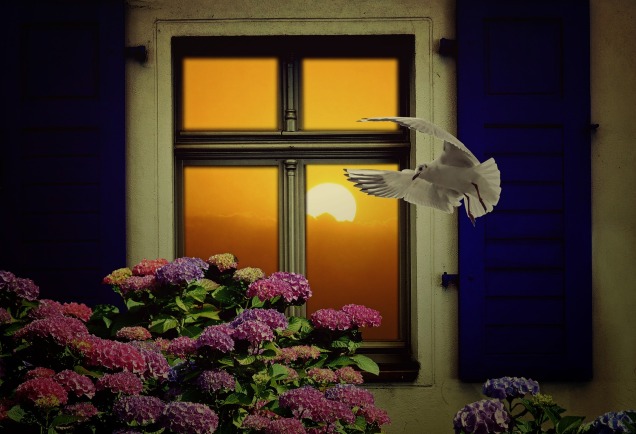
window-1843473_1920

Shared with dVerse OLN today….the virtual pub for poets. Everyone is invited to share one poem of their choosing. Bar opens at 3 PM Boston time. Come join the fun! Photo in public domain.

Twiglet #8, two views

Like folding chairs
marred from years of abuse,
they wait to be used again.

—————————————

Like folding chairs unfolding
legs scrunched to body,
newborns squeal with protest.

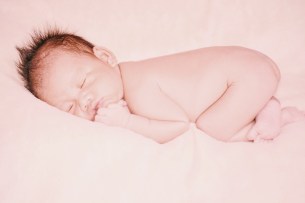
babie-1736885_1920

Twiglet #8 is folding chairs. A twiglet is a short phrase. Or a word. Maybe two. Its aim is to “prompt” a flow. A thought. The idea is to create a poem or piece of prose using the twiglet as the jumping off point – the shorter the better! New twiglet prompts from Misky appear each Tuesday — join the fun! Photo in public domain.

Hoyle Be Damned

This ain’t kitchen bridge.
An arrangement of tricks,
points scored below the line.

Kibitzers watch dumbfounded.
Self-sufficient suit
forced into dummy hand.

Duffer without finesse,
unbalanced distribution
trumps again and again

to win
the grand slam.

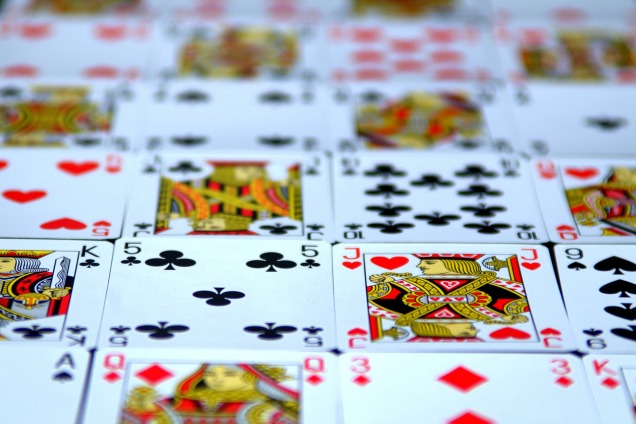
card-1298695_1920

A second poem for Dverse, Tuesday Poetics…using the word “bridge.” Apologies to Hoyle’s rules for bridge…..and yes — metaphor applies. For those of you unfamiliar with the card game of bridge: kitchen bridge is a social game with little emphasis on skill; all of the following are terms used in bridge and may be found in the Hoyle’s book of bridge terminology/rules:  tricks, points scored below the line, kibitzers (nonplaying onlookers), self-sufficient suit, dummy hand, duffer (bridge player of inferior ability), unbalanced distribution (has to do with the cards in your hand), trump, and grand slam.


What’s your history?

Adam and Eve’s tale
created a history.
Two genders. Two roles.
From prehistoric eras
came seminal works,
histrionic characters
assigned to mankind.
Hissy fits to machismo.
Words whimpered wrongly,
like hysterical mis-spelled.
Time now to accept
the herculean tough task.
Too often not heard
unless we are herd, enmasse.
Cherish who we are.
Do not say female or male,
women versus men.
We shall march a million strong,
support each other.
Our bodies, our minds, our love.
Together we can, we will.

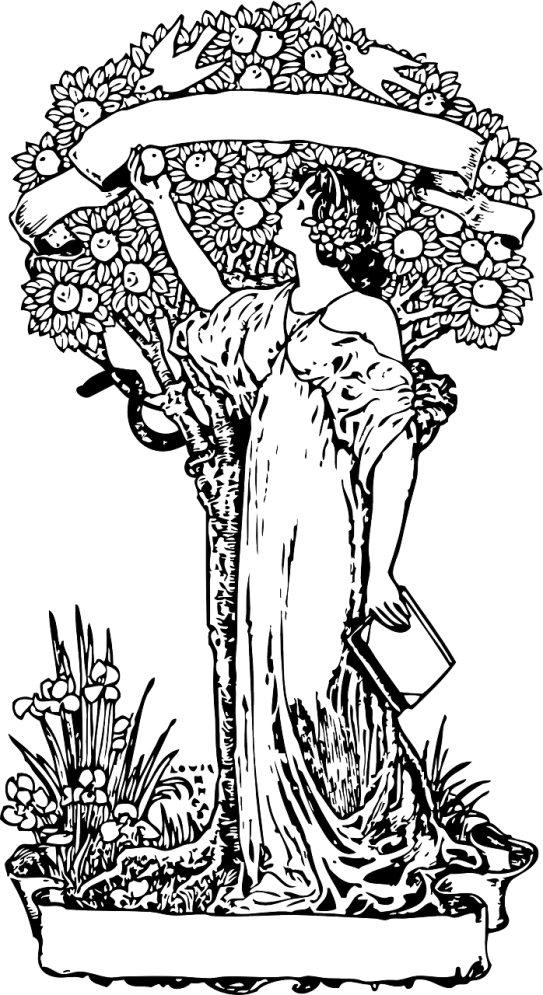
tree-145820_1280

Gayle hosts dVerse today and asks us to write a CHOKA: an unrhymed poem with lines that alternate 5 and 7 syllables, ending with two 7 syllable lines. A new form for me…and quite a challenge to make the sense of the poem be the reader’s main focus rather than the framework of the 5-7-5-7-5-etc-7-7 syllable requirement. Bar opens at 3 PM Boston time.
Two explanatory notes for the poem: 1) I’ve always been interested in semantics and the power of language; applauding the movement to more inclusive language as in “fire fighter” rather than “fireman” and “work hours” rather than “man hours.” Many changes like these have concretized in our language over the years and, I believe, affected perception. This poem looks at the place of gender specific words within words. Note the italics. There are many many more one could use. I find it an interesting exercise. 2) Jan 21, 2016 is the Women’s March on Washington with simultaneous similar events around the country. My daughter and I shall attend the one in Boston. Hence the reference at the end of the poem. I should add ,persons of both gender/sex are highly encouraged to attend these events!

Opus Us

When
life
gets
all
staccato,
insert
a
rest    

and slow yourself down.
Don’t beat yourself up.
Think key largo
and slip into three-quarter time.

Note:
I’ll dance with you
to any music, any time,
any place, any where.
Except the polka.
I hate dots and oompah bands.

Note_lines_horizontal

Victoria is hosting dVerse today, a virtual pub for poets. She asks us to write a poem that incorporates music. Bar opens at 3 PM Boston time….stop by and add your own musical voice, scat with us, or just enjoy some of the other folks jammin’.  For those non-musicians among my readers, opusstaccato, rest, beat, key (as in key signature), largo (as in slowly), 3/4 time, note and of course polka all refer to music. Photo/graphic credit to freepik.com

Original Sin

Proud anthems hide painful histories.
Call them Scar Face, the original mobs.

Maori treaties disemboweled.
Aborigine beliefs purged, land seized,
lives stolen by small pox scourge.
Wounded Knee cut beyond the pale.

Revisionist history.
Frayed band-aids cover festering wounds.
Moans for restitution reverberate.

A Quadrille (poem of 44 words) using the word “scar” for dVerse where De is tending bar at this virtual pub for poets today. Photos are from our recent trip to Australia and New Zealand. In New Zealand, Europeans came to settle and discovered the Maori people — they were of Polynesian descent. Treaties were signed that ultimately displaced the Maori. However, in recent years New Zealand has done much to rectify the situation including a formal apology, declaring English and Maori as the two official languages of NZ, giving back some key lands, having both languages taught in the first years of school. There are Maori television stations. The video is of a beautiful Maori dance on the land, given back to the Maori’s, where the original treaties were signed. A beautiful museum just opened there this year.

Second set of pictures are from an Aboriginal tour we took of the Botanical Gardens in Sydney. This man is Aboriginal (mixed marriage) and showed us many of the plants and trees used by the Aboriginee for food and shelter, and explained their difficult history. Because Aboriginees no longer have easy access to their natural foods of years ago, they now eat “normal” food and their bodies have never adjusted…the average age of an Aboriginal male is just 65. Kidney disease and diabetes are rampant in the population. The artwork is some from the garden and one bark drawing from a beautiful display at the New South Wales Art Gallery. The Aboriginees have not fared as well as the Maori in New Zealand.

And of course, the wonded knee reference is to the Massacre at Wounded Knee in 1890 when US federal troops killed 150+ native American Indians. In the U.S., the plight of the American Indian, on reservations, high alcoholism, education access etc.  In all three countries, we sing our national anthems proudly, but our countries are established on the “original sin” of taking the land away from those who were our countrie’s first inhabitants. It is a fact of our histories. This recent trip gave me much food for thought concerning history and indigenous peoples.

Rotting Fruit

i.
They ignored the name, blood orange,
plucked it from apples in the bin
and then they were surprised.
Layer after layer peeled away
through pock marked rind
through white pith,
only to reveal a rotten core.

ii.
They chose the brightest orange one
mr. jack-o-lantern
pre-carved, with the biggest grin.
Set it out for all to see.
Surrounded with goblins,
they left it on the porch too long.

Rot and mold began to take its toll.
They watched in great dismay
as it slumped and caved
into a misshapen ugly thing,
far earlier than the target night
it was expected to shine.

bloodocean07