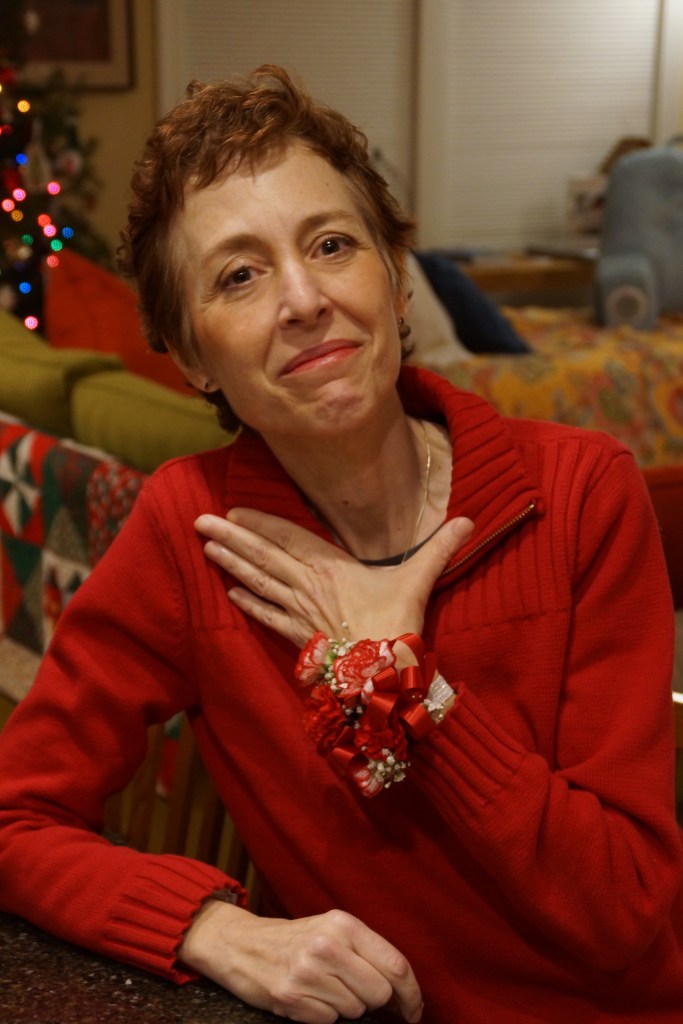
My friend, Louise. Gregarious, always moving, always engaged. She strode through life like she owned it doing good for others, singing, laughing. Pain from a pulled muscle slowed her a bit, but she kept hiking, bicycling, eagle watching along the Iowa River, until she could ignore the pain no longer.
Cancer. A word. Not a sentence in her mind. She fought. God how she fought. Refused to be forced over the edge. She took everything they had and asked for more. Bring it on! She told me, “I’m not afraid of dying. I just don’t want to.” Steps slowed. Belly bloated. Scalp exposed. But she trekked on. Reached the fringe of living.
She never acknowledged it. Would not let it win. “My head’s freezing but doesn’t this hat look divine?” She grabbed every filament of hope no matter how thin. She held on for dear life. Until one night as the household slept, a kind ethereal spirit appeared beside her bed. It spoke gently, words riding on the breeze that floated in from her open window.
“It’s not like a high mountain top towering over a rough sea. It’s simply a turn in the road. Hold my hand and I’ll walk you there.” And quietly, in the middle of the night, she did.
Written for Tuesday Poetics at dVerse, the virtual pub for poets, where today our prompt is to consider the edges and the fringes. We may if we wish, write a poem that contains the word “edge.” Photo is of my dear friend, Louise. She died in 2018 after a 2+ year battle with ovarian cancer.
I remember Junie’s house. She was my best friend until we moved away when I was in third grade. I remember her house as comfortable. A heated enclosed front porch held all her well-used dolls and dress-up clothes. Her grandma always sat in the living room in an old wooden rocker. She was tiny, silent and mysterious to me. Junie’s big dining room was crammed full by just three things: an old upright piano with lots of sheet music on its top, a huge dining room table covered in papers and books and magazines, and a large sidebar that had mail on it and a mish mash of other things. The kitchen was huge. I was entranced by the modern washing machine and dryer next to the big gas stove. That was the only washer and dryer I’d ever seen – until we moved to our new house. Junie had a special white metal chair at the table. It sat her up high and was battered and dented. I was always jealous of it when I had to sit on a regular chair on top of books. Junie’s mother, Bertha, was my mother’s best friend. I remember her in the kitchen, wearing an apron around her ample waist, always happy. She made yummy pb&j sandwiches and cut off all the crusts for us. Junie shared a bedroom with her older sister. First door on the right when you got upstairs. There was a dressing table between the two twin beds, covered with Auberdeen’s lipsticks, dried corsages, and fingernail polish bottles. And strangely, I remember the doorknobs in her house. They were big and white and looked like china to me. I have no idea what the doorknobs in my own house looked like.
I have no photos of Junie’s house; nor did my mother. I find it interesting that I remember it in so much detail. And that I use the word “comfortable” to describe it. But that’s in juxtaposition to my mother’s tiny glass animal collection on display in our dining room and my collection of story book dolls kept on glassed in shelves in my bedroom.
winter storm rages – farm cat beckoned into house turns back to old barn
Written for Haibun Monday at dVerse, the virtual pub for poets around the globe. Today I host and ask people to “travel down memory lane” with a simple exercise. Close your eyes for a few moments and go back in time to your earliest memories NOT recalled by virtue of a photo or family lore. Now start jotting them down. You’ll be surprised what you come up with. When I first did this exercise, I actually drew out what the first house I lived in was like: rectangles for rooms. Then I labelled them: my room, parents’ room, brother’s room, living room, dining room, linen closet in hall — and suddenly I remembered climbing up in there to hide from my mom! After jotting things down, choose one memory to share. Remember, a haibun is: 2 or 3 paragraphs of succinct prose that must be true (cannot be fictional), followed by a haiku that is somehow related to the proseand includes a seasonal reference.
Photo is one of the few I have of me and my friend Junie. Junie is on the left. An interesting fact we found out about 5 years ago when we reunited after some 60+ years, we were married on the same date! That’s a Tiny Tears doll she’s holding. Anyone remember those?
I remember Mrs. Jester’s house. Reddish paint, curtains always open. Mostly I remember her apple tree blossoms bountiful, sturdy limbs to climb.
That house has not aged well. Foundation cracked, three-quarters sinking low. Panes of glass missing, cracked or in shards.
Apple tree now diseased, fallen waste dead at base, putrefied in stinking mold. All branches save one, diseased from within.
Seven fruit, avoiding pestilence, catch a bracing breeze, land far away from tree. Far from decaying rot, their goodness intact.
Children on a walkabout give wide room that rotting tree, but see the golden orbs and recognize their worth. They stuff their pockets full.
At home the fruit is buffed and cored, cut in quarters and enjoyed. Children, wise beyond their years, save seeds to grow again. The youth shall become the sowers and goodness shall survive.
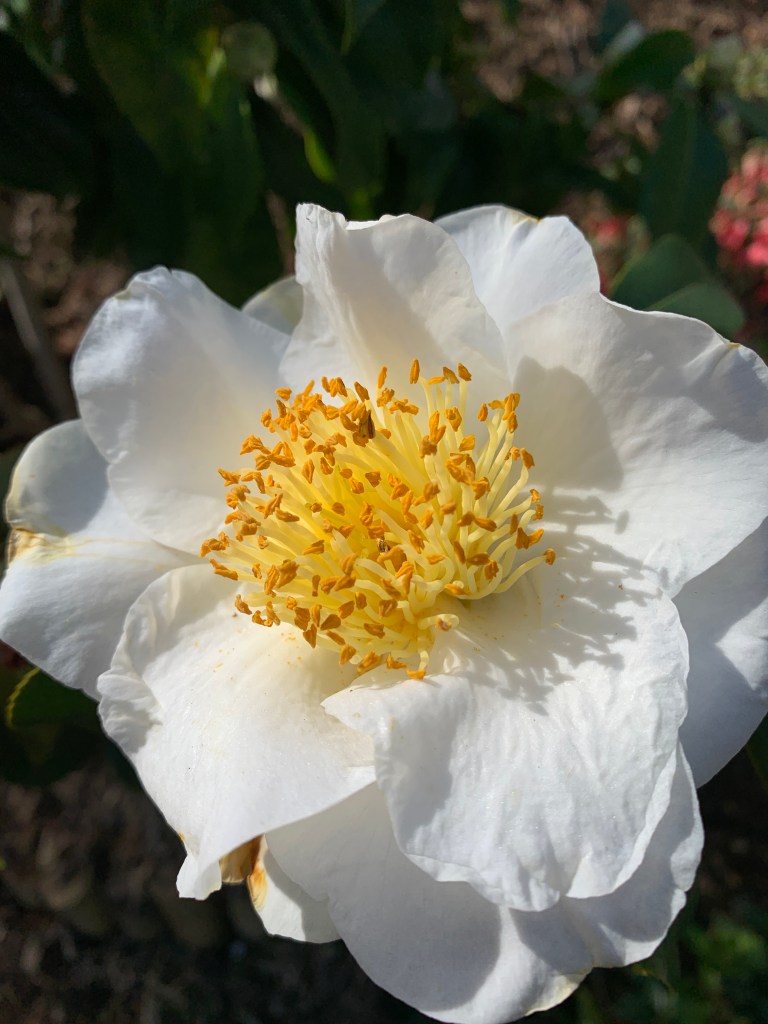
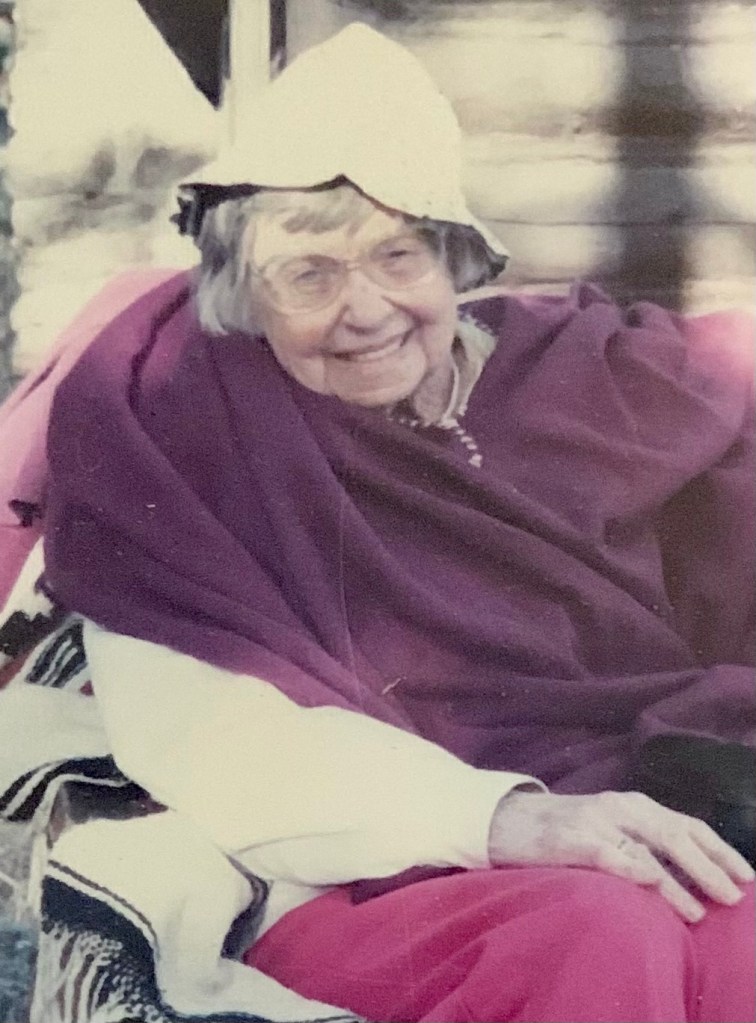
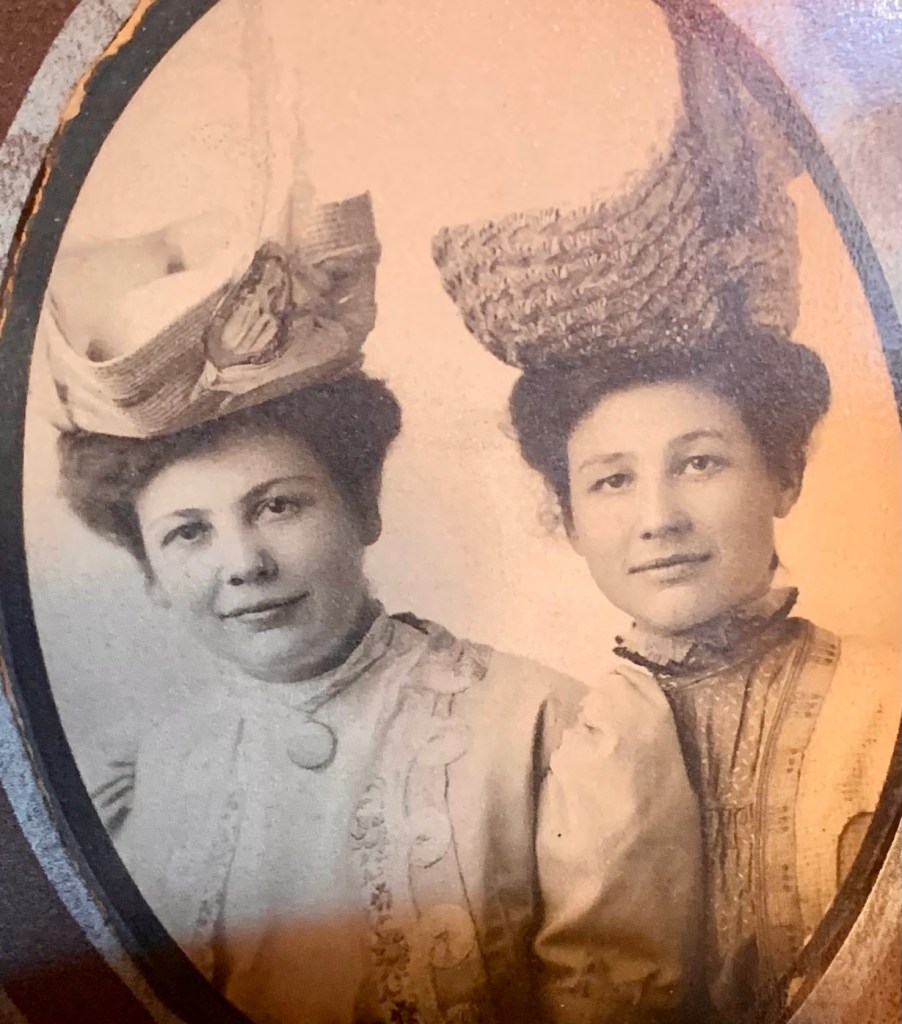
Aperture, open-shut time frozen in space, minute details embraced. Butter-colored flower filaments crowned by mustard-yellow pollen. Violas waving in purple-lemony shades. Mother smiling back at me, weeks before she died. Father sits, infant twin one-hundred years ago. All long gone, but with me still.
Written for Quadrill Monday at dVerse, the virtual pub for poets around the globe. Today Merril asks us to use the word “embrace” (or a form of the word) in our poem of exactly 44 words, sans title. Pub opens at 3:00 Boston time. Drop by! All are welcome.
Aperture refers to the opening of a camera lens’s diaphragm through which light passes. Around 1880 photographers realized that aperture size affected depth of field.
I have old black and white framed photographs on our living room shelf (some of them shown above). They are family treasures.
We take photography for granted these days….clicking away with our iPhone, deleting what we don’t want. Storing the rest in cyberspace. I remember when I had to take a roll of film to the drug store; wait a week or two to pick up my photos; and then be so disappointed in the quality of so many. What a world of convenience we live in! And thank goodness for the photographers of olden days!
Reflecting today – don’t know why exactly. Just am. Wondering . . . who has known me my entire life? Requires they be older than me. Parents, brother, grandparents, aunts, uncles, five cousins. But all departed from this earth. Have I known me all my life? Earliest memories, not gleaned from photographs? Me at age five. So no, I haven’t known me all my life. Turns out, no one on this earth has. Odd. Life is just odd.
Written for dVerse, the virtual pub for poets around the globe. I’m hosting OLN today. That means folks can post any one poem of their choosing: no prompt, form or topic requirements. Pub opens at 3 PM Boston time. Come on over and imbibe some words!
Photos in collage: Left to right top row – me with mom and dad; my folks and my brother Chuckie (I called him that all his life) in summer; me and my brother before his high school graduation. Left to right middle row: mom and dad; my gramma the year before she died; me as an infant. Left to right bottom row: my brother and I not too many years before he died suddenly at age 51; my brother and I with our grandparents; me, mom, dad and Chuckie at my baptism. He was nine years older than me.
Orderly spaced headstones gleam pristine in morning sun. Blood stains and broken bodies, beneath the verdant green.
Stilled smile in photo frame clutched to breast each night. Bereft widow lies in bed, his voice only within her head.
Stanley, called to World War II, assigned to stressful desk job. Safe, his thankful family thought, gentle soul far from battle.
But war destroys in different ways. Pressure built. Commands grew harsh. Time, country, lives at stake. Stanley broke . . . mind imploded.
Other soldiers moved forward, Stanley retreated inward. Into the mind’s maze. once in – no way out.
His world, one room. His eyes vacant. No words. Only rare mutterings. His way lost in the war, once a brilliant mind, is where?
Weekly family visits in his once was home. Devoted family tried tried to talk, to share.
You bring me to be with you but Iamnot here I amnotanywhere Iwillneverbeeagain
The cacophony of war – sometimes evident in the silence we see.
Written for dVerse, the virtual pub for poets where today Bjorn asks us to consider the poetry of war. My first thought when I read this prompt, was of Arlington Cemetery. And I thought of the hushed silence in that sacred space. And then I thought of my husband’s Uncle Stanley who came back from World War II a different person. I am of the mind that war is hell . . . no matter one’s role in it. Image from Pixabay.com
Call me to lie down in the fragrance. – D. Margoshes, Seasons of Lilac
Bare brittle branches and snowless grey pallor, this winter’s reality. Night dawns starless as we slip into dreams. Our bed afloat in riotous blossoms, spring collaged in wildflowers cacophony of colors and scents. There is but one season with you by my side. Calendared through so many years, this season of love.
Written for dVerse, the virtual pub for poets around the globe. Today Laura asks us to write a poem inspired by a final line from a poem. She provides us with a number of lines and we are to choose one. We may use that line as an epigraph, but are not required to do so. The line can not be in the body of the poem; nor can it be the title of the poem. Epigraph: a line from another source, inserted between the title and content of one’s poem. It should somehow complement the poem. Photo: from a visit to Ireland’s Blarney Castle a number of years ago.
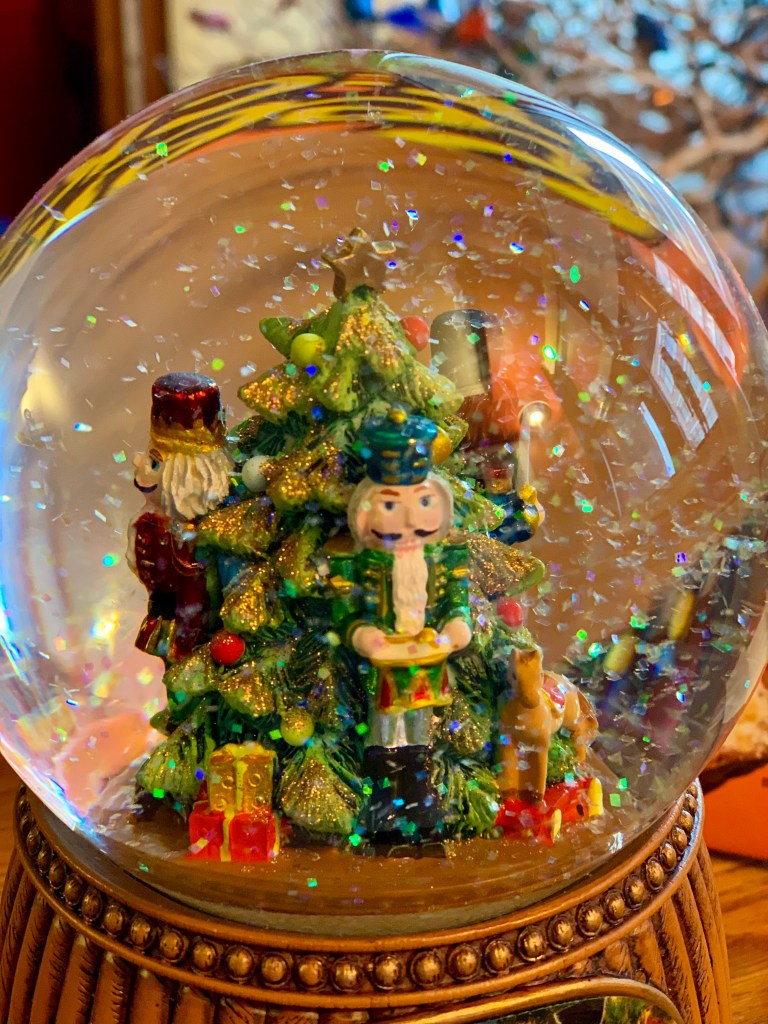
This is not a snow globe this is me seeking refuge slipping mentally inside, beautiful crystal orb.
This is not a snow globe but a world disrupted. Lies pummeling us everywhere beliefs shaken, in disarray.
Wellbeing, within our grasp. Shake loose the tyranny. Set it down firmly and stop the madness.
This is a snow globe. Sentries within trust us. When their world is shaken they know we will reset the calm.
Written for Tuesday Poetics at dVerse, the virtual pub for poets around the globe. Today we are asked to write an object poem and begin with the words “This is not a ….” We are asked not to simply describe the object, but to relate to it. How does its existence affect me….what does it mean to me….how do I relate to it at this moment. Photo is the snow globe on our coffee table … a Christmas decoration I’ve had for many years. I love to tip it and see the beautiful shimmering “snow” swirl inside.
Would-be leader: brazenly denigrated the disabled name-called, disparaged so many. Usurped Lenin’s words, Enemy of the People. And we gasped in shock, watched as he became
our leader. And all could see. He swooned at tyrannical dictators, locked innocent children in chain link cages denied science, endangered earth. Denies a virus its due respect, callous as thousands upon thousands die.
People carried lit torches into the night spit epitaphs at Jews and blacks and browns. This chosen leader praised these folks. They’re “good people” he said and he did nothing to change the tide. And we watched, some ashamed.
Our chosen leader lied and lied and lied again. Some lies repeated so often morphed into truth for far too many, angry people starved for validation. Supremacists lurking in the shadows came out in droves, baited by his words.
Some people dared to say, this cannot be. But others among us, some in leadership roles consumed his lies until they began to take root, fill their mouths like canker sores.
He created his own reality. We watched as too many followed until the fire he lit became a blaze. Destruction reigned over their shocked heads. Death was in their house and they cowered in fear.
We watched with sickening bile on this day of Epiphany. Surely they would now understand. And yet they took their place again, his mouth still incised upon their faces. They spewed his lies for all to witness.
We watch days later, true evil unveiled. Not just him, but scores of others. His sycophants, a scourge upon our land. We wring our hands and pray, where is the justice, oh Lord? Only in us, our voices must be raised.
I’m “filing” this under Cherished on my blog because I cherish this democracy and pray for its preservation. Written on January 9, 2021.











 lillian the home poet