
He lost one wife to family genetics. Her parents and siblings suffered fatal heart attacks before the age of sixty. He woke one morning to find her cold body next to his. Thank God he passed away before his eldest son suffered the same fate.
He lost his second wife to religion. A devout, and some would say overly zealous Christian Scientist, he watched her cold symptoms worsen. After arguments that went nowhere, he stood by as she prayed her pneumonia away. He held her hand as she died.
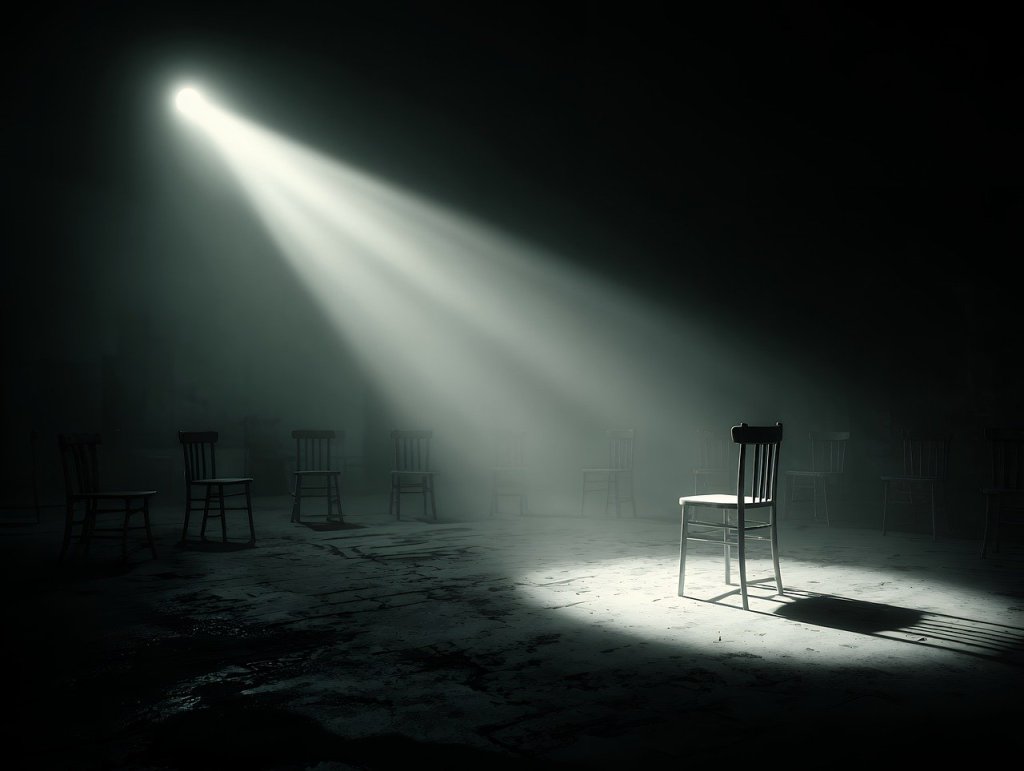
If we are all actors upon a stage, Grief enters with or without directional cues. A sudden drop-in as if let fly from an overhead catwalk. A slow unraveling as clues and evidence appear, until the perpetrator is revealed and the curtain falls.
We – the family, the friends, the audience – ultimately leave the theater with only playbill in hand. But Grief hangs on to the one left alone. It may dissipate ever so slowly, but the void remains. And at times, sometimes unexpectedly, it grips the heart like a vise. Grief, a character in every script, is simply masked at times or hovering in the wings.
Nature airs her grief.
Loud thunder sounds her anger,
soft rain weeps her tears.
A haibun dedicated to my dearest uncle. His “story” is in the first two paragraphs. He has been gone many years now. I loved him dearly. Also dedicated to my dear friend, Mary Nilsen.
Haibun: a Japanese form consisting of prose (usually nonfiction) followed by a haiku that contains a nature reference.
Image by Vilius Kukanauskas from Pixabay


 lillian the home poet