Whether to . . .

Layers of putty grey clouds hover on the horizon. Empty masts jut upward from small boats bobbing in waking waves.

Look right: off in the distance, pale blue sky meets roof tops of white clapboard buildings; the town, a twenty-minute walk away. Look left: eyes squint as water glitter-gleams. The sun appears then disappears, valiantly trying to break through slow moving, darkening clouds. A lone gull perched on jetty’s peak, preens itself then sits, nature so statuesque, as waves slap against stone, lap into shore.

Morning pauses, weather waits . . . deciding on its temperament for the day.

early September ~
dalliance between summer
and crisp autumn days

Posted to dVerse, the virtual pub for poets, where today Frank asks us to write a poem that includes descriptive detail.

My haibun (prose followed by a traditional haiku that includes a seasonal reference) is about what I saw this morning, sitting on the deck of our annual two-week rental in Provincetown. Photos document the view! Provincetown is at the very tip end of Cape Cod. 

Provincetown Serenity

Wooooshhhh . . .
wooooshhhh . . .
waves sweep in,
rhythmic oceanic refrain.
Sun glittered ripple-path
narrow at shore,
widens to horizon by risen sun.
Solitary floating cormorant
stretches sleek neck,
floats . . . then dives under,
resurfaces yards away.
Provincetown serenity
in the nick of time,
news cycle left behind.

IMG_0537

It’s Quadrille Monday at dVerse, the virtual pub for poets. Prompt word for today is “nick”. It must be used within the body of a poem that is exactly 44 words in length, sans title.

Photo from yesterday morning — sitting on the deck enjoying our beloved Provincetown…at the very tip of Cape Cod – just beginning our two week respite here.

Industrialization at a price . . .

On a hot summer day, we ventured back in history, on a day-trip to Lowell, Massachusetts.

A small boat took us through part of the 1796 Pawtucket Transportation Canal, with locks so old, their levers are maneuvered above us by National Park volunteers. Green trees reflect in the water marking a beautiful scene. But we’re told that once these waters were polluted thick with textile dyes as industrial capitalists captured hydro-energy from the Merrimack River falls to turn belts and wheels on thousands of textile machines.

In the Boott Cotton Mill Museum, we stand in a long factory room, filled machines, just as they were in the 1830s. Only three of the hundreds are turned on and the noise is deafening. We drip with sweat and imagine women as young as fifteen, standing in long dresses, no electricity for fans, tied to machines fourteen hours a day, six days a week.

sweltering summer
dogs pant laboriously
tethered to leashes

Frank hosts Haibun Monday at dVerse, the virtual pub for poets. Since today is Labor Day in the U.S., a day to celebrate workers, he asks us to write a haibun (2 or 3 paragraphs of prose — cannot be fiction; followed by a traditional haiku with reference to a season) that is somehow about labor. Canada celebrates Labor Day on the first Monday of September and more than 80 countries celebrate International Workers’ Day on May 1.

Photos and video from our recent day trip to Lowell, MA. An amazing step back in time. The Mill Girls, as they came to be known, were some of the first individuals to stage a strike against unfair wages and conditions. They were recruited to this factory city from rural farms in the nearby countryside. Companies required them to stay in the company boarding houses, attend church on Sunday, and live by “the bells” which woke them befroe dawn each morning, signalled meal times, and times to report to the floor. When Mill Girls left their jobs, waves of immigrants came to Lowell, working side-by-side with locals. Lowell did not stay with the times, keeping the hydrology-run factories until they all left for other parts of the country and Lowell fell on hard times. Warehouses were vacant and fell to disrepair. Senator Tsongas, from Lowell, together with Congress, established Lowell as a National Park and the city was “reborn” so to speak, rehabbing and restoring itself as a place to preserve history. An amazing place to visit!

Somewhere in the Catskills . . .

Mr. Bobcat trains wildcats
in his purrfect cat-filled town.
Miss Pussycat educates tiny ones,
eradicating copycats all around.

Devilish hellcats fornicate
in cold cathedral catacombs.
Catholics’ scatter catnip,
as holier-than-thou catchalls.

Mr. Tomcat struts vainly
in the town’s decathalon,
like a catty fat-cat victor,
like he’s the cat’s meow.

Catatonic mayor catnaps, dead asleep
as cat burglars roam the littered streets.
When crime reaches cataclysmic levels
catcalls will be heard, Abdicate NOW!

Cats will suddenly get sick as dogs,
as heat rises and dog days come.
Cats will be dogged by fleas
and this poem shall end . . .

in unbelievable catastrophe!

cat-2155606_1920

It’s Poetics Tuesday at dVerse and we’re asked to write a poem that has something to do with cats in the subject matter, as metaphor, or wherever the muse takes us. My muse took me to the Catskill Mountains! There are twenty-nine cats in the body of this poem….some hidden as in educated. Can you find them all?
Pub opens at 3 PM Boston time. Come join us!
Photo from pixabay.com

Aberrant Musings

. . . I could buy the Sea of Tranquility.
Probably more lucrative than Greenland.
Panoramic views.
Exciting ride to get there.
If a cow jumped over it,
how hard could it be?
Me: The Man on the Moon.
King of the Green Cheese!

moon-44684_1280

Second posting for Quadrille Monday: poem of exactly 44 words sans title, that includes the word “tranquility.”  Illustration from Pixabay.com

Greening

Shhh . . .
follow me.
Walk quietly
thru stately trees
dew-kissed leaves
green glistening fronds.
Inhale. Breathe in deeply.
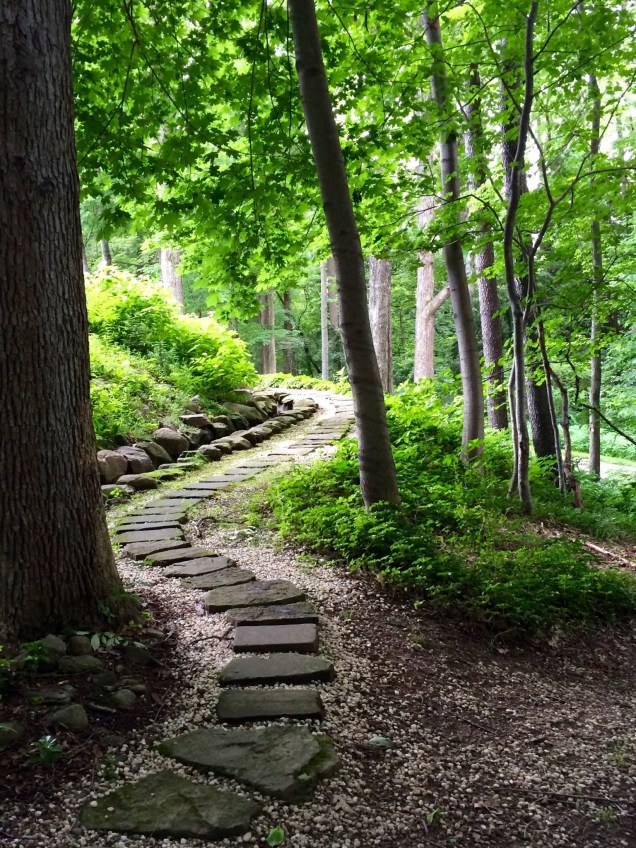
Fresh woods’ scent fills lungs.
Eyes shut, listen to forest sounds.
Birds sing, scamper, dart overhead.
Shrubs swish softly as critters scamper.
Forest tranquility.

IMG_1024

I’m hosting Quadrille Monday at dVerse, the vitual pub for poets. The challenge is to write a poem of exactly 44 words, sans title. The poem must include the word “tranquility” (or a form of the word) within the body of the poem. Pub opens at 3 PM Boston time. Come join us!

Did you know, according to a British Council’s survey of 40,000+ people from 102 nonEnglish speaking countries, “tranquility” is the tenth most beautiful word in the English language?  

Photo taken on our visit a number of years ago to the Crosley Estate in Cincinatti, Ohio. 

The Rabbit Hole

Alice: How long is forever?
White Rabbit: Sometimes, just one second.
Lewis Carroll, Alice in Wonderland.

. . . and the gods hovered
watching glaciers melt
fires burn and scar the land
animals lose their habitat
guns and sirens blare
and the gods said enough.

As I stood, hands cupped
shielding candle’s flame
wax dripping faster
wick sputtering weakly
the gods said enough,
and the light was gone.


Written for dVerse the virtual pub for poets. Amaya asks us to consider how we feel living in “this surreptitious world of smoke and mirrors” and to remember “that writing poetry is a clear and simple form of rebellion against a world that is anything but clear and simple.” Photos from our 2015 Alaska trip where we hiked to a glacier field and saw it melting.  Note this August 18, 2019 headline: Scientists bid farewell to the first Icelandic glacier lost to climate change. If more melt, it can be disastrous.” Pub opens at 3 PM Boston time. Come join us!

Lunch At That Place

She felt herself slipping away. Nerves frazzled. Lashing out. Pieces of herself seemed to be missing. She couldn’t remember where she used to live – she just knew this wasn’t it. She remembered taking the train to work, having a nice big desk with an ink blotter. She wore hats to church. And gloves too. Now she was in some kind of housedress, sitting in a room with people she didn’t know. Well, maybe that one over there. She looked familiar. It’s like being inside a Chinese puzzle box. But just your head. Someone gave her a poetry book today. Or yesterday? “You will love again the stranger who was yourself.” She got that. Her body was a stranger attached to legs. Her brain was across the room in the orange sherbet jello mold. Those cream cheese curds. I’m the stranger. To you and me.

forgetfulness-63624_1280

Prosery written today for dVerse where Kim is hosting. Prosey is a new form for dVerse and prompts appear every second or third Monday. We are given a line from a poem, in this case “You will love again the stranger who was yourself” from Derek Walcott’s poem Love After Love. We must include the exact line in a story (prose) of 144 words or less. Photo from Pixabay.com

Maiden by the Sea

She was but a young sweet maiden,
smitten by the power of a gifted book.
Mesmerized by words, her only escape,
imprisoned alone on distant shore.
Her appetite for love, like thunder,
battered her soul like a storm at sea.

She met her swashbuckling pirate at sea
in chapter two’s final scene. “My, maiden!
I proclaim my love for thee,
” he thundered.
Eyes smoldering, as described in the book,
he appraised his lover, as if a shore,
seeking soft inlets for future escape.

His character so real, she craved to escape,
clambered from tower, ran to the sea.
Consumed by lust, she scanned the shore.
I know you are real and I am your maiden!
I long for your lips, and not from a book!
Words so loud, they rose above thunder.

Where are you? Emotions roared over thunder.
Reality struck hard. There was no escape.
The man she adored, merely words in a book.
Irrational now, seeking her pirate by sea,
into the water she strode. Love struck maiden,
seeking Neptune’s comfort far from shore.

Distraught by loss, villagers gathered by shore.
News spread quickly, as hooves thundered,
galloping across the land. Where is our maiden?
they cried in despair. How could she escape?
Bereft of her graces, they prayed by the sea.
Swore at the heavens. Damn ill-fated book!

Town wizards scolded the crowd. Burned the book.
Chanted mantras up and down the shore.
Gone. Their locked away lady-by-the-sea.
She had been theirs. Until words like thunder
roused the rabid escape
of their walled-in maiden.

Book but ashes now, repercussions still thunder.
Guilt forever plagues their shore.  No escape.
She haunts their seas. Storms from a once loved maiden.

My first attempt at a Sestina….the most difficult poetic form I’ve ever tried. Thank you dVerse for the challenge!
Sestina: A 12th century form consisting of 6 stanzas, each having 6 lines; followed by one tercet (3 line stanza).  BUT, that’s not all.
The end-words of the first stanza’s six lines, must appear as end words in each line of the following stanzas, in a particular prescribed order:

Stanza 1: End-words: Line 1 – maiden. Line 2 – book. Line 3 – escape. Line 4 – shore.
Line 5 – thunder, Line 6 – sea.

Remaining 5 stanza’s end-words use end-words from stanza 1 as follows:

Stanza 2:
Line 1 – sea (end word for line 6, stanza 1)
Line 2 – maiden (end word for line 1, stanza 1)
Line 3 – thunder (end word for line 5, stanza 1)
Line 4 – book (end word for line 2, stanza 1)
Line 5 – shore (end word for line 4, stanza 1)
Line 6 – escape (end word for line 3, stanza 1)

Stanzas 3 -6 use the end-words of stanza one’s lines as follows:
Stanza 3
:   3, 6, 4, 1, 2, 5

Stanza 4:   5, 3, 2, 6, 1, 4
Stanza 5:   4, 5, 1, 3, 6, 2
Stanza 6:   2, 4, 6, 5, 3,
One can use a bit of poetic license and use a form of the word – hence thundered.

Stanza 7:  is DIFFERENT. It is a tercet-only three lines. It must contain all six of the end- words for the lines in Stanza 1 in the following order:
Line 1: book (line 2’s end-word) somewhere in the line; and line 5’s end-word thunder as the last word of the tercet’s line 1
Line 2: shore (line 4’s end-word) somewhere in the line; and line 3’s end-word  escape as the last word of the tercet’s line 2
Line 3: sea (line 6’s end-word) somewhere in the line; and line 1’s end-word maiden as the last word of the tercet’s line 3

Confused? Add to that: somehow the poem must make sense! It’s a poetry sudoku!!
Image from Pixabay.com