I take my walkabouts at the optimum time of day, always with my shadow in the lead, following her confident pace, one step at a time into my future.
Version Two
I walkabout at half-past two. Toe-to-toe, my shadow leads the way then picks up the pace. We two-step then strut then run. We dare the future to trip us up, dare the sun to set.
Written for dVerse, the virtual pub for poets around the globe. Today Peter, who is from Australia, tells us that we write like a dog and should edit like a cat! He asks us to rewrite a poem we’ve previously posted. I do like the second version better. Photo from Pixabay.com
I like my positive attitude my hazel-green eyes my dad’s white-streaked wave in my hair the Vionic shoes I wear to support my feet so I can dance when the mood strikes.
I love that I married my best friend that Face Time allows me to see our son that our daughter still laughs with us and our children still think our thoughts are important.
I love that I’m in my seventh decade and whenever anyone complains about growing old, I always say, “and aren’t we glad we are!”
In this age of Covid, I am blessed to be a recluse with the man I love to walk along the Charles River to be healthy and safe. I am humbled by my privilege.
Written for Poetics Tuesday at dVerse, the virtual pub for global poets. Today Sarah asks us to write a self-portrait poem. Last week , we walked along the Charles and then through Boston’s Public Garden, where this photo is taken. Since we do not own a car and avoid public transportation during this age of Covid, we explore and walk within a perimeter that our feet will take us. Can you tell we’re smiling for this selfie?
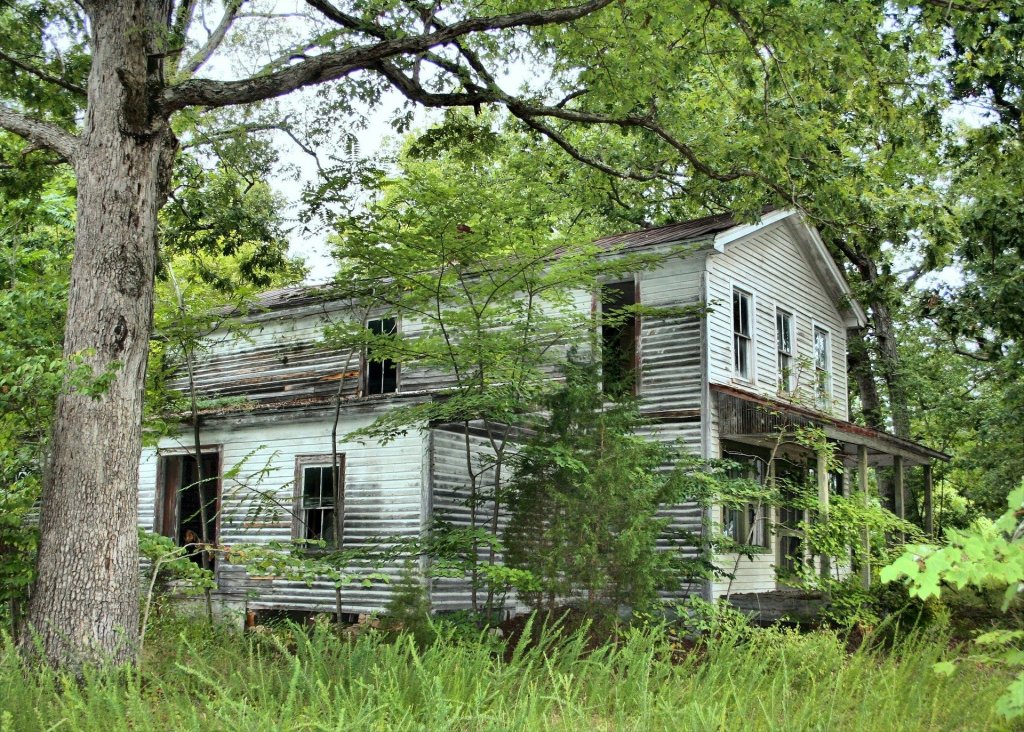
She returned to eavesdrop on her history. Imagine Grandpa’s weathered face, rusted tractor rumbling through fields. Picture Grandma young and spry, aproned in her summer kitchen. Failing roofs, weathered homestead, long empty. But as she left, it whispered, You are our dreams come true.
Written for dVerse, the virtual pub for poets, where today Kim asks us to write a Quadrille (poem of exactly 44 words, sans title) using the word “eavesdropper” or a form of the word.
PHOTOS provided by Andrea Gunderson Frederickson. She was a high school student of mine many many years ago when I taught at Iowa Valley High School in Marengo, Iowa. This is her grandparents’ homestead, just outside of Marengo. Summer kitchens were used to avoid heating up the entire house during the hot and humid summer months.
In these days of Covid-19, when we are tied closer to home, I find more time for reflection. I believe it is an important time to maintain our faith; to believe in the good. Photo taken at dawn, last year in Provincetown on Cape Cod.
Standing in front of the sea, she smiles with moon-kissed lips. I immerse myself, deeper and deeper still. Explore her nautilus curves. Ebb and flow within her wake, then lie still as darkness gives way to light and dawn awakens me.
I lie stilled on deserted beach. Low tide surrounds me, as if the ocean bared its soul. Oh rapturous sleep, I question thee. Was she real, this goddess of the night? Or was she but a siren escaped from far-off craggy coast? Tears flow from my eyes staring up at blushing sky.
Spent am I, splayed out on moist and rippled sand. And then my fingers feel . . . what? Something smooth and cool to touch. A nautilus. I stare at it in wonder. Then slowly, lowered to my lips, my mouth upon its curved edge I whisper hoarsely, I shall return tonight, my love. You are my destiny.
Written for dVerse, the virtual pub for poets, where it’s Tuesday poetics and we are asked to explore erotica in poetry. I like to think of this as romantic rather than erotic. Simply my choice of words. Photo taken last year in Provincetown during a full moon.
We’ve seen firsthand the many faces of Iceland. We’ve soaked in the Blue Lagoon and walked beside hot bubbling fumaroles in the Krysuvik geothermal field. We’ve hiked in her desolate volcanic terrain.
Wearing sturdy hiking boots, using walking sticks for leverage, we climbed to the top of Stora Eldborg, an extinct volcanic crater. At its peak, buffeted by winds, our travel van below was a mere dot. Craters in the distance looked like small molehills. On the descent, our sticks helped take the pressure off our knees.
An hour later, we donned hardhats with headlights; no sticks allowed. Our guide took us to explore a 2,000 year old lava tube. Once a conduit for flowing molten rock, the channel crusted over forming a tunnel which we gingerly entered. We inched over boulders, slid down slabs, and crawled our way through parts of this damp, dark hollowed out place. Our headlights revealed pockmarked, cracked, uneven walls and lavacicles that hung from the ceiling. We came upon misshapen lava pillars impeding forward progress, thus marking our turn-back point. By the time we clambered out of the tube, my body was chilled to the bone and I was exuberant to feel the sun.
earth weathers through all summer’s torrid heat burns land below ground, cold springs
Written for Haibun Monday at dVerse, the virtual pub for poets. Today Frank is our host and asks us to write about a hike, or somehow use the word hike in our post. Photos are from our 2017 visit to Iceland. HAIBUN: 2 or 3 paragraphs of prose, must be true; followed by a haiku.
I should have known. She silked the room, entered with swishing skirts. Eye-lashed me in that coquettish way. Wove words into delights. Spinning wheeled me, unlike any woman I’d ever known. I could not escape her wiles. I skeined under her spell. First hands, then arms, then eyes, then heart. My senses spooled as one, tautly captured in her clutches. She left me, forever specimened. Pushpinned my veins until I was but a dried shell. Once a vibrant man, now locked in despair. I shall never love again.
Written for Meet the Bar at dVerse, the virtual pub for poets from around the globe. Today, Bjorn asks us to “verbify” in our poem. That is, to use a noun, or several, as verbs in our poem. Photo taken a number of years ago at Ricoleta Cemetery in Buenos Aires.
City folk turned country dwellers we weathered through the seasons. First-time home-owners on thirty acres, we rented out our fields. Watched corn and wheat planted, then flourish in hot Iowa sun.
Harvest seasons came and went. Like shapeshifters, acres changed their landscaped views. Plant, tend, reap, rest. We marked off years waiting, hoping for a blooming of our own.
And then, pregnant with expectation we watched my belly grow, just as the wheat and corn grew tall. Similar to mother earth that year, we gave birth, finding sustenance in the fruits of our labor.
And then one bright September day we brought our daughter home. Stood blinking from the sun’s glare holding her up amidst the fields, thankful for new life in this, our season of joy.
Written for Tuesday Poetics at dVerse, the virtual pub for poets across the globe. Today, Rose is guest hosting and titles her prompt “Waiting on Wheat” – asking us to somehow write about wheat within our poem. Photos are from our homestead in Iowa, in 1974. Yep – that’s me with our daughter on the day I came home from the hospital. In those days, it was common to stay in the hospital for 5 days! Even after a normal birth. My how times have changed!The title for the poem comes from Ecclesiastes in the Bible and was also turned into a wonderful song written by Pete Seeger, first recorded in 1959.
Clown me, please. Paint a smile on my face and give me huge clodhoppers. Stomp with me through muck and lies. This bulbous red nose? Not from weeping. It toots raucously – my exclamation point to your inane arguments. Living in this three-ring circus it’s the only way to survive. Clown me, please.
Written for Tuesday Poetics at dVerse, the virtual pub for poets across the globe. Today we’re asked to write a poem that somehow uses the word “clown” or deals with a clown. Image from Pixabay.com.
Would that we all could be
Wynken, Blynken, and Nod,
sailing and bobbing along
on beautiful misty seas.
Snuggled together in our boat
lullaby waves softly lulling,
drifting slowly under the stars
off to the shores of Neverland.
Never the hatred,
never the strife.
Never the sadness
never the Covid-19.
Yes, I’ll be Wynken and you be Blynken,
both with our lids shut tight.
Smile with me and together shall we
nod off to the shores of Neverland.
Sarah is hosting Tuesday Poetics today at dVerse, the virtual pub for poets. She asks us to write about boats. For me, the first thing that came to mind was the poem Wynken, Blynken, and Nod. My mother often read it to me when I was very young….always just before bedtime. The poem was written by American writer and poet, Eugene Field and first published on March 9, 1889. Photo illustration is from the actual book my mother read to me from, Volume One, Poems of Early Childhood, in Childcraft in Fourteen Volumes, published by the Quarrie Corporation, Chicago, in 1947. I’ve obviously also taken liberty with Peter Pan’s Neverland!