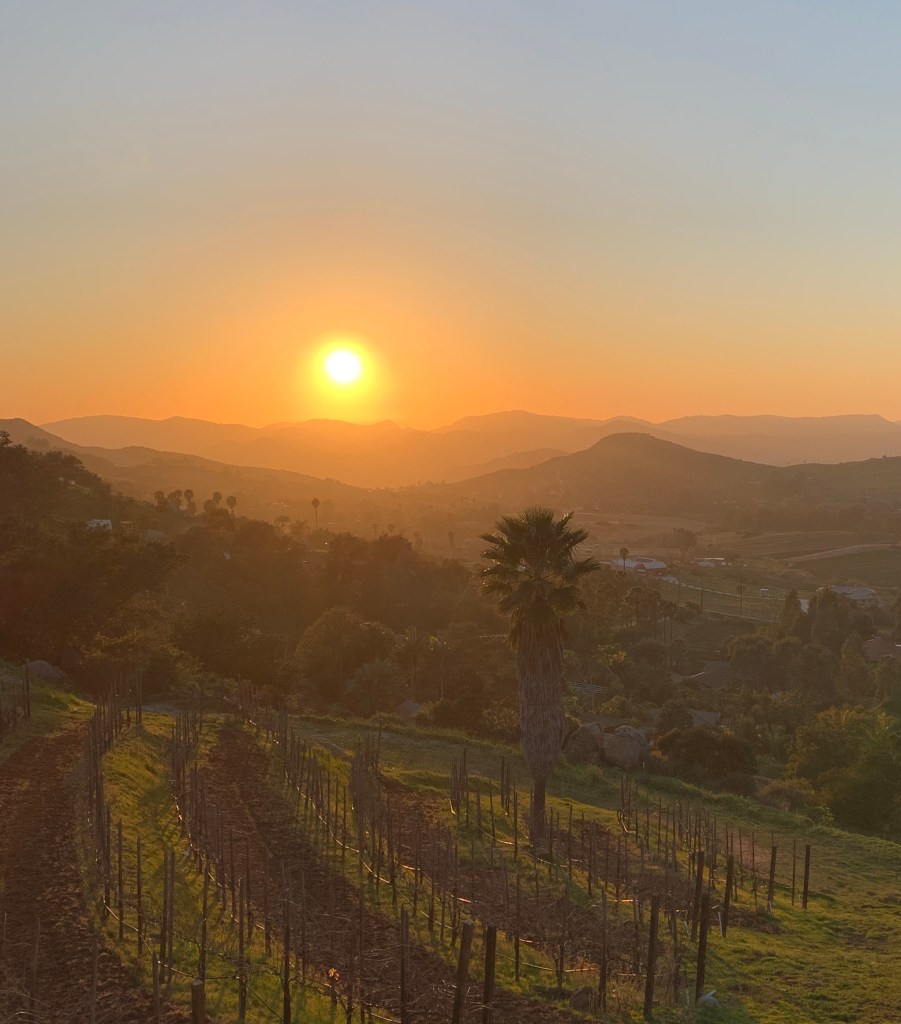
Spire

Suppose I spin
summit rejuvenatement
reverberate insanely
peek into everland
see paradise
enlightenment
stop spinning
rest in peace
irrevocably
stop

Written for dVerse where Bjorn presents us with quite a challenge – to write a poem using the following rules: 1) Select a title of one word containing not more than 3 vowels and 3 consonants. 2) Try to find as many words that are using only the letters in the title. 3) Combine this into a poem of your own. 4) Do not use any punctuation in the poem. The rules comprise a poetic form created by Canadian poet Christian Bök known for his experimental work. “Rejuvenatement” is a word I created when I rejuvenated (never say re-tired).
Image by Merlin Lightpainting from Pixabay

Time for the Truth

We are the baby-boomers, celebratory births
conceived and born after World War II.
We lived in our all white world,
walked to elementary school in Mary Janes
and white lacey ankle socks.

We were the oblivious ones
riding from Chicago to Florida.
Family vacations to grandma’s
excited to buy Orange Blossom eau de cologne
and praline candies at rest stops.

We had no idea Black families
used The Green Book for the same trip.
Dog-eared pages marked “friendly” towns.
Listed cafes, motels, and gas stations
where Negroes were welcome.

We didn’t know anybody named Jim Crow.
As young kids, we blindly sipped
from white-only fountains,
sat where we wanted
at diners along the route.

But we know now, or do we? –
How many of us
have seen or read the children’s book,
Ruth and the Green Book
by Calvin Alexander Ramsey?

How many of us have read
The 1619 Project?
Written by Nikole Hannah-Jones,
winner of the Pulitzer Prize
and a #1 New York Times bestseller.

What are we afraid of?
We may not be Bible readers
but we’ve all heard John 8: 31 and 32.
“The truth will set you free.”
Now is the time the truth be told.


Written for dVerse, the virtual pub for poets around the globe. Today Bjorn is hosting from Stockholm, Sweden and asks us to write a poem in the “collective” voice — we, our.
Given the movement so rampant in parts of the US to ban books, I thought it important to write this poem. If you’ve not read either of the books I mention, they are well worth the read.

Quoting from the Calvin Alexander Ramsey at the end of his book:
“In 1936, an African American living in New York City named Victor Green wrote a book to help black travelers. He made a list of all the hotels, restaurants, gas stations and businesses that would serve African Americans in his city. There was such a high demand for his book that he decided his next edition would include other towns in other states, as well.

The Green Book was sold for a quarter in 1940 at black-owned businesses and at Esso stations, which were among the only gas stations that sold to African Americans. Esso was owned by the Standard Oil Company, which eventually provided funding and offices for Victor Green. The Green Book quickly became very popular and helped many businessmen on the road, as well as the families who needed and wanted to travel by car.


By 1949, the price of the Green Book had grown along with its size – it cost 75 cents and was 80 pages. It covered all the United States, Bermuda, Mexico, and Canada!


In the 1950s and early 1960s, civil rights leaders like Martin Luther King Jr. brought national and international recognition to the injustices suffered by African Americans. Jim Crow’s days were numbered. On July 2, 1964, President Lyndon Johnson signed the Civil Rights Bill into law. Among other things, this act made it illegal for hotels, restaurants, and gas stations to discriminate against customers.

Victor Green published the final edition of the Green Book that same year – 1964.”

Illusive Time

My kaleidoscope memories,
colorful because they feature you and me.
Time before you
sepia toned, indistinct.

Like a deeply embedded sliver
tender to the touch,
fear festers
as you sleep beside me.

I need
longer days
and many many more,
to continue being us.


Written for dVerse where today it’s Quadrille Monday. Kim is hosting and asks us to include the word “sliver” in our poem of exactly 44 words, sans title.

Image by Dmitri Posudin from Pixabay

. . . for Char . . .

Music, when soft voices die,
Vibrates in the memory –
Percy Bysshe Shelley, English Romantic Poet (1792 – 1822)

People say, watching someone transition
from all knowing, to sporadic dementia,
to full blown Alzheimer’s,
is like watching someone disappear.
It seems to me,
there could be another perspective . . .

She saw our bodies, our faces.
But in her eyes, we were shadows.
In the beginning of the end
the mist would eventually lift.
She’d remember our names,
laugh with us as we reminisced.

But the veil fell and we lost her,
and she lost us.
We no longer existed in her world.
But the music . . . sweet notes, harmony,
songs she loved.
These she kept in her heart.

Some days, we’d find her singing.
Her voice clear and strong.
Her face animated.
We dared not interrupt
lest she stop
and simply stare confused.

She’s gone now, gone from this earth.
In her last days of lying still,
eyes closed, lights dimmed,
unaware of nurses nearby
or family by her side,
occasionally she’d smile.

I have no doubt
angels were hovering nearby,
humming a lullaby only she could hear.

Written for dVerse, the virtual pub for poets around the globe. Today is Tuesday Poetics and Merril asks us to write a poem about a transition in time we may have experienced or that we’ve thought about. She provides the poetry lines from Percy Bysshe Shelley at the top of my poem, as a bit of inspiration. They made me think about the lasting power of music for those who, for example, suffer from dementia and Alzheimer’s disease.

I was reminded of Tony Bennett’s last concert with Lady Gaga, when he was suffering from Alzheimer’s. He had trouble remembering many things but as soon as he heard the music of the standby songs he sang and loved for so many years, and was in front of the audience, all the music came back to him. The YouTube video is of him singing at that last concert.

On a more personal note, I learned several days ago that an old college friend of mine recently died. We were sorority sisters and she sang in our college choir and for all these years, in her church choir. Like Tony Bennett, I know from last year’s Christmas letter from her husband, that although her memory problems were increasing, she was still singing in her church choir. At her funeral, which I was able to watch in a recording, the pastor said her life was a song….and he had no doubt, God was singing a lullaby to her in her final days.

** the scene within the poem is fictional


In the Style of Amber Rose Tamblyn

When I think of aging
visions of nature appear poetically,
ready to be written across the page.
But my hand tremor sets script askew,
not unlike a preschooler’s
first attempt at printing their name.

——–

Bright pink ruffled peony
once perkily perched,
quite the showy thing
gleaming amongst greenery.
Now droops beneath residue
of last night’s fierce thunderstorm,
struggles to hold its bloom.

Newborn foal,
gangly tries to gain its footing.
Youthfully romps through fields
colored riotously in wildflowers.
Years later, put to pasture.
Stands swaying slightly,
head down, eyes clouded,
wildflowers a dull blur.

And I myself, mark changes in my body.
Steps slow and sometimes falter,
veins protrude on hands.
News comes
of friends facing grave illness,
friends who leave this earth.
I reflect more and more
on what was, and what is,
and what is to come.

Perennials dance in spring’s fresh air,
stand proudly through their season.
Then wilting, lie down to disintegrate
beneath winter’s winds and snow.
But their seed is strong.
The next generation takes their place,
for they are perennials
and their beauty continues.


Written for Tuesday Poetics at dVerse, the virtual pub for poets around the globe. Today, dear friend Sanaa is hosting. She asks us to write in the style of Amber Rose Tamblyn, an American actress, author, poet, and film director. Sanaa tells us Tamblyn’s “poetry is incredibly unique and descriptive. When asked where the power lies when it comes to writing, Amber Rose answered, ‘when it makes you feel every human emotion all at once.’” Sanaa asks us to create visuals in our poem and “aim to explore the human condition.”

Image by Tabea on Pixabay.com

An Alternate Reality

Take my hand. Travel with me
through starry starry nights
to a new place not yet discovered.
Not yet befouled by humanity,
but still palpable in its existence.

Happiness, serenity, joy,
jubilation, celebration, exuberance
good works and caring,
and most importantly,
optimism shall color this world.

All peoples dwelling here
shall live within the light.
None shall be unseen, unheard,
besmirched, assigned to the shadows.
If I were to paint this place . . .

it would be spills of pastels
and primary hues
beginning at the bottom of the canvas
and rising until they meld
into a crescendo of love.

If you take my hand this day,
this hour
this moment
to embark upon this journey,
might others join our endeavor?

Can it only be achieved on a small scale,
two people within a cocoon?

Or can we gather together
creative spirits of master artists
from centuries past?
Might they join today’s artists
and somehow . . .

paint our dreams into a reality . . .
into a place of life
and joy and hope
for you and me . . .
and for the many.

Written for dVerse, the virtual pub for poets around the globe.

I’m hosting OLN LIVE at dVerse on Thursday from 3 to 4 PM EST and again on Saturday from 10 to 11 AM EST.

It’s an opportunity to join us via video and audio, to read a poem of your choice and listen as others do the same. OR, just come to sit in if you prefer.

Go to https://dversepoets.com beginning at 3 PM Thursday, EST, and you’ll find a link for Thursday’s LIVE session and one for Saturday – just click on the link and you’ll be with us LIVE!

Image is of course, Starry Starry Night by Vincent Van Gogh and is in public domain.

You Became My Constant

I was not there, the day everything changed.
When was that? When World War II ended?
When Einstein discovered relativity?
When nine-eleven crashed into infamy?

Or when Harry really met Sally?
Or when you simply ate a peach that summer day,
juice deliciously dripping down your tanned wrist.
Somewhere at that moment, I suppose a child was born.

Truth is, everything changes
with every breath we take.
Every pivot, every spin, every loping run,
something new becomes.

Nothing stands still. Except perhaps
sentinel mountains in the Norwegian fjords.
Yet even they are marred by subtle granular shifts
as we gaze up at their rugged rockface surface.

Like when we turned around
and our children became adults.
We noticed when their braces came off that summer,
but we didn’t register the daily shifts.

I don’t understand my image in the mirror.
I know it’s me. But how did it become . . . that?
Wasn’t it just yesterday, I was a brunette
and you introduced yourself to me?

Fifty-seven years later, we walk more slowly,
still hand in hand more often than not.
We’ve passed through so many seasons together,
the path is now longer behind than in front.

And so my love, in this moment
that shall also pass by all too quickly,
I simply must tell you.
I am thankful for every day.
I am thankful for you.

Written to share with dVerse, the virtual pub for poets around the globe.

Saturday, March 18, dVerse will go LIVE with audio and video from 10 to 11 AM EST.

Folks from across the globe will meet face-to-face via Google Meet to read a poem of their choosing, and to visit across the miles.

Click here between 10 and 11 AM Boston time on Saturday, March 18th to join us — you’ll find an easy link that will open in your browser so you can meet everyone. Be sure to click on the SATURDAY link. Come and read a poem of your own OR just watch and listen. We’re a friendly goup and the more the merrier!

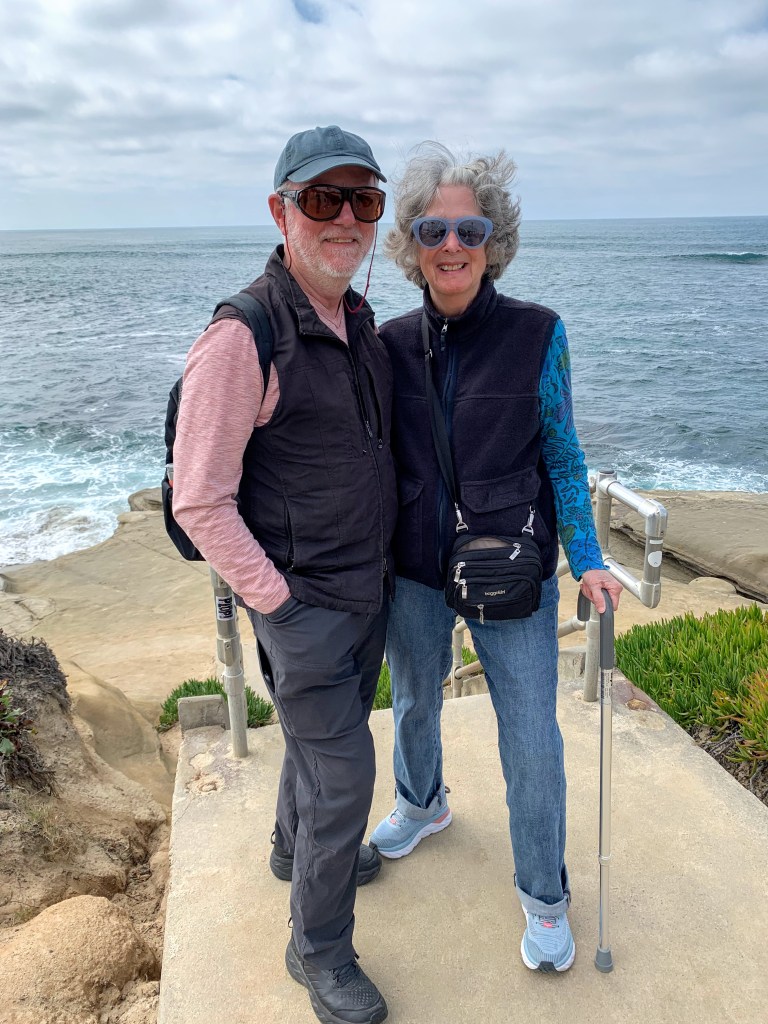
Photos: That’s George, the love of my life, and I our freshman year in college – many many years ago. Second photo is of us this past summer.

Seaside Frolic

Sun beams broadly,
watches innocence frolic
on Cape Cod shores.

Arms akimbo,
children leap
through shallow waves.

Water splashes,
tickles skipping, kicking feet.
Laughter punctuates the scene.

If I could, I would capture this joy.
Carry it in a bottle with perforated lid
and sprinkle it on the world at will.


Written for Tuesday Poetics at dVerse, the virtual pub for poets around the globe. Today Lisa tells us it’s time to play at dVerse!

Photo at Provincetown; our grandchildren many years ago.

Haiku for Glenn

You’re skywriting now,
in stardust and bright moonbeams.
Still, we’ll miss you here.

Glenn Buttkus. Jun 14, 1944 – February 17, 2023.

Born in Seattle, Washington in 1944, he was a movie buff and an amateur thespian through high school, community theater, and college productions. He was accepted into the U of W’s BFA Professional Actor’s Training Program in 1970, then in its third year of existence. He worked in Regional Theatre in the Northwest for a few years, and then relocated to Los Angeles. In 1977, he took a job at an agency for the blind that was located near Hollywood, and he found a new love: special education. He returned to college, getting his MA in Education and worked with blind people for thirty years. (from m.imdb.com)

Glenn was a frequent contributor to dVerse and other online venues. His was a powerful voice at our OLN LIVE sessions. He is already missed.

Image clipped from his last appearance at OLN LIVE.

Who needs a rosary?

Rosary tied to box spring
beneath where my father slept.
God, have mercy on him.
He did not worship You,
but lived You in relationships.

I was taught Papal invincibility
as priests preyed on youth.
They forgave others
behind confessional screens,
required rosaries for penance.

My father,
God rest his soul,
more a father than them.
He didn’t need a rosary,
but many of them did.


Explanation: When I was away in college, I received a phone call from my mother. They’d just had a new mattress and box spring set delivered. And the strangest thing, she said. When they went to remove the old box spring, they found a rosary entwined in the bottom of it. Did I have any idea why it was there?

And then I remembered. When I was in Catholic grade school, learning my catechism, I feared my father wouldn’t go to heaven because he didn’t go to church and he wasn’t a Catholic. So I sneaked into my parents’ bedroom, crawled under their bed and tied a rosary to the boxed spring, on the side of the bed my father slept on. Imagine the indoctrination that happened to make me think that and go to that extreme to save him. I was probably in third or fourth grade when I did this. I just couldn’t understand, I suppose, how such a good man as my father, wouldn’t be allowed in heaven.

Image by Richard Revel from Pixabay