Teaching skills. Helping. Watching. Too soon the dividing line appeared, between the now and what was coming.
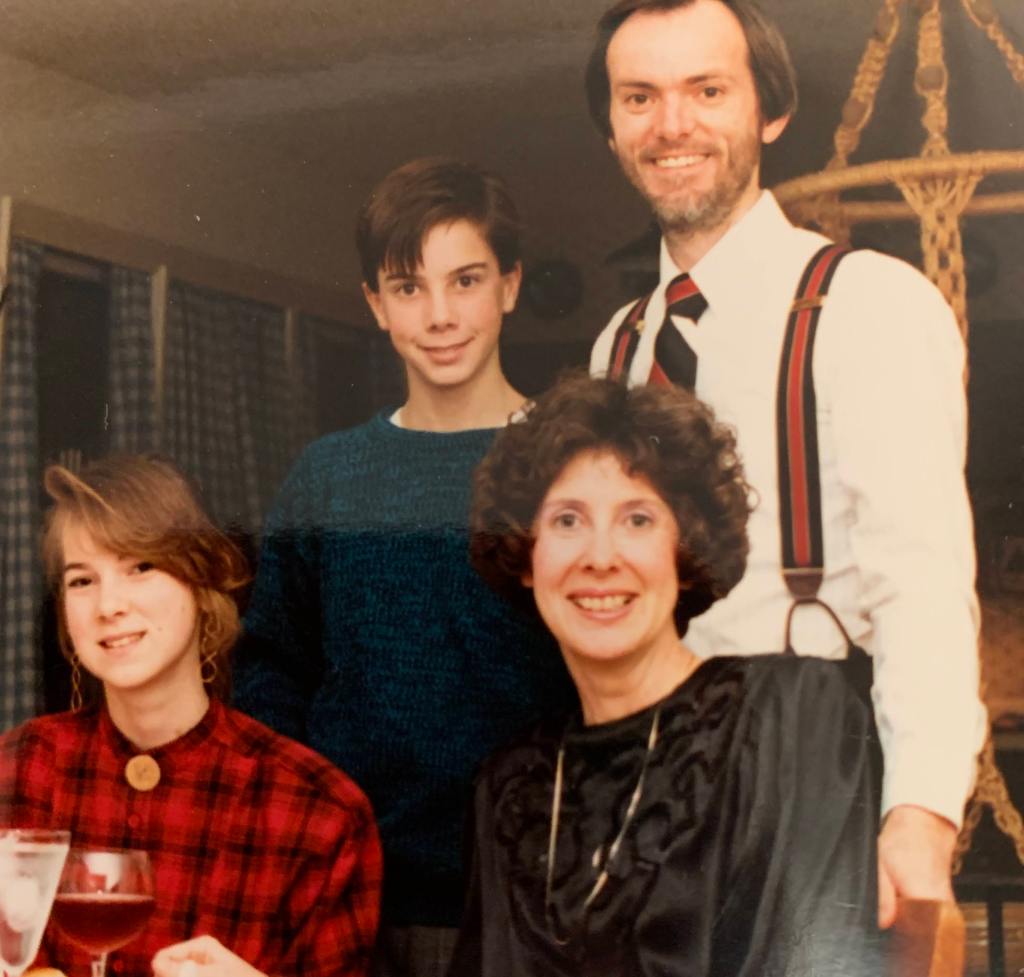
Responsibilities increased. Yours not ours. Your departures, more frequent, measured at first in hours, not miles.
Your wings. Expected, prepared for. We marveled and smiled. Waved at you . . . and then you were gone.
Distance multiplied. Time stretched separations. Hairline fractures of the heart, smiling our love through goodbyes.
Parenting children to adulthood. Learning to live through changing times, adjusting to the moving margins.
Written for dVerse, the virtual pub for poets around the globe. Today Dora asks us to write about a poem that somehow talks about margins. She gives many examples of margins. As a septuagenarian with two happily married children and five grandchildren, I thought about living through moving margins as a parent and thus, this poem.
. . . ‘tis a holiday when spring rains refresh the fields when a babe is born into a family of love when a home is infused with the aroma of freshly baked bread when a child chalks a sidewalk hopscotch when peach nectar dribbles down your chin when calloused hands are clasped in repose while the body sits relaxed, belly full, mind at ease. There is a positive sense to the word, most especially when you believe one moment in time can be a holiday if we make it so.
Written for Open Link Night at dVerse, the virtual pub for poets around the globe. I’m hosting the pub today. Folks are free to post any one poem of their choosing, OR write to the optional prompt: create a poem that includes the word “holiday” in the body of the poem. Image from Pixabay.com
NOTE: dVerse will be LIVE on Saturday, December 14, from 10 to 11 AM New York time.Click here to find the embedded link that will take you to the LIVE session (audio and video). You’re invited to read a poem of your choosing or just sit in and listen. The more the merrier!
I promise, she shyly whispered, to only stomp in mud puddles when the grumbles grab me. To weave daisy chains when the nervous-nellies strike. To concentrate on blessings like tulips, birch trees, snow flakes, puppies, and sweet juicy peaches. And her guardian angel smiled.
It’s Quadrille Monday at dVerse today, the virtual pub for poets around the globe. As pubtender for the day, I’m asking folks to include the word “promise” in the body of their poem of exactly 44 words, sans title. They may use a form of the word “promise” but a synonym will not suffice. Stop by and see what folks are writing about – I promise you’ll enjoy! Image by ymyphoto from Pixabay
“No man ever steps in the same river twice, for it’s not the same river and he’s not the same man.” Heraclitus
Some years back we found ourselves near the town I grew up in – Waukegan, Illinois. I’d not been there in decades. We decided to take a detour in our planned trip and drive by some of my old haunts.
Sadly, the house I lived in for my first nine years was in a state of disrepair. Rickety porch steps, missing shingles. My mother’s beloved lilac bushes were no more. The downtown where I’d “scooped the loop” in the front seat of an old Chevy was barely recognizable. Not one store name was the same. Most jarring was my walk through the Catholic church I grew up in. How could it be so small? I remembered lighting candles inside a hushed space – a side grotto/cavern made of dark rock. There I stood, inside the grotto, looking at battery operated candles and grey plastic simulated stone walls. After lighting a candle and saying a small prayer for my mother, I decided to end our nostalgic tour. I wanted to keep the rest of my memories intact.
stream rushes surely rocks tumble and change their shape nothing stays as is
Frank is hosting Haibun Monday at dVerse, the virtual pub for poets around the globe. His prompt for today is to “imbue our haibun with mono no aware. Write on any topic that you like as long as your haibun embodies that wistful sadness marking the beauty of transience.” A haibun combines prose and a haiku.Image is a photo I took some years back on one of our vacations.
So many questions I could ask myself. Why this? Why that? Why then? Why now? Why not? Why me?
But those sound too much like regrets. I choose to live my life without regrets.
Regrets indicate a desire for change in the past. One change a ripple makes and then,
life would be different somewhere along the path. Life would be different now. I like my now.
Written for day 25 of NaPoWriMo where the prompt is to “write a poem based on the “Proust Questionnaire,” a set of questions drawn from Victorian-era parlor games, and adapted by modern interviewers. You could choose to answer the whole questionnaire, and then write a poem based on your answers, answer just a few, or just write a poem that’s based on the questions.”
The future is beginning now. When I arrive, I am what was missing before.
Tomorrow always becomes a yesterday. My past was once unknown to me.
Time is after all, a glutton. Best to concentrate on the moment, every time it comes.
Written for NaPoWriMo day 24.
The prompt is to “write a poem that begins with a line from another poem (not necessarily the first one), but then goes elsewhere with it.” “The future is beginning now” is from Mark Strand’s poem, The Babies, published in his Collected Poemspublished by Alfred A. Knopf in 2015. He is a former Poet Laureate of the United States and a Pulitzer Prize winner. Image is from Pixabay.com
Living my life as a perennial? Lily of the valley, that would be me. Closest to forever I ever would be.
Lily of the valley, that would be me, planted beneath our family tree. I ever would be blooming and seeing generations to come.
Planted beneath our family tree. Closest to forever, blooming and seeing generations to come, living my life as a perennial.
Written to fulfill the prompts for for day 18 of NaPoWriMoand for Meet the Bar Thursday at dVerse the virtual pub for poets around the globe.
Prompt for NaPoWriMo today is to write a poem where “the speaker expresses the desire to be someone or something else and explains why.”
Prompt for dVerse today is to write a Pantoum: a poem of any length written in quatrains and using the prescribed line directions below: Line 1 Line 2 Line 3 Line 4
Line 5 (repeat of line 2) Line 6 Line 7 (repeat of line 4) Line 8
Last stanza: Line 2 of previous stanza Line 3 of first stanza Line 4 of previous stanza Line 1 of first stanza
When I was very young time meant having fun. The road ahead of me . . . well I couldn’t see the end much less fathom the turns, detours, or optional routes in the long journey to come.
A septuagenarian now, closer to eighty than seventy, my memories are glued in scrapbooks. From early marriage days to birthdays and holidays, newspaper clippings, and recital programs.
Wedding albums, birth announcements. Photo albums filled with tent-camping vacations, early grandparenting days, family reunions, scenery shots from cruising days.
There is no doubt about it, time is a glutton. It eats up seconds, months, and precious years. But if we could stop it, collect special events, and put them in a bottle, the question is, at what point would we do that?
What would be the ripple effect? Which moments might be lost, what aspects of human development might be missed in that stutter moment between stopping the clock and starting it again? Can we really judge what is significant enough to stop everyone’s else’s world to save our own?
And just as important to consider, how many bottles would we need?
Written for NaPoWriMo day 17 where the prompt today is to choose a song, and write a poem whose title is the name of the song. Time in a Bottle was made popular by Jim Croce.
What if every dawn illuminated hope? What if every house was a home? What if words had only positive meanings? What if gross only meant twelve dozen? What if thirst only happened to plants? What if everyone holding hands produced a circle of love? What if politicians had no power over a woman’s womb? What if simple soap and water could eliminate prejudice? What if war was only a card game? What if every dawn illuminated peace?
Written for NaPoWriMo day 14. The prompt is to write an anaphora: a poem of 10 lines where each line begins with the same word. Photo is from Cape Cod some years ago.
Namrah soared through night skies, finding his way back to the Pepperdine home. He’d not returned for many years. He’d spent that time in Europe, delighting so many children, guiding them through star dust fields until they grew beyond what adults called their pretend years.
Namrah is not an imagined creature. He appears at night, silver wings softly flapping, golden beak tapping upon a child’s window. He hums softly, the reverse of a lullaby tune, waking them from the deepest of sleeps. They climb upon his back, fingers entwined in crimson feathers, flying past Venus into the glorious galaxy. Namrah tells them wondrous tales and listens to their dreams.
Once the elders agreed Namrah was ready to join the fleet, Jarrad Pepperdine had been his first assignment. He remembered Jarrad’s soft brown eyes, opened wide as they flew. The whispered secrets he’d shared and how carefully he listened. His job was to instill everlasting wonder and hope in children, understanding that far too soon, they would inevitably part. Tonight, Namrah breaks every rule he agreed to long ago, returning to the Pepperdine’s street, hoping for a glimpse, if not a visit, with Jarrad, the adult.
Written for Day 12 of NaPoWriMo where the prompt today is to “write a poem that plays with the idea of a “tall tale.” American tall tales feature larger-than-life characters like Paul Bunyan (who is literally larger than life), Bulltop Stormalong (also gigantic), and Pecos Bill (apparently normal-sized, but he doesn’t let it slow him down). If you’d like to see a modern poetic take on the tall tale, try Jennifer L. Knox’s hilarious poem, “Burt Reynolds FAQ.” Your poem can revolve around a mythical character, one you make up entirely, or add fantastical elements into a real person’s biography.”
Namrah is a wonderful creature I wrote about frequently in the early days of this blog. Go to the search function on this page and plug in the word Namrah and you’ll find some very early poems about this wonderful imaginary friend. Have not written about him in many years so very fun to revisit him.







 lillian the home poet