Herd-like, glistening wet black bodies lift, hover low then soar. Migration has begun.
Written for dVerse, the virtual pub for poets around the globe. Today De is hosting Quadrille Monday, asking us to include the word “lift” in our poem of exactly 44 words, sans title.
Video filmed several years ago from the deck of our annual rental in Provincetown, at the very tip of Cape Cod. Amazing to see….many more and much louder ruckus than you hear and see with the video!
Fly with me, my love, once more into the skies to sail upon the seas. Far away lands, new tastes and sounds. Kisses iced with salty breezes, dessert to cap our days. When sun’s warmth wanes, stars will glisten above the wake. Through all our travels when I am with you, I am home.
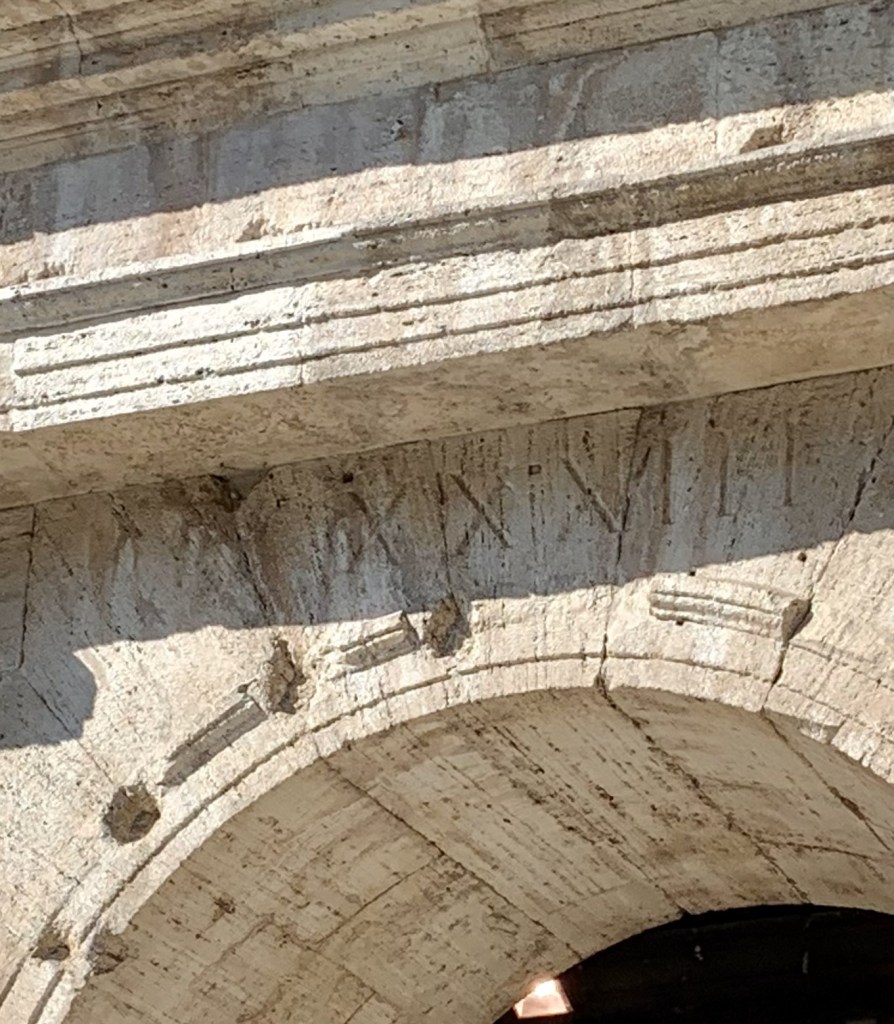
Excited citizens rush through archway thirty-three. They take their seats on marble slabs, cool to the touch this sweltering summer day. Lions roar. Giant bear paws rattle cages. Slaves strain, work a pulley system, lifting up beasts on stone slabs. Trap doors open. The crowd gasps, then screams approval. Eighty thousand men lusting to see lion against tiger, grizzly bear against bear, or prisoner against beast. These to-the-death spectacles, the opening acts.
Last bout of the day, stirs the crowd to mad frenzy. Two gladiators trained to fight, slaves by night, warriors by day. They leave their training complex across the road, make their way through dark, dank tunnels connected to the Colosseum. One a slave with wealthy master, fights to earn his freedom, bout by bout. The other slave, a wealthy man’s business investment, simply tries to stay alive.
Entering the arena, they pause, adjust to glaring sun. The adjudicator signals and the battle begins. When deep wounds pore blood and exhaustion sets in, one man is declared a winner. Both barely alive, they are carted off the field as the crowd roars its approval. Back across the road, medical treatment given, they collapse in their cells. Crowds file out of the Colosseum. A day’s respite with excellent entertainment. Who can ask for anything more?
Written for dVerse, the virtual pub for poets around the globe, where it was Open Link Night on Thursday, August 24. I’m a day late posting. BUT, it’s also Open Link Night LIVE, coming up on Saturday, August 26th from 10 to 11 AM EST. Hope you can join us! You’ll find the link to on the dVerse home page,HERE!
We already had OLN LIVE on Thursday and had folks from Sweden, the UK, Jerusalem, Pakistan, Michigan, Iowa, Vermont, New Jersey; Portland, Oregon, Missouri, Washington, and Trinidad Tobago reading a poem of theirs aloud, and chatting with each other. We’re a friendly and appreciative bunch! So do join us on Saturday if you can!
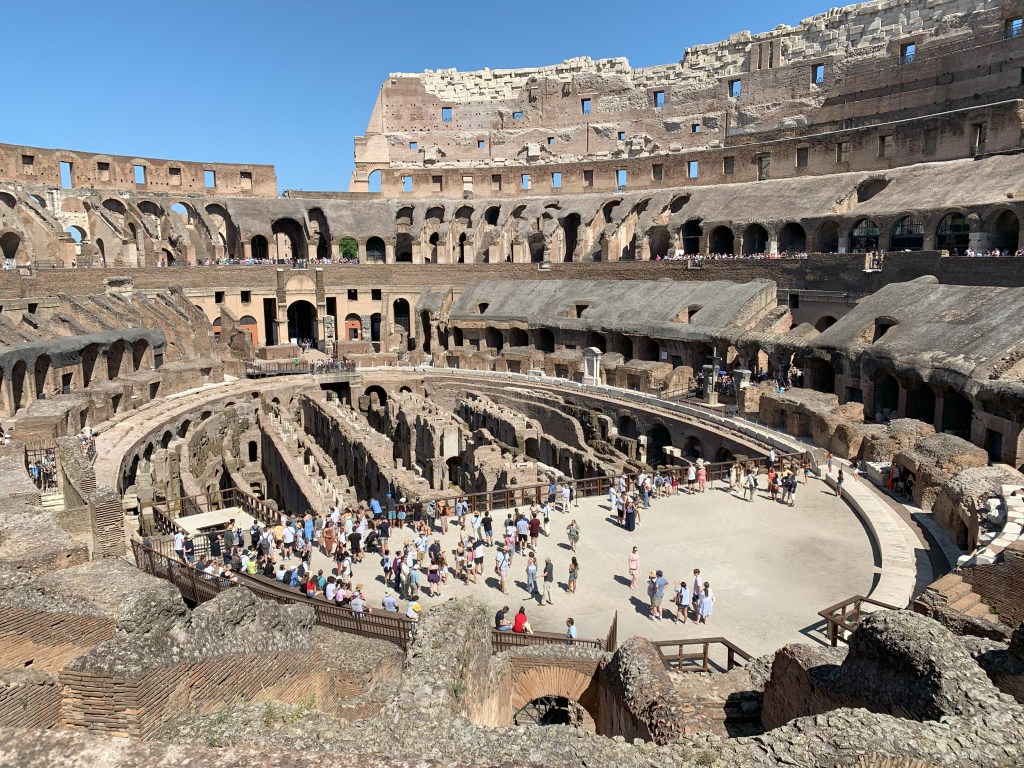
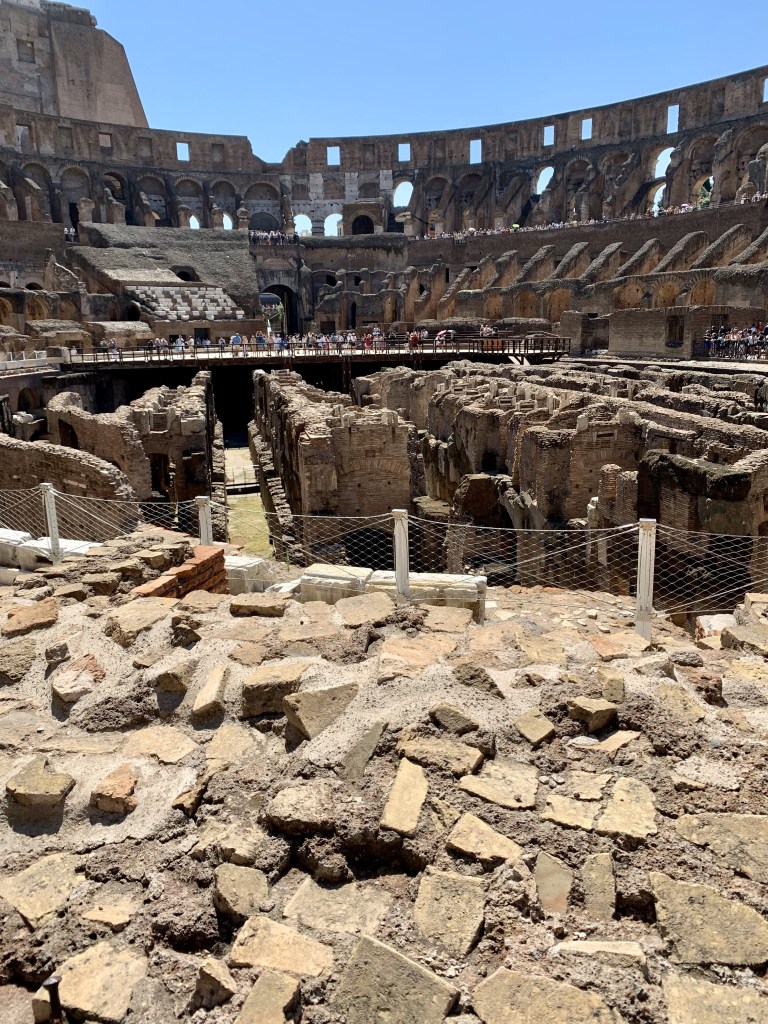
Yes, these are PHOTOS from July when we were on our month-long trip. First stop was Rome and its antiquities. We had a day’s tour with an archeologist which began with an extensive visit to the Colosseum. Everything I’ve written about here is what it was like back in the day! And yes, you can still see the original XXXIII on the archway where folks who had seats in this area entered. The photo bottom left shows part of the floor rebuilt, and you can see the circular shape with the tiers of seats. Photo bottom right shows the partitioned off “rooms” or “cells” where the animals were kept. And yes, there were trap doors in the floor and animals were raised up to suddenly appear on the colosseum floor. It turns out that animal to animal fights were always to the death of at least one animal. Animal to prisoner would most likely end in death to the prisoner. But the real gladiators, unlike in the movies, who fought here, never fought to the death. There was an adjudicator who called the contest and named a winner. The gladiators were actually slaves and had a “school” literally across the road from the colosseum where they trained by day and were locked in their cells by night. As slaves, they were a business investment, owned by wealthy people. When you learn that, you understand why they didn’t fight to the death. Some slaves had the opportunity to earn their freedome by winning X number of battles. Sometimes they managed to do that, but not often. An incredible place to see.Construction on the Colosseum, the largest amphitheater ever built, began in 72AD and was completed in 80 AD. It held 50 to 80,000 people. And there was indeed a “gladiator school” across the road. There was daily entertainment here, provided to the citizens free of charge, and sponsored by the Emperor.
There are moments in life standing in the glory of nature when I’ve been awestruck.
Humbled by her magnificence at the Grand Canyon, Norwegian fjords, and Mount Fuji.
And once, under whispering tall pines, I felt the sun’s rays of grace shine upon me.
Written for Quadrille Monday at dVerse, the virtual pub for poets around the globe. Today De asks us to use the word “pine” or a form of the word, in our poem of exactly 44 words, sans title.
Yes, in our travels we’ve been to the magnificent Grand Canyon, the Norwegian Fjords, and to Japan where we saw Mount Fuji. Photo is from about ten years ago when we were camping with our children and their children, in Mount Rainier National Park.
Walk down with me, into this dark ancient place. Sixth century engineering feat. Wander round three hundred thirty-six columns, sentinels to Constantinople’s water supply. Discover Medusa’s inverted head carved into marble base. Outside, sun blazes. Istanbul’s teeming streets jolt us back to present time.
Written for dVerse, the virtual pub for poets around the globe. Today we’re to use the word “water” within the body of a quadrille: a poem of exactly 44 words sans title.
I’m home again and back to writing after a month’s hiatus, traveling the Mediterranean on three back-to-back-to-back cruises with two overnights in Istanbul, Turkey. I’d been to Istanbul a number of times with my job before I rejuvenated in December 2012 (never say re-tired). It was a thrill to finally share Istanbul with my husband.
Istanbul’s Basilica Cistern was built in 532 AD, during the reign of Byzantine Emperor Justinian. It is slightly west of the Hagia Sophia and literally down the street from the old hotel I used to stay at during my sojourns in Istanbul. According to ancient texts, seven thousand slaves were involved in building the cistern. Many of its columns were salvaged from ruined temples. It provided a water filtration system for the Topkapi Palace and other buildings on First Hill in Constantinople. After the Ottoman conquest in 1453, Constantinople became Istanbul. Locals drew water from the cistern until 1565. The Cistern was featured in the 1963 James Bond movie, From Russia With Love, where it was fictionally located under the Soviet Consulate.
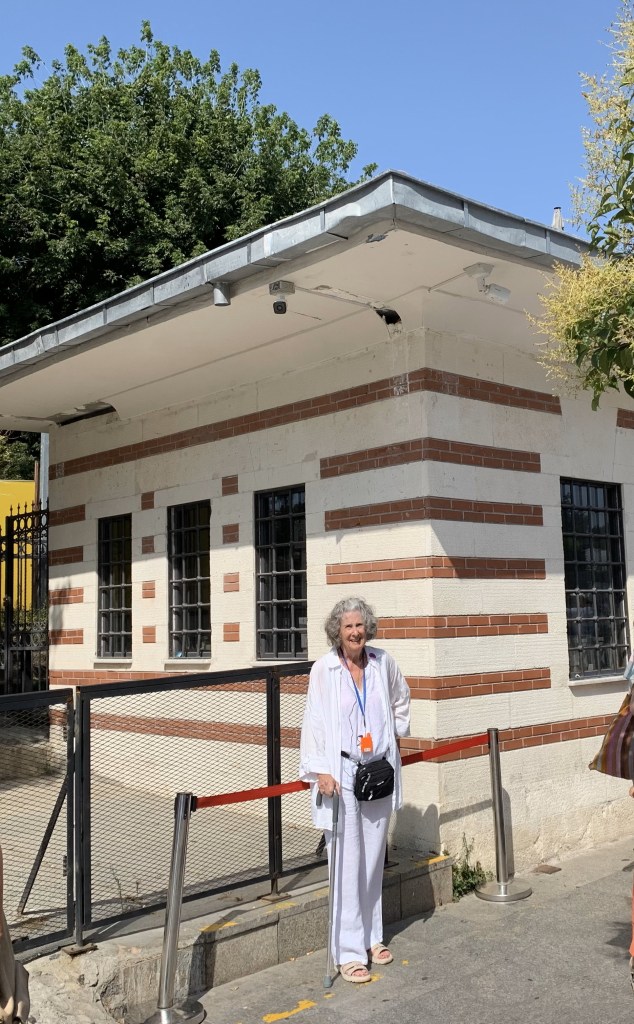
All photos from our visit there last week. Last one shows me standing outside the bland entrance to the Cistern.
I sit in darkness, blanket-wrapped against damp chill. Squawking gulls pierce my quiet, spar over fish carcass washed ashore. Dawn will present herself shortly, streak sky angry crimson-orange or smudge it gently in soft puffs of pastel pink. How will she start my day?
Written for Quadrille Monday at dVerse, the virtual pub for poets around the globe. Today I’m hosting and ask writers to include the word “present” or a form of the word, in the body of their quadrille, a poem of exactly 44 words sans title.
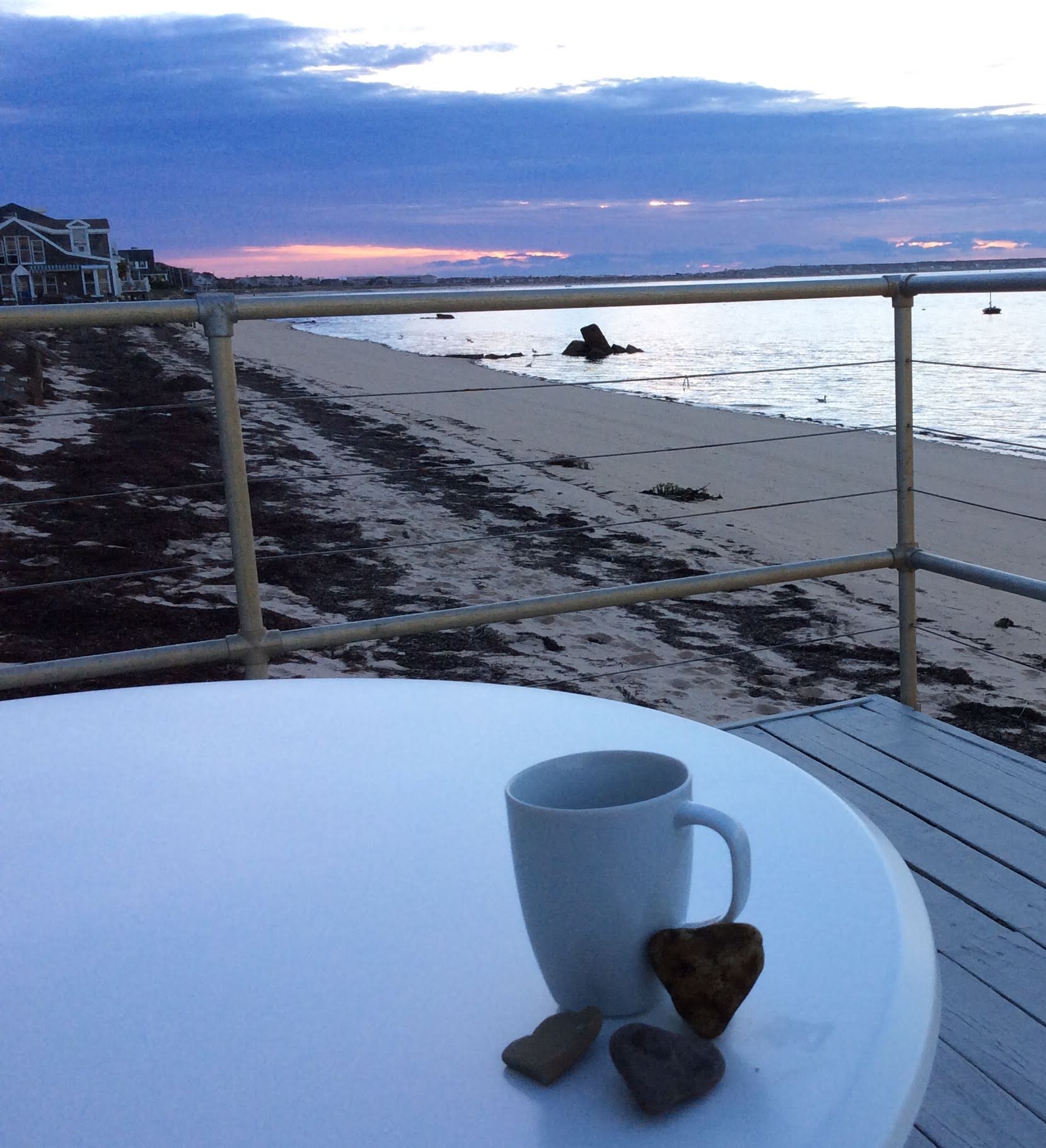
Photo taken at dawn in Cape Cod’s Provincetown some years ago.We treasure our annual two-week visit to Ptown. I often wrap up in a blanket on the deck, in that chilly dark time before the sun rises, hold a coffee cup in my hands to stay warm, and watch the day dawn over the ocean.
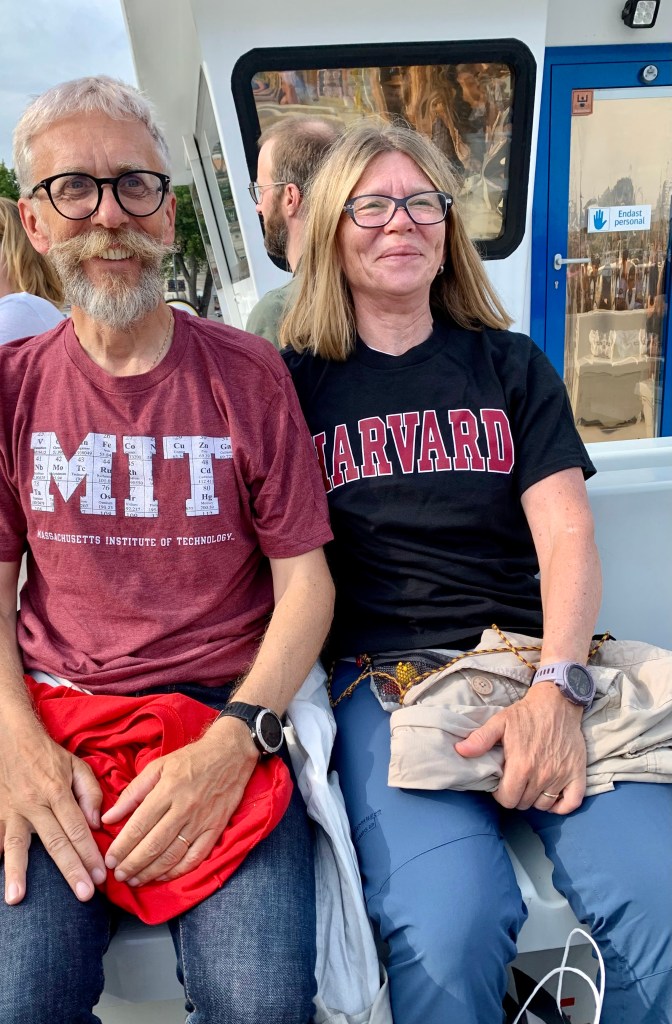
I’ve know Bjorn on dVerse for six+ years and finally got to meet him in Stockholm last week during our Best of Scandinavia cruise. He and Lotta were indeed the best of Scandinavia! They showed us the city from an insider’s perspective. We especially enjoyed walking through quiet streets and neighborhoods and going to a small restaurant filled with locals, for a truly Swedish lunch!
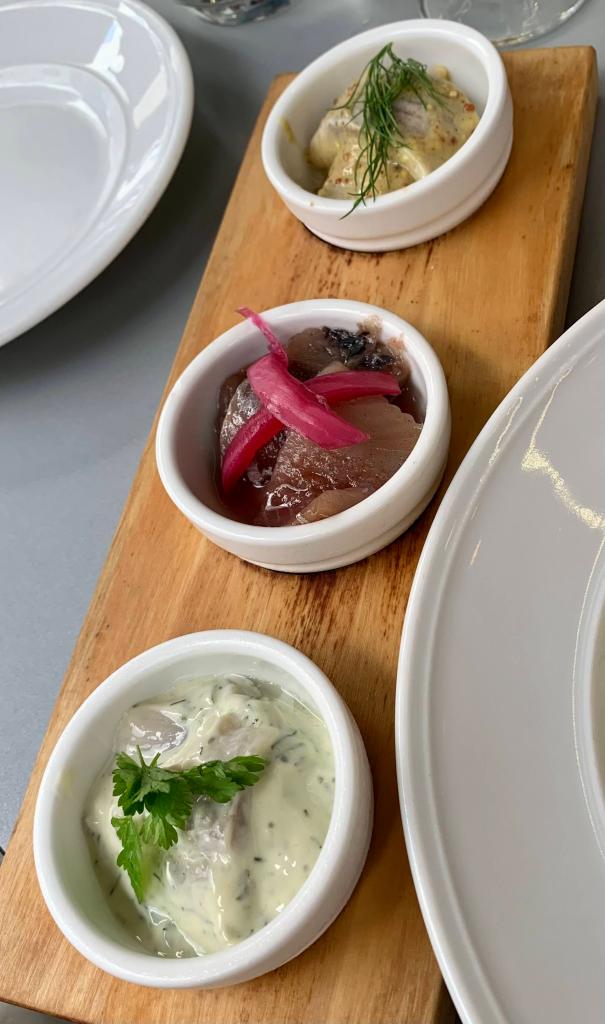
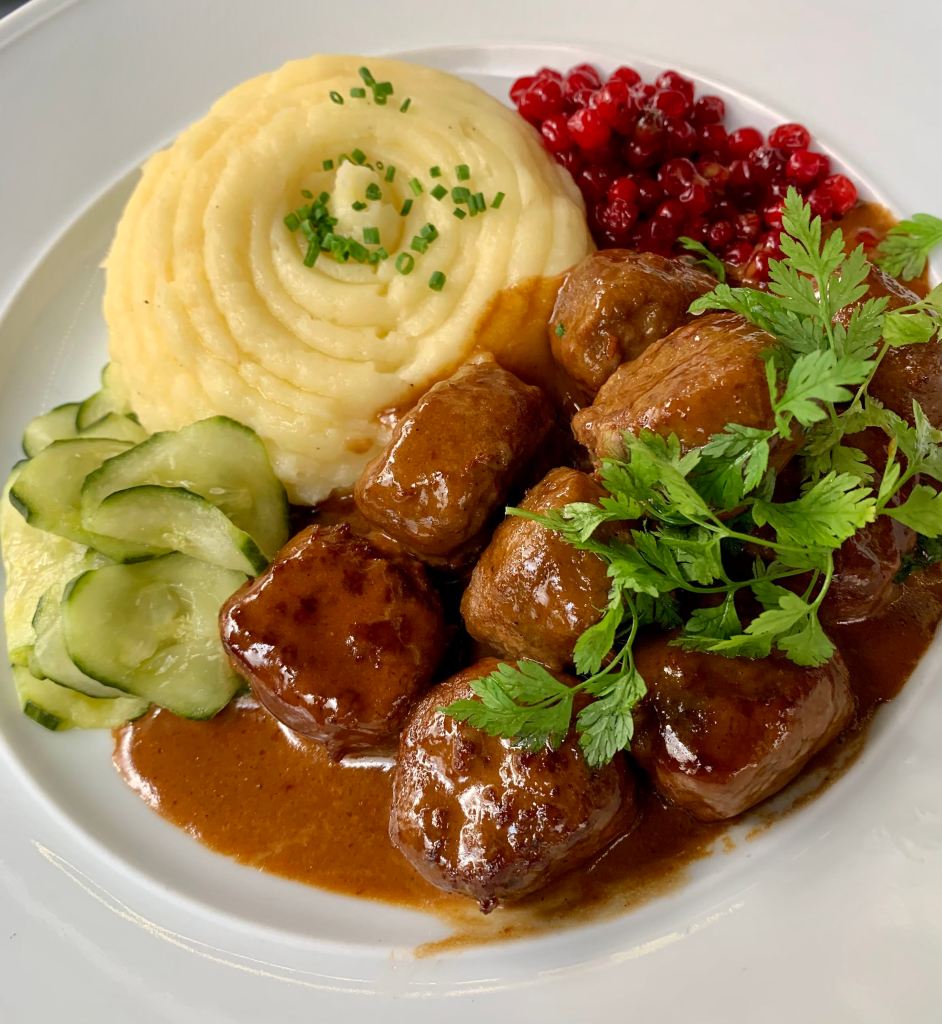
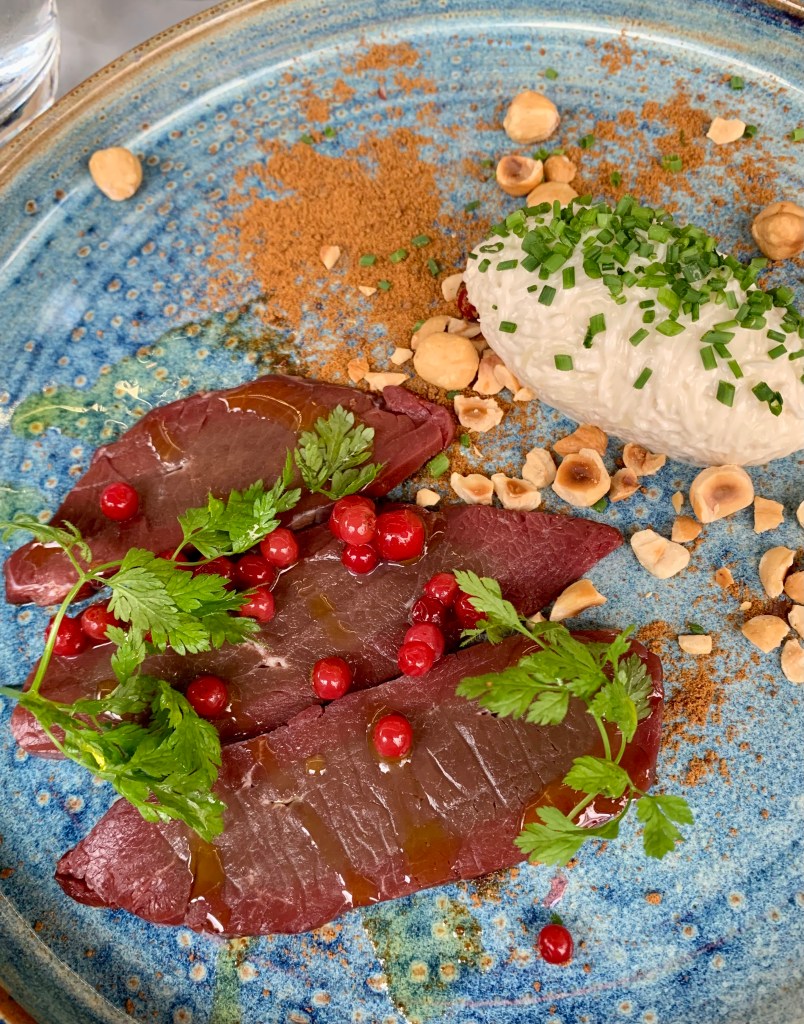
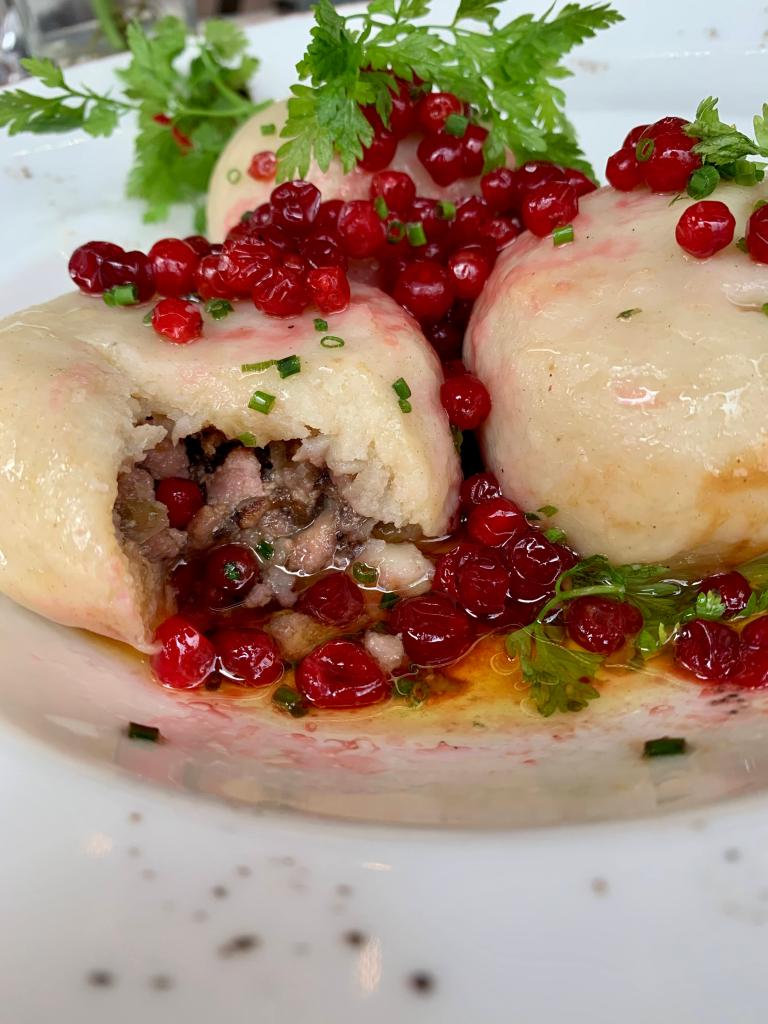
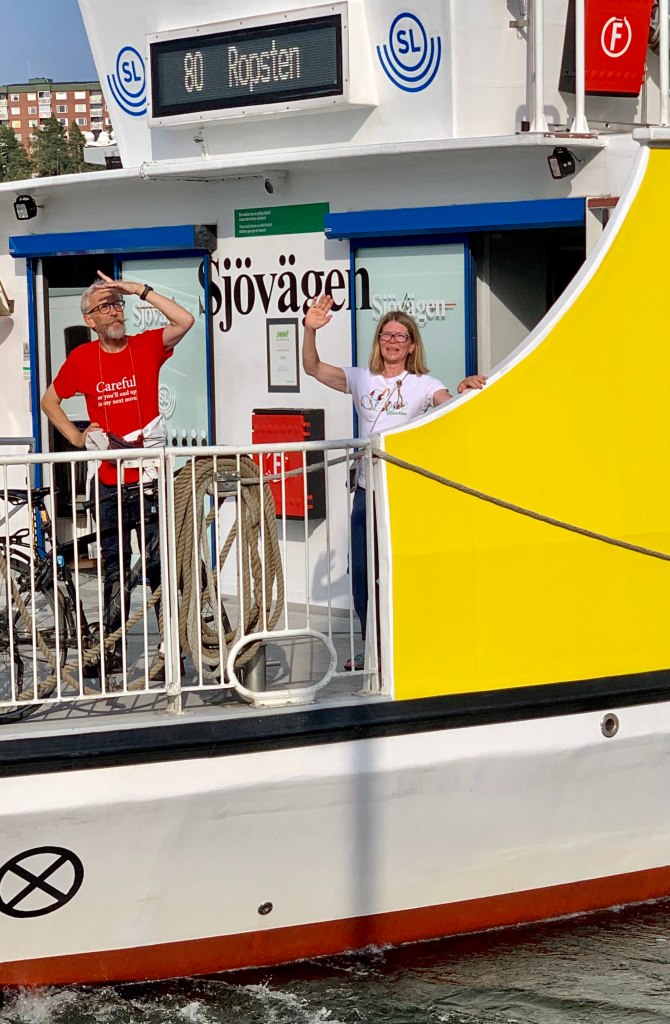
My husband’s grandfather immigrated from Sweden so Swedish traditions literally run through his veins. I’ve embraced many of those traditions, especially those related to Christmas. I’ve also eaten many a Swedish meatball. One tradition I have not taken to? Herring! George and our children always ate soft boiled eggs and pickled herring on Christmas morning while I stayed in bed. When they finished eating, they woke me up by breathing heavily in my face. Yech! So you can imagine George’s great delight to see an appetizer with three kinds of herring, Vasterbotten cheese, sour cream, red onion, and dill potatoes on the menu! He also had Köttbullar (Swedish meatballs) for an entrée with potato puree, cream sauce, lingonberries and pickled cucumber. I had Souvas (smoked reindeer) as an appetizer with kohlrabi in horseradish crème, lingonberries and hazelnuts; and Kröppkakor (Swedish potato dumplings filled with pork) for my entrée. Everything was delicious! But even better, was the time to sit and relax and just get to know Bjorn and Lotta. They took us on a commuter ferry back to our ship which meant more time to talk and seeing more of the real Sweden. The last photo is Bjorn and Lotta waving goodbye from the ferry. What an amazing day! THANK YOU BJORN and LOTTA!
And an aphorism for the prompt? One man’s herring may be reason enough for a woman to refuse his kiss!
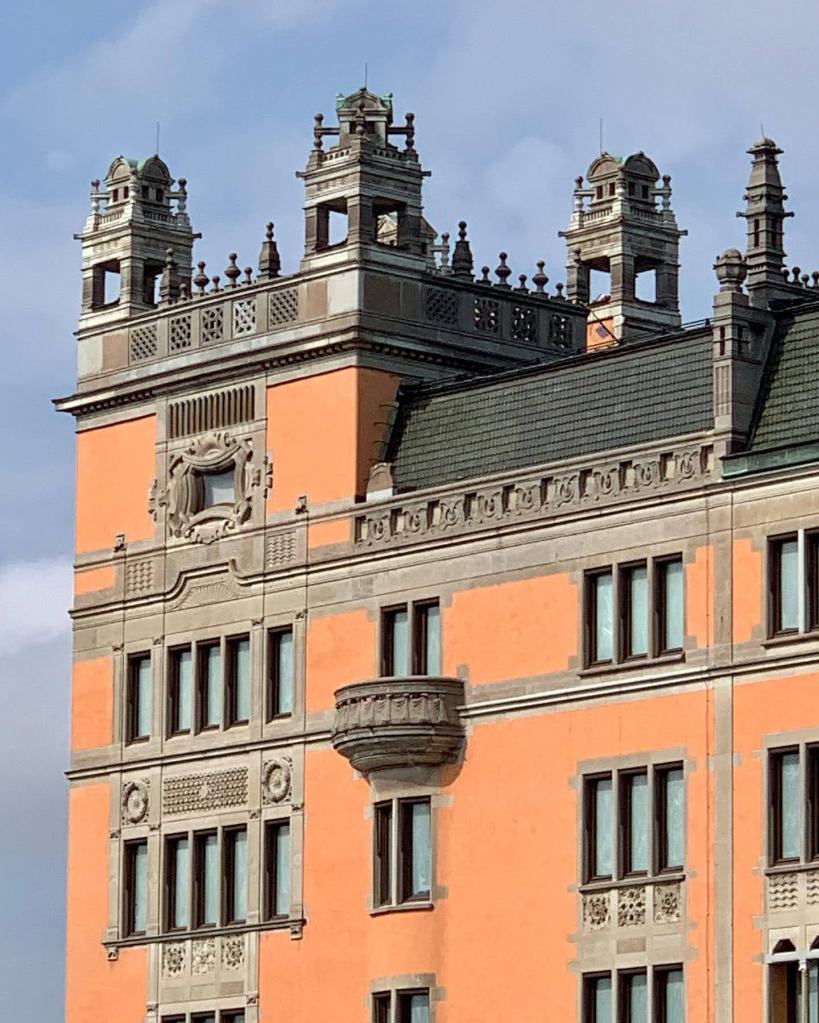
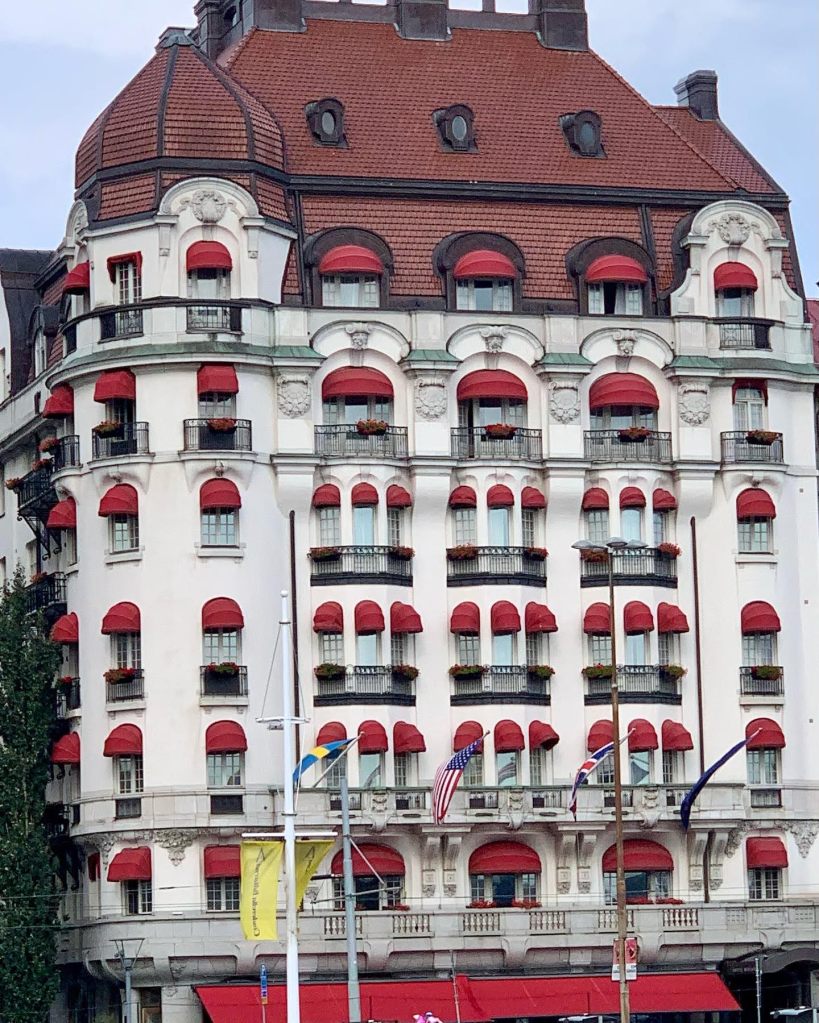
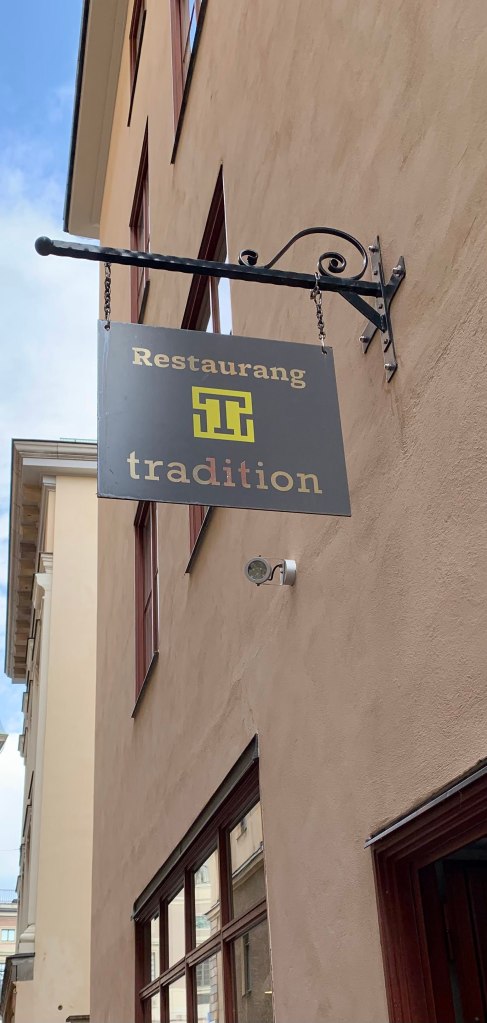
A very popular place to gather.Notice 3 crowns atop the building. They are Sweden’s national symbol. This building just looks happy!One of the most famous hotels in Stockholm. One of Stockholm’s more quiet neighborhood streets.Many years ago, this was the sole source of water for this neighborhood.Lotta, Bjorn and me.A small local restaurant serving traditional Swedish food.Three kinds of herring.Real Swedish meatballs.Smoked reindeer.Swedish potato dumplings stuffed with pork. Thankful to Bjorn for introducing me to the dVerse community!Notice Bjorn’s tee-shirt! 🙂 We gifted Bjorn and Lotta these tee-shirts from Boston. Untill we meet again . . .
Written for dVerse, the virtual pub for poets around the globe. Today Bjorn is hosting Thursday’s Meet the Bar and asks us to create an aphorism, and if we’d like, add some prose of explanation.
All photos are from our visit with Bjorn and Lotta last week in Stockholm! If you click on each photo, you can see them a bit larger.
Aphorism: a statement that presents a moral or philosophical idea and many times does so with a pithy statement. For example: “the grass is always greener on the other side”and “don’t count your chickens before they hatch.”
I do admit, I’ve taken a bit of liberty with my aphorism….but I really wanted to share these photos with all of you dVersers! And…..after all…..everyone should know when to use breath mints!
Step back in time with me, into 17th century Holland. Into rural fields of working windmills. One man pulls ropes taunt, sets sails to catch wind and spin. Inside wooden cogs and wheels whirl, grind stone to fine ochre powder. Village survives by ingenuity.
Quadrille written for dVerse, the virtual pub for poets around the globe where today, Lisa asks us to use the word “work” or a form of the word in our poem of exactly 44 words, sans title.
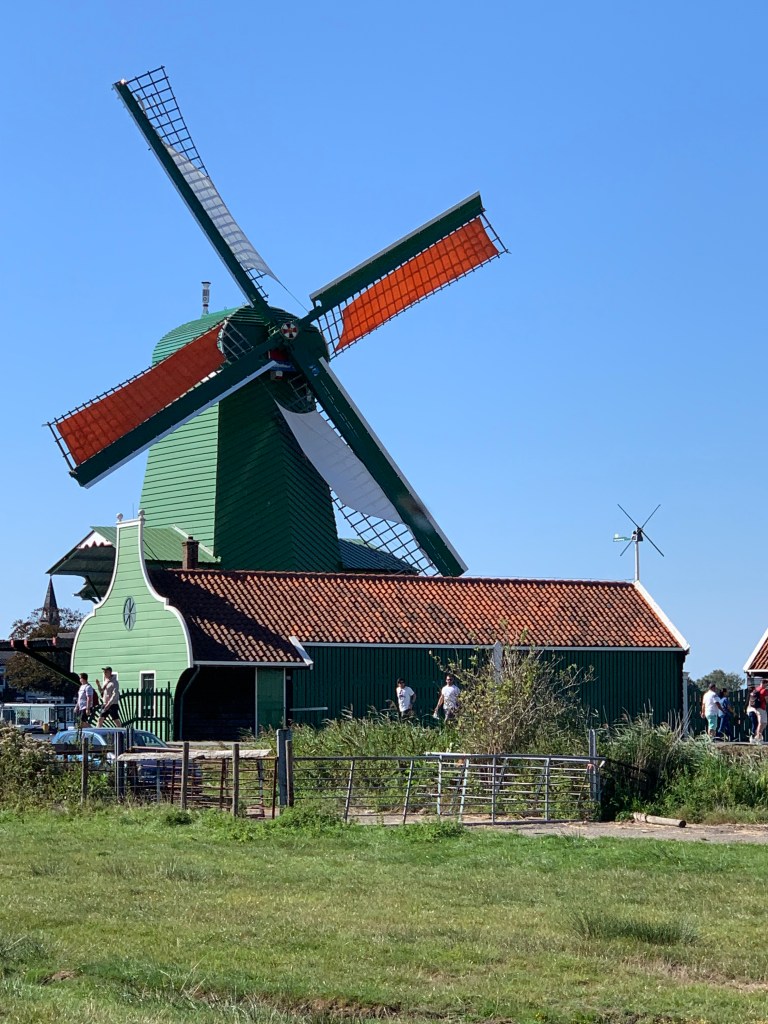
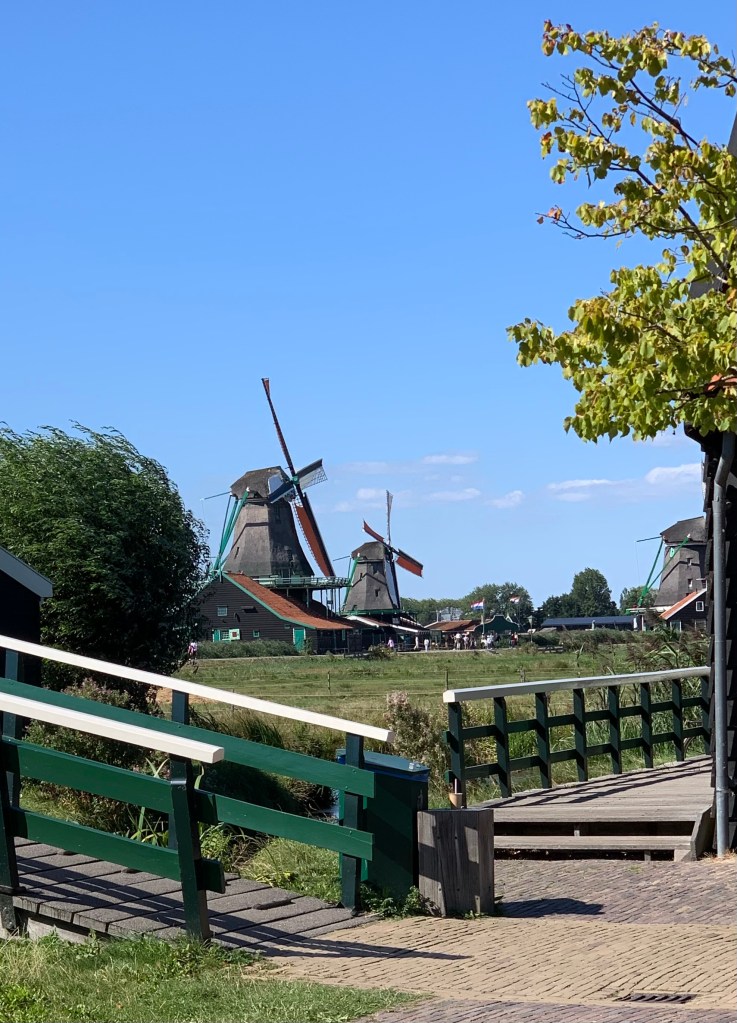
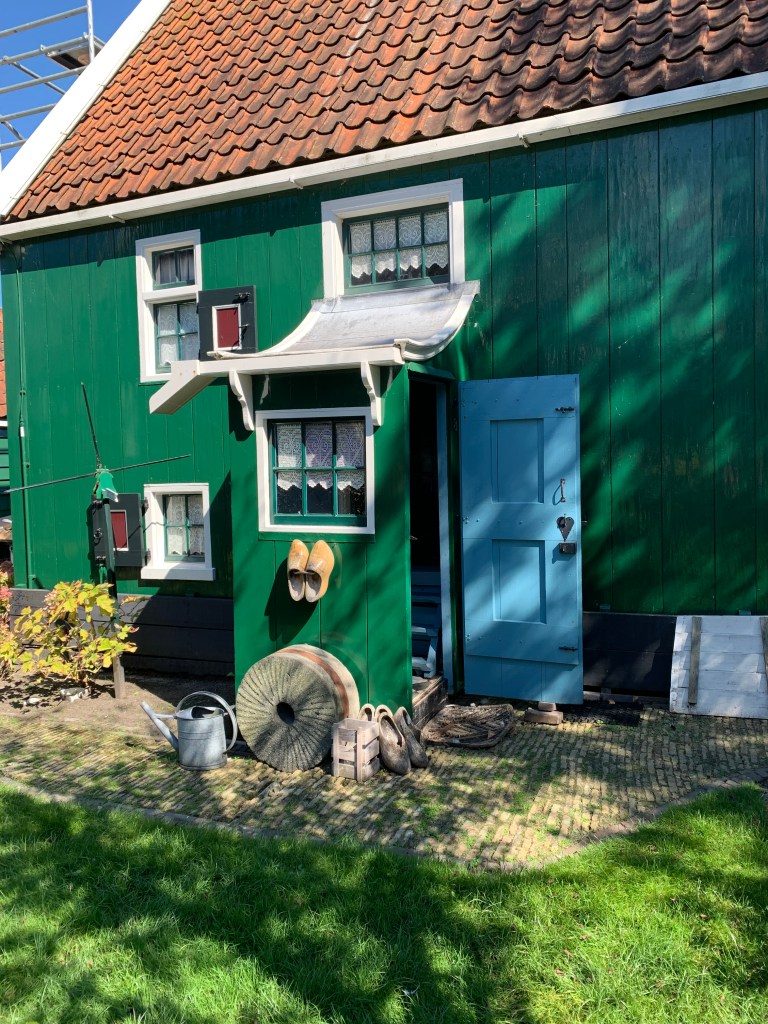
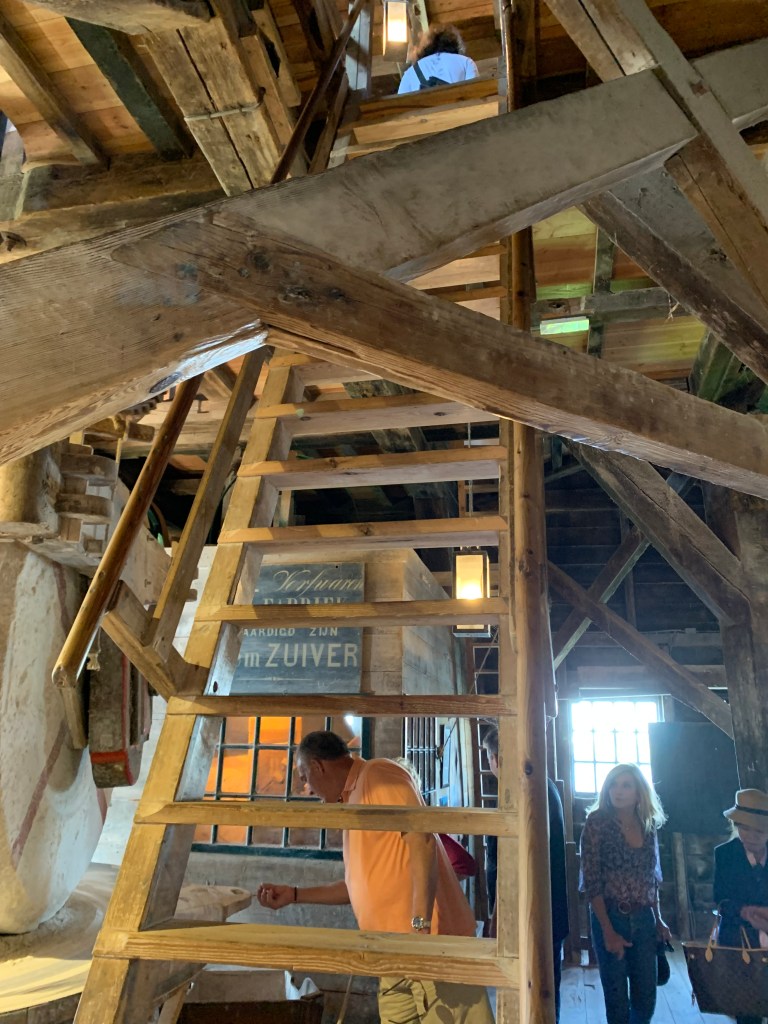
Images and videos from four days ago when we visited the village of Zaanse Schans, which is about a twenty-five minute drive from Amsterdam. During the 17th century there were more than 600 windmills in this area. Today there are 8. They were used to grind spices, produce paint, saw wood, and make oil, among other things. The one we climbed around in is used to grind rock into ochre powder.
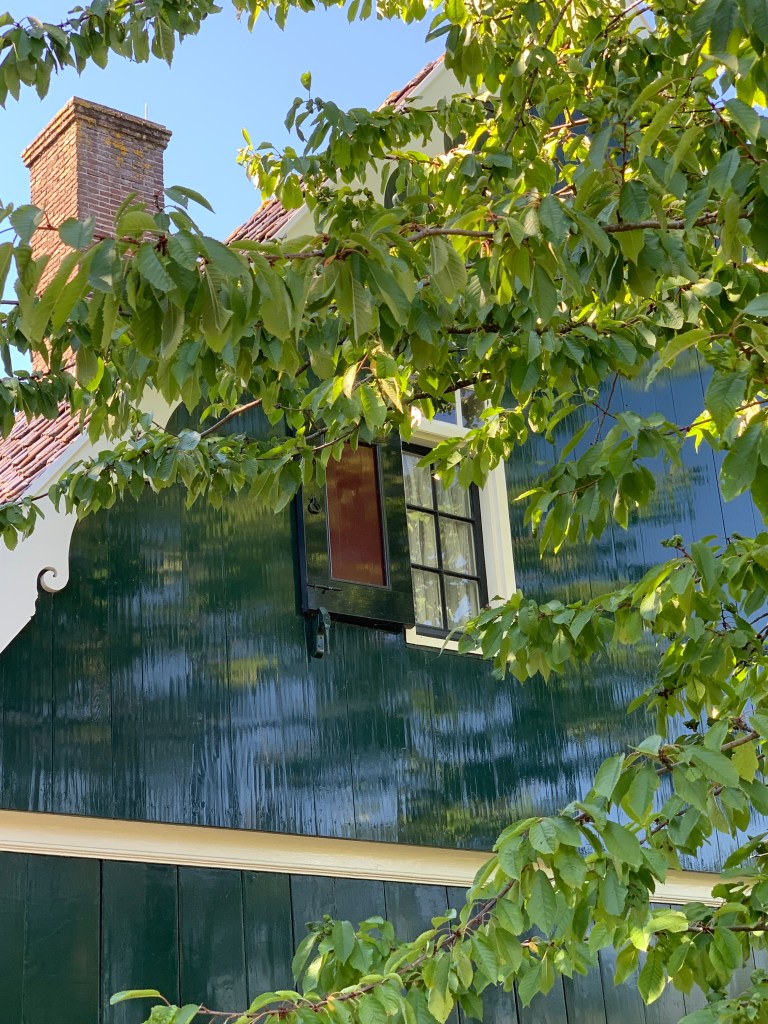
A man must climb up onto the roof and adjust the angle of the sails to catch the wind. The turning sails power the inner workings, cogs, wheels etc (top video) which work to make the grinding wheels turn on the ground level (2nd video). We climbed up a steep wooden ladder to see the machinations and walked around downstairs to watch the huge grinding wheels. Houses in Zaanse Schans and the stairs we climbed inside the windmill.
How many times around life’s stationary wheel? Eight times ten, nine times ten? Apex reached at twenty-five or fifty? Maybe thirty and three-quarters? Down cycle begins later, much later, or maybe it did? Back then. There should be a view from the top, everything spread out in miniature but recognizable. Broken fulcrum invevitable, timed entrance tickets do end. Others clamor to get on, their turn. What’s that saying? We’re just along for the ride.
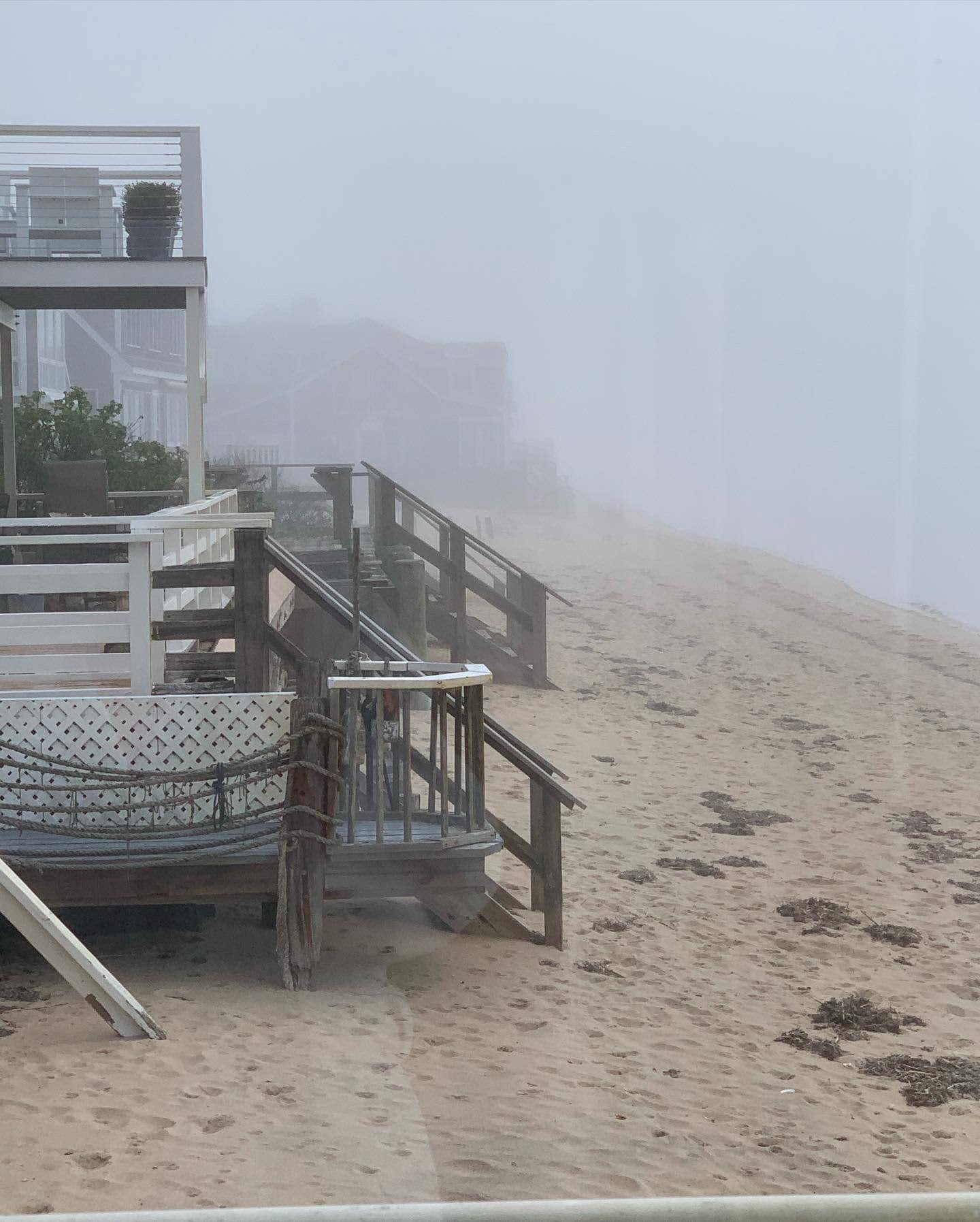
Beloved Provincetown, how shall I pen you? Sometimes mellow, sweet as honey, dew dripped fogged another day?
Your fickle Spring brings brisk winds, lean-into gusts that slow my steps on low tide walks along the shore. Horseshoe crabs spawn, two moving as one, leaving intricate trails on sand, caring not that I observe their intimacy.
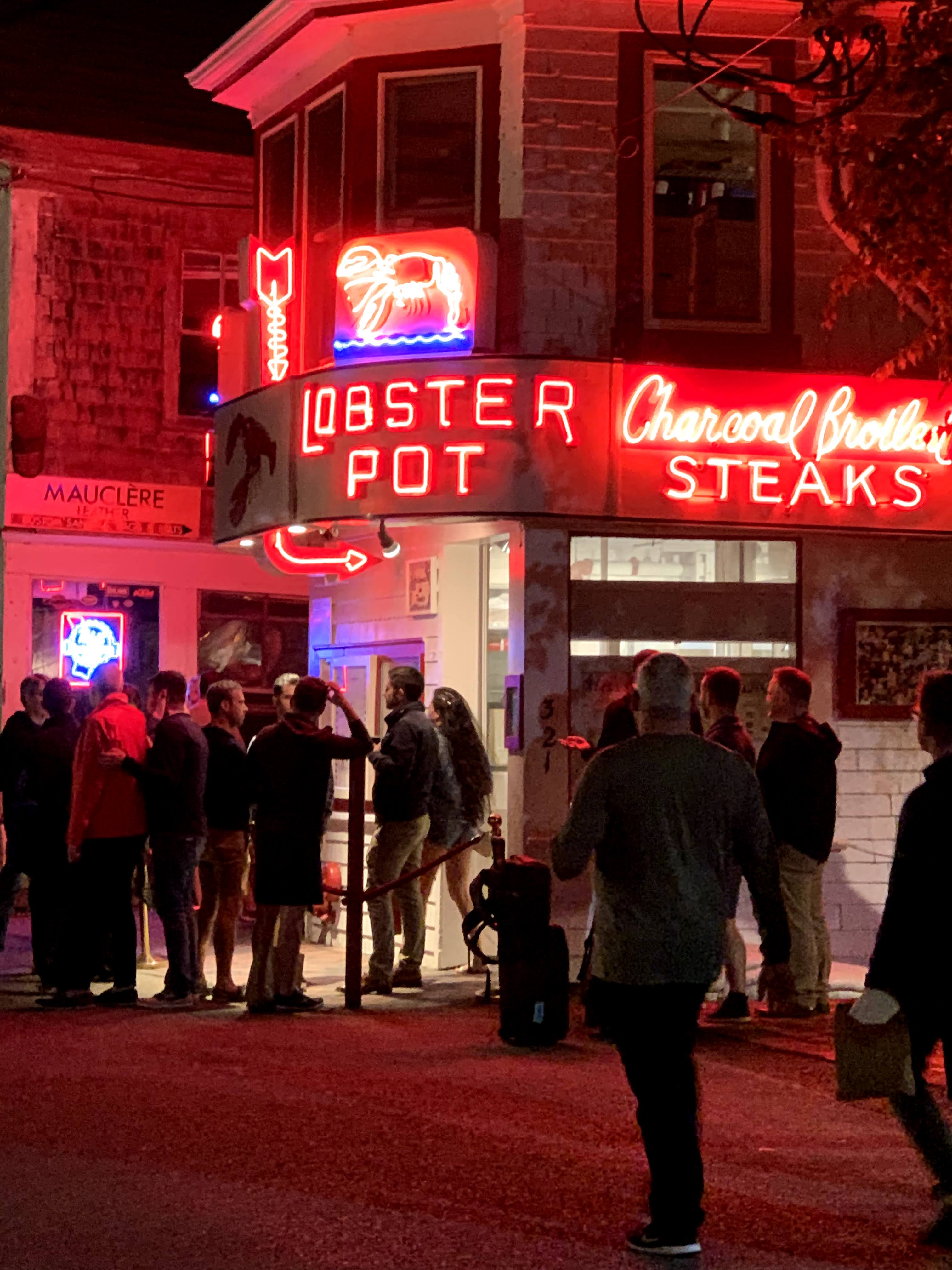
Summer explodes in gulls and fireworks. Two and four-legged beach walkers skirt ’round children digging moats. Engorged tour buses relieve themselves. Nametagged visitors join throngs in streets as bicycles weave their way through maze.
Autumn brings sweatered afternoons, shorter ice cream lines, gardens’ last hurrahs, and fewer buskers on the streets. I stand alone in wool cap on deserted shore, marveling at the glory of an amber moon, light temptation for tomorrow’s palette of words.
When your Winters flaunt Nor’easters, remaining locals, few in number, tread quickly through snow-muffled quietude. Behind once busy Commercial Street in this, the most off of off-seasons, ocean’s rhythmic tides still reign.
The ocean, in fog or sun or snow, Provincetown’s constant gift, no matter the time of year.
Written for Tuesday Poetics at dVerse, the virtual pub for poets around the globe. Today I’m hosting and asking folks to “compound me!”
I’ve provided a list of compound words in the prompt . (A compound word is formed by putting two root words together to form an entirely new word.)
Writers must choose at least one compound word from the list and use it in their poem EXCEPT, they must take apart the word! They can not add any words between the two root words nor can they add any additional letters to the root words. For example: moonlight: writers can put moon at the end of one line and begin the next line with the word light. Or they may, within one line, include the two words moon and light, with no other letters added to the words and no additional words between the two root words. They may however, add a punctuation mark between the two root words.
Confused? Here’s the two lines from my poem above, where I’ve used the words honeydew and moonlight, which are in the list:
Sometimes mellow, sweet as honey, dew dripped fogged another day? and marveling at the glory of an amber moon, light temptation for tomorrow’s palette of words.
I do hope you’ll join us! Pub opens at 3 PM Boston time and you’ll find the complete list of compound words there. Choose one or more and compound me! Or just stop by to see what others write. The more the merrier!
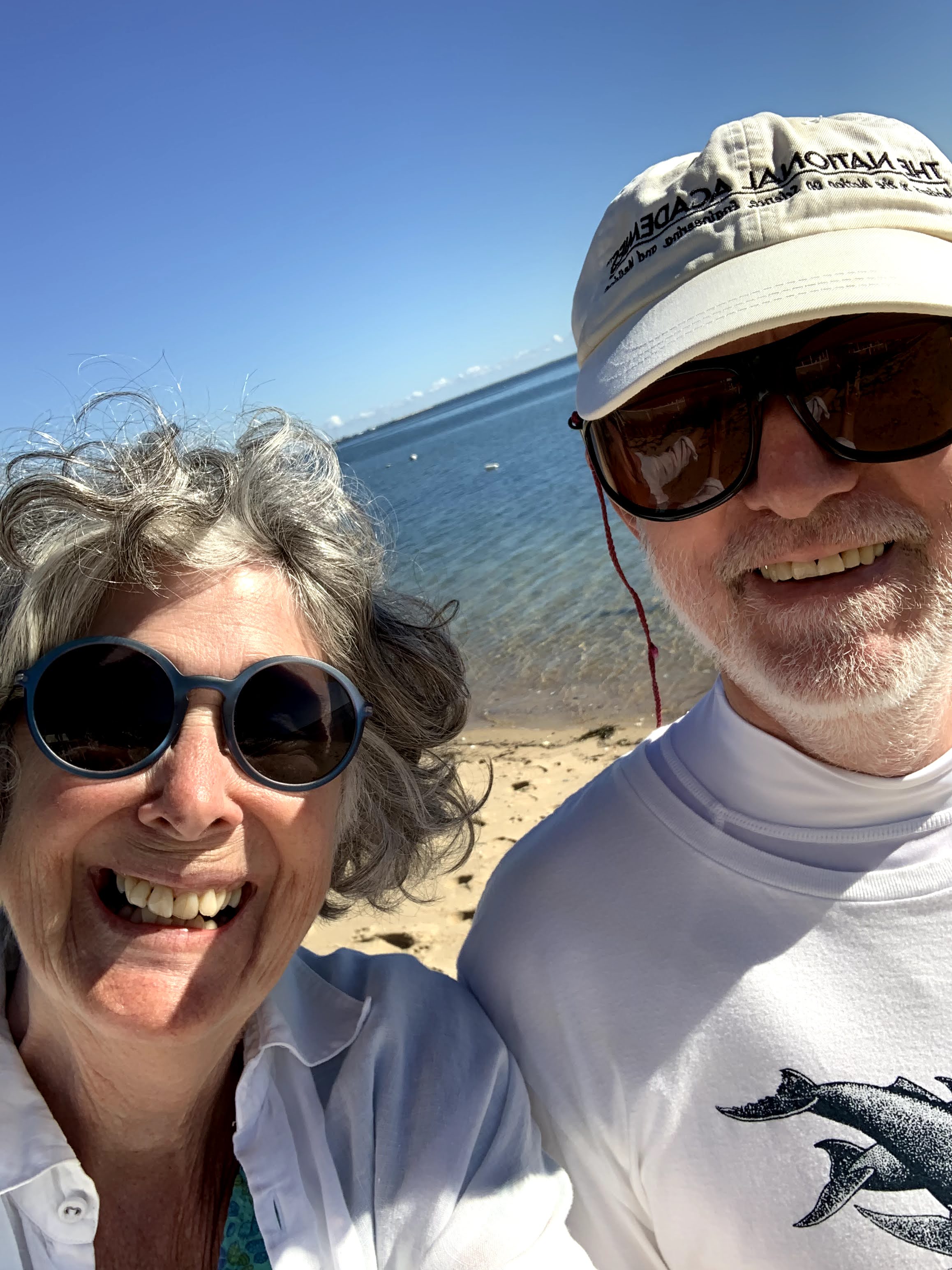
Photos from our annual two weeks in Provincetown over these past 22 years. We’re here until Saturday, and as you can tell from this poem and the last few I’ve posted, it is my muse. We are smitten with our beloved Provincetown.
Video was taken yesterday!! Did you know …. May is spawning season for horseshoe crabs. They’re not actually crabs. They’re chelicerates, most closely related to arachnids, such as spiders and scorpions. They’re consiered “living fossils” meaning they’ve existed nearly unchanged for at least 445 million years, well before even the dinosaurs!Amazing to watchtheir spawning. Our first time in all these years, coming in May….and then we find out it’s horseshoe crab spawning time!
















 lillian the home poet