In a Photographer’s Terms

Everyday wide apertures:
newsprint, television, radio.
Second or third-hand glimpse of another’s plight.
Photographers know
wide apertures provide shallow depth.

Until that day, that’s what I had.

That day, strolling the cruise ship’s deck,
my privileged promenade
was suddenly interrupted.
What I’d read about, heard on the news,
appeared off port side.

A small boat bobbing, barely moving.

Two oars slapped white caps.
In and out and in and out. Out of sync.
Six? Eight people? Dark shapes,
even in bright sun, crowded together.
Struggling, no doubt praying, not to capsize.

Our Captain’s voice suddenly blared.

“There is a small boat in distress.
Our assistance has been refused.
We will remain here until the Coast Guard arrives.
This will not impede our schedule.
You will arrive in Miami on time tomorrow.”

Narrow apertures give a deeper depth of field.

My eyes saw, stared, teared.
Refugees risking everything
for what they deemed would be a better life.
My heart ached at the scene
as did many looking on.

That night we did, as all aboard our ship did.

Enjoyed dinner served on linen tablecloths,
toasted our last night at sea.
Danced late into the night.
Slept on a king-sized bed
and flew home the next morning.

But I’ll never forget what I saw.
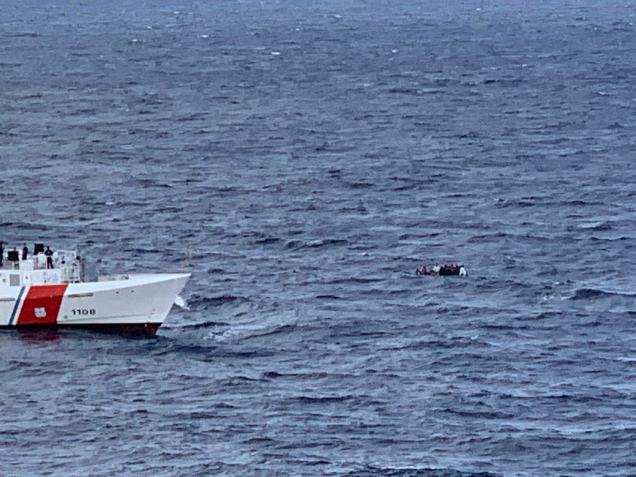

Written for Tuesday Poetics at dVerse, the virtual pub for poets around the globe. Today, Dora asks us to “write a poem that conjures a veiw (whether from our travels or everyday life, whether from desire or expeirence) that is colored by the emotion of the moment.” Photo was taken from on one of our cruises that sailed roundtrip from Miami, Florida. It was a good number of years ago but I’ve never forgotten this heartbreaking experience.
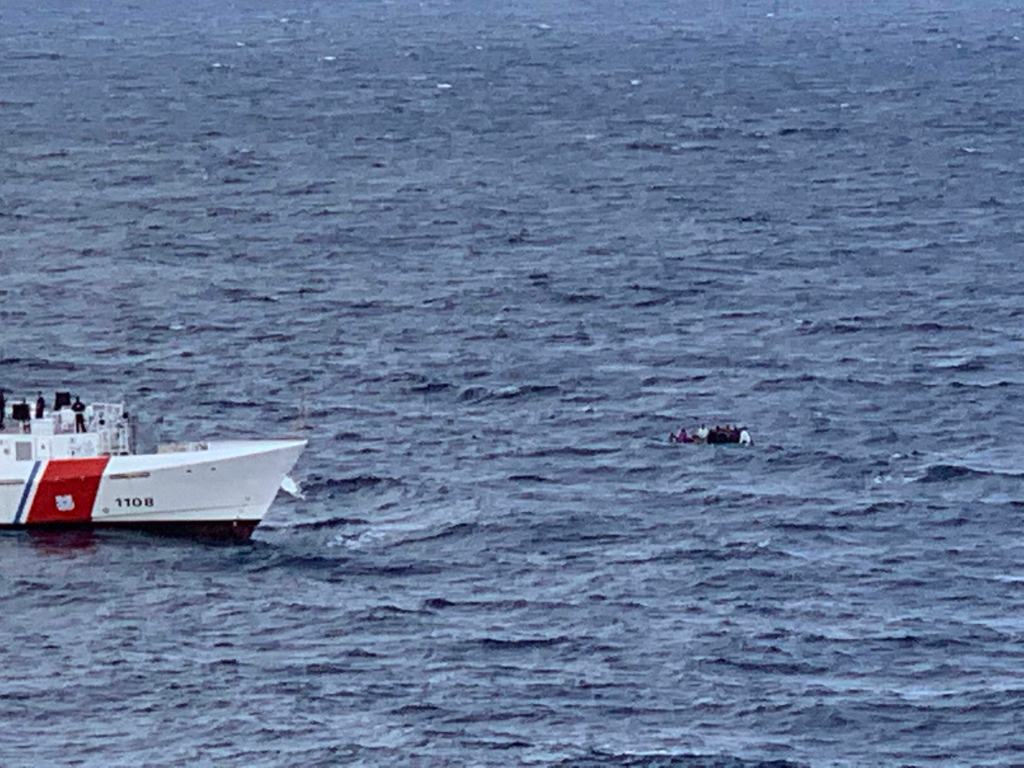
Sheltered / Seeking Shelter

We stood on the deck of our cruise ship, warm and comfortable, having just eaten our fill for breakfast in a beautiful dining room. The night before, we’d had wine with dinner and our choice of four entrees. We were returning to the ship’s home port in Florida, to then return to our highrise condominium in Boston.

The Captain’s voice was clear and strong over the loudspeakers. “There is a small boat of refugees on our starboard side. We have alerted the Coast Guard and will hold our position until they arrive. We believe in safety at sea for all. This will not impede our itinerary. We will arrive at our home port as scheduled.“

A small boat bobbed in the ocean, the people barely distinguishable except to see they were crowded in what looked like a rubber raft. It looked so low in the water, as if it was barely staying afloat. When the Coast Guard arrived more than an hour after the announcement, our ship moved away quickly. We only saw the Coast Guard approach the refugees. We never knew what happened to them.

cherry tree blooms pink
robin sits in feathered nest
mole burrows in darkness

It’s Haibun Monday at dVerse, the virtual pub for poets around the globe. Today, Mish asks us to consider the word “shelter” in our haibun: two or three succinct paragraphs of prose that are nonfiction/autobiographical, followed by a classic haiku.

Photo is from November 2021, when we took a cruise in the Caribbean. It was sobering to see in reality, what we’d read about in newspapers and heard about in the news.

Her Name is Sharbat Gula

You saw me as a refugee.
My piercing eyes your prize.
I was, am more than that.
I walked miles over mountains.
Mountains of earth, violence
hatred and poverty.

You asked no permission.
You saw in my eyes . . . what?
Pain, loss, my future?
My future was with or without
your use of me.
Your lack of concern for me.

Your future, on the other hand
calloused or not,
your future was in my eyes.
And they appeared everywhere
while they were still here.
One click and you were gone.

I became your prize photograph.
I was your prey.

Mish hosts Tuesday Poetics at dVerse, the virtual pub for poets around the globe. She asks us today to “look into my eyes”, giving us several ways to do that in her prompt for our poem.

My poem is written from the perspective of Sharbat Gula. Her photo was taken in 1984, by Steve McCurry and subsequently used as the cover for the June 1985 issue of National Geographic and the large book National Geographic: The Photographs published in 1994. This photo has been called “The First World’s Third World Mona Lisa.” The photo was published without her consent and the identity of the photo’s subject was not initially known. At the time, she was a child living in the Nasir Bagh refugee camp in Pakistan during the Soviet occupation of Afghanistan.

National Geographic later searched for her, not knowing her name. They found her and produced a documentary “Search for the Afghan Girl” which aired in March 2002. In her recognition, National Geographic created the Afghan Girls Fund, a charitable organization with the goal of educating Afghan girls and young women.  In 2008 the scope of its mission was extended to include boys and was renamed the Afghan Children’s Fund. After finding Sharbat Gula, National Geographic also covered the costs of medical treatment for her family and a pilgrimage to Mecca. Hers is an amazing story and can be found at https://en.wikipedia.org/wiki/Afghan_Girl