
Everyday wide apertures:
newsprint, television, radio.
Second or third-hand glimpse of another’s plight.
Photographers know
wide apertures provide shallow depth.
Until that day, that’s what I had.
That day, strolling the cruise ship’s deck,
my privileged promenade
was suddenly interrupted.
What I’d read about, heard on the news,
appeared off port side.
A small boat bobbing, barely moving.
Two oars slapped white caps.
In and out and in and out. Out of sync.
Six? Eight people? Dark shapes,
even in bright sun, crowded together.
Struggling, no doubt praying, not to capsize.
Our Captain’s voice suddenly blared.
“There is a small boat in distress.
Our assistance has been refused.
We will remain here until the Coast Guard arrives.
This will not impede our schedule.
You will arrive in Miami on time tomorrow.”
Narrow apertures give a deeper depth of field.
My eyes saw, stared, teared.
Refugees risking everything
for what they deemed would be a better life.
My heart ached at the scene
as did many looking on.
That night we did, as all aboard our ship did.
Enjoyed dinner served on linen tablecloths,
toasted our last night at sea.
Danced late into the night.
Slept on a king-sized bed
and flew home the next morning.
But I’ll never forget what I saw.
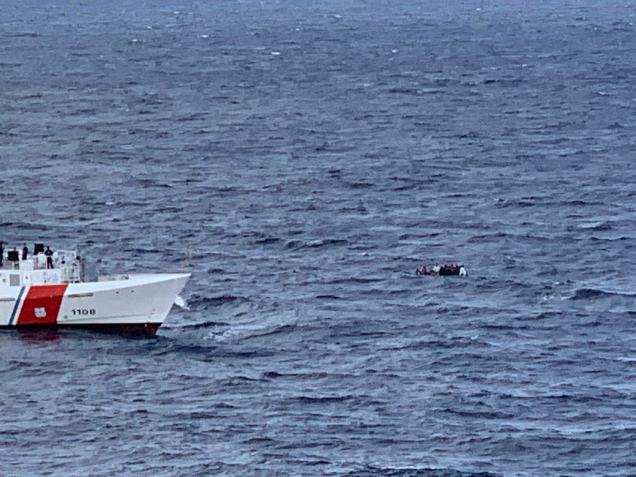
Written for Tuesday Poetics at dVerse, the virtual pub for poets around the globe. Today, Dora asks us to “write a poem that conjures a veiw (whether from our travels or everyday life, whether from desire or expeirence) that is colored by the emotion of the moment.” Photo was taken from on one of our cruises that sailed roundtrip from Miami, Florida. It was a good number of years ago but I’ve never forgotten this heartbreaking experience.
 lillian the home poet