
We are the baby-boomers, celebratory births
conceived and born after World War II.
We lived in our all white world,
walked to elementary school in Mary Janes
and white lacey ankle socks.
We were the oblivious ones
riding from Chicago to Florida.
Family vacations to grandma’s
excited to buy Orange Blossom eau de cologne
and praline candies at rest stops.
We had no idea Black families
used The Green Book for the same trip.
Dog-eared pages marked “friendly” towns.
Listed cafes, motels, and gas stations
where Negroes were welcome.
We didn’t know anybody named Jim Crow.
As young kids, we blindly sipped
from white-only fountains,
sat where we wanted
at diners along the route.
But we know now, or do we? –
How many of us
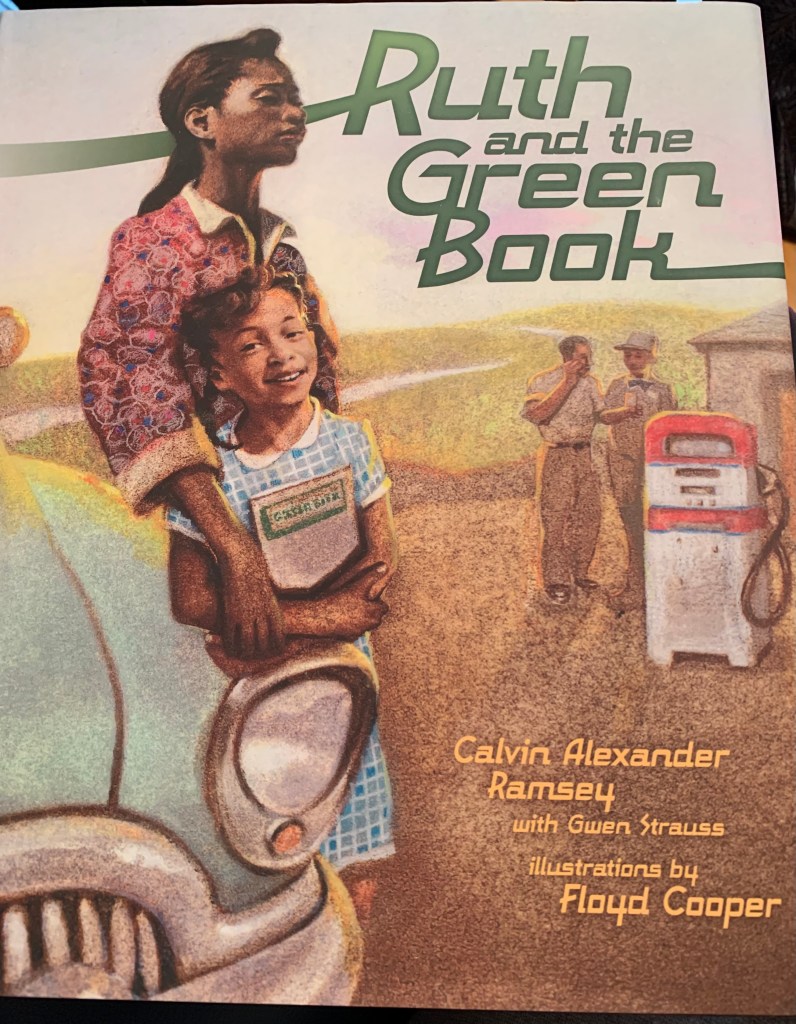
have seen or read the children’s book,
Ruth and the Green Book
by Calvin Alexander Ramsey?
How many of us have read
The 1619 Project?
Written by Nikole Hannah-Jones,
winner of the Pulitzer Prize
and a #1 New York Times bestseller.
What are we afraid of?
We may not be Bible readers
but we’ve all heard John 8: 31 and 32.
“The truth will set you free.”
Now is the time the truth be told.
Written for dVerse, the virtual pub for poets around the globe. Today Bjorn is hosting from Stockholm, Sweden and asks us to write a poem in the “collective” voice — we, our.
Given the movement so rampant in parts of the US to ban books, I thought it important to write this poem. If you’ve not read either of the books I mention, they are well worth the read.
Quoting from the Calvin Alexander Ramsey at the end of his book:
“In 1936, an African American living in New York City named Victor Green wrote a book to help black travelers. He made a list of all the hotels, restaurants, gas stations and businesses that would serve African Americans in his city. There was such a high demand for his book that he decided his next edition would include other towns in other states, as well.
The Green Book was sold for a quarter in 1940 at black-owned businesses and at Esso stations, which were among the only gas stations that sold to African Americans. Esso was owned by the Standard Oil Company, which eventually provided funding and offices for Victor Green. The Green Book quickly became very popular and helped many businessmen on the road, as well as the families who needed and wanted to travel by car.
By 1949, the price of the Green Book had grown along with its size – it cost 75 cents and was 80 pages. It covered all the United States, Bermuda, Mexico, and Canada!
In the 1950s and early 1960s, civil rights leaders like Martin Luther King Jr. brought national and international recognition to the injustices suffered by African Americans. Jim Crow’s days were numbered. On July 2, 1964, President Lyndon Johnson signed the Civil Rights Bill into law. Among other things, this act made it illegal for hotels, restaurants, and gas stations to discriminate against customers.
Victor Green published the final edition of the Green Book that same year – 1964.”
 lillian the home poet