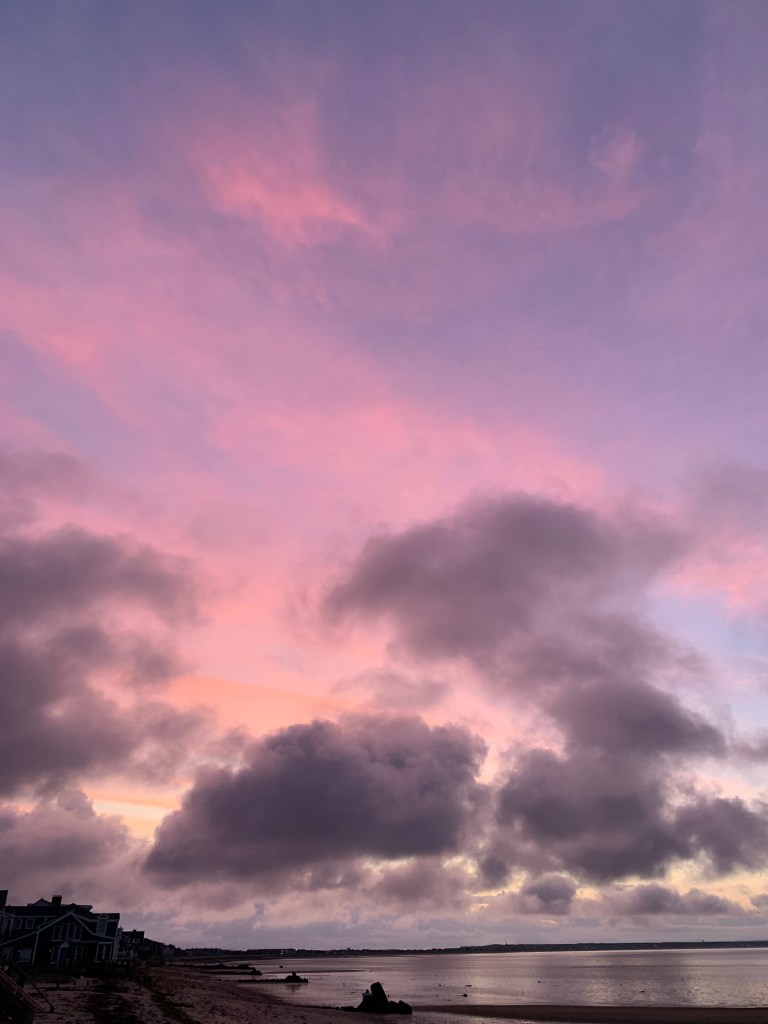
Provincetown’s prequel to dawn. Nature’s sky palette, her brush strokes divine. Palest of pastel pink ribbons and cotton ball fluffs, ombre into muted blues and greys. Profound quiet punctuated by gentle waves lapping shore. Day awakens as I gaze mesmerized by her calm. Her promise, a lovely day.
Written for dVerse, the virtual pub for poets around the globe. Today Lisa gives us three options as prompts for our poems. I chose the second: to write of an experience, preferably in the first person, where we’ve asked for a sign of something to come. Here in our beloved Provincetown for two weeks, I awaken each morning to watch the skies, wondering if we will have a clear, cloudy, or stormy day. No matter the weather, Ptown is always beautiful.
Photos taken this morning from our deck – those magical moments before sunrise. And it has indeed, been a beautiful day.
Mist and fog ~ marauders of the night, muffle morning’s sun. Drip moisture on decks, lush grass, drooping hammocks and once tall hollyhocks. Grey ocean meets putty sky, nature’s pall like widow’s veil. But my view today? My spirits shall not be dampened nor my view dimmed of this wonderful place called Provincetown. I know the sun is there, simply biding her time to appear.
It is indeed a foggy morning in Provincetown today. I shall simply wipe down the table and chairs on our deck and sit outside to savor the myriad shades of grey presenting themselves between ocean and low hanging sky, all the while listening to the ebb and flow of waves lapping on to shore.
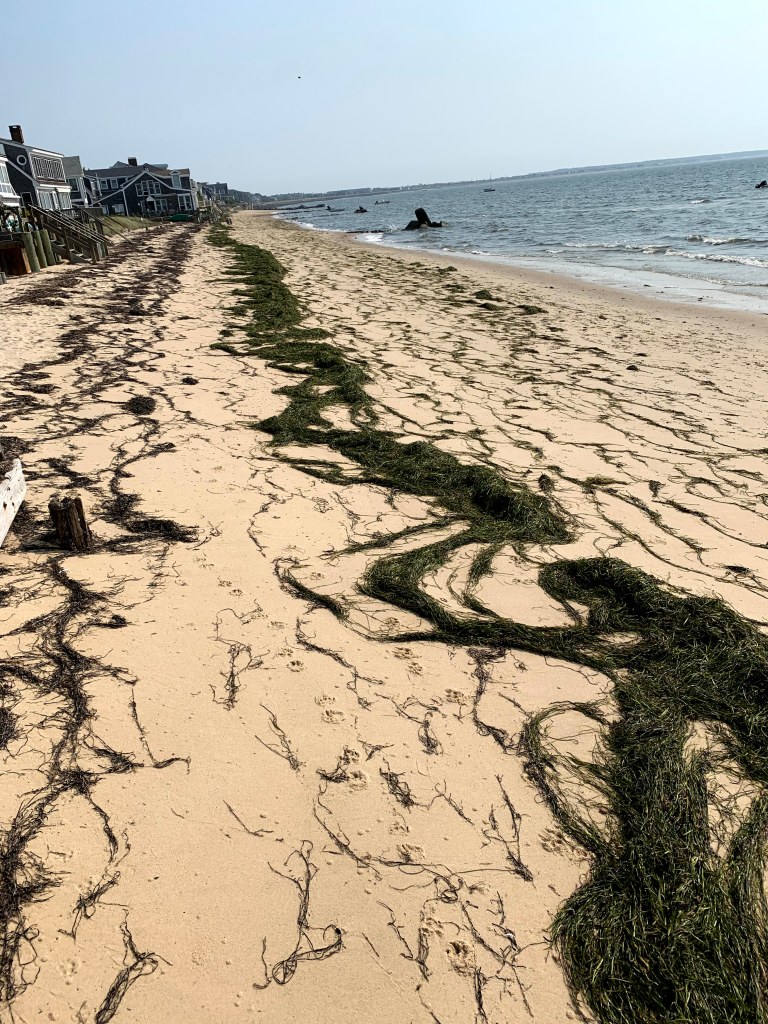
Walk with me along Provincetown’s shore. We’ll stroll through ripples of time, these oft etched sands. Some days smooth, some days ribbed like corduroy wale. Some days strewn with seaweed turned black from upheaval by tides in stormy rage. Walk by children’s sand castles, knowing that by night’s end waves will fill their moats, capture make-shift popsicle wrappers turned turret flags.
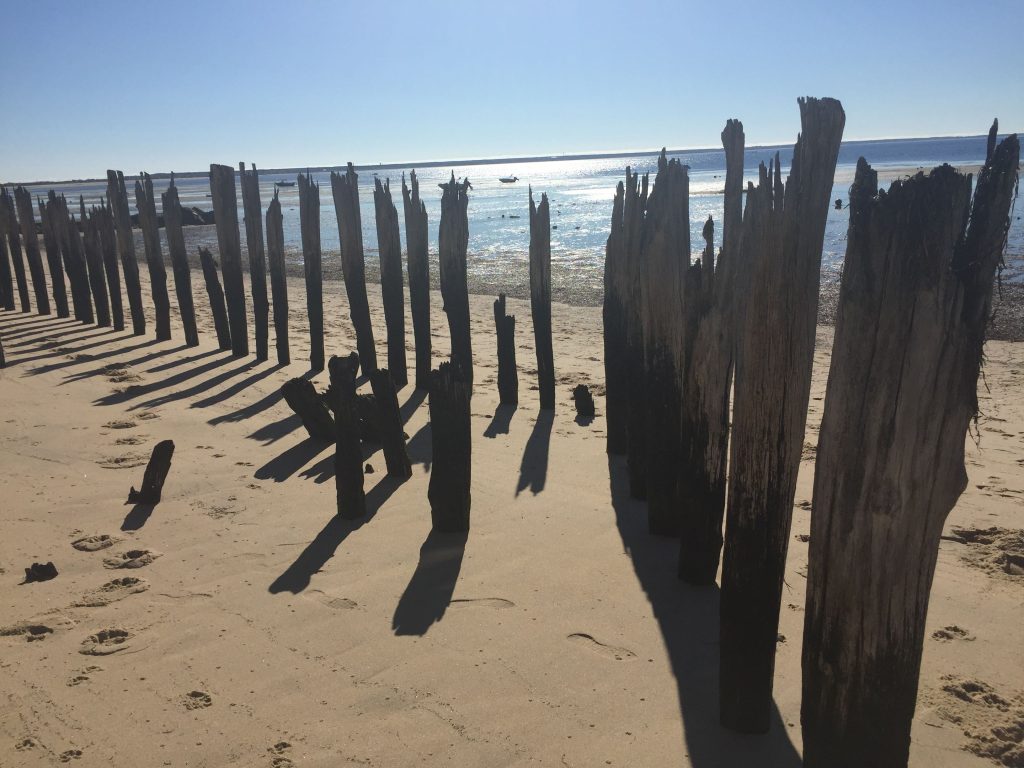
Farther down the coast remnants of wharves and docks once sentinels for Portuguese fishing boats, stand ghostlike in their dampened pallor. Imagine Wampanoags and Nausets here, long before pilgrims usurped their land. Think about artistic genius in this community: Eugene O’Neill, Norman Mailer, Jackson Pollock, Tennessee Williams, E.E. Cummings. More recently, Mary Oliver lived here for over fifty years, inspired by the raw beauty of this place.
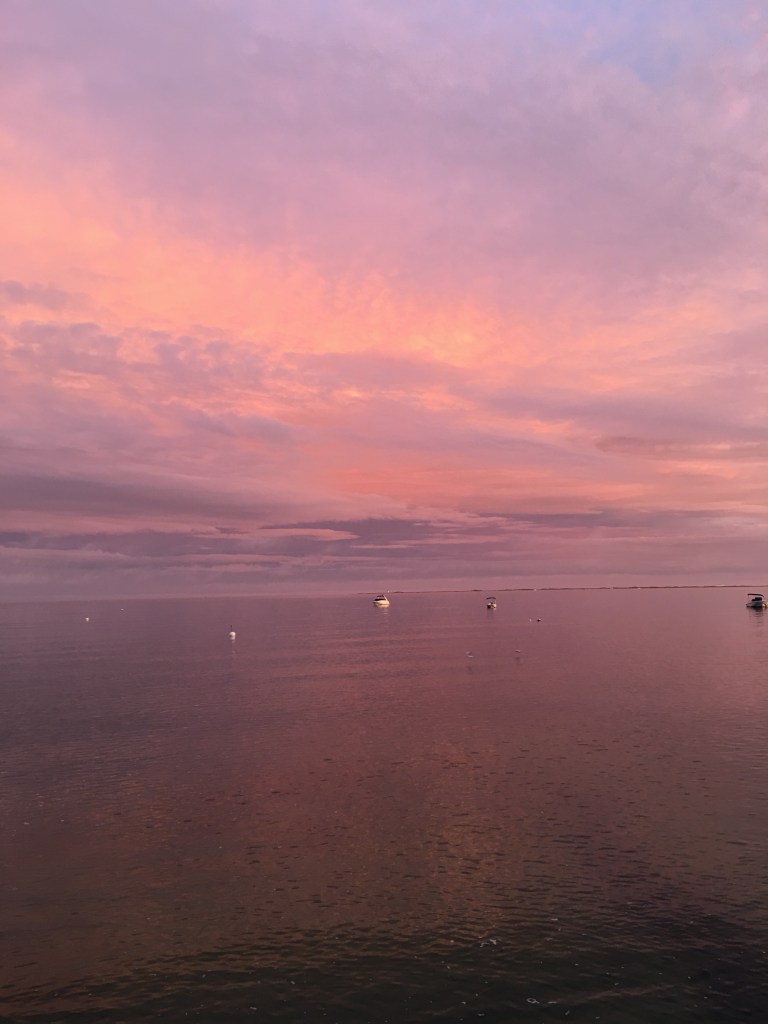
And at night’s end, watch the sky with me, painted in pastels or crimson reds. Tip a glass of wine my friend, sit now and relax. Allow your muse to enjoy every sip.
Written for Tuesday Poetics at dVerse, the virtual pub for poets around the globe. Today I’m hosting and asking folks to take us on a walk in their poem! Come join us – my guess is we’ll be walking many enjoyable miles through the words of many!
Photos are from our many two-week sojourns to Provincetown – at the very tip – the very end of Cape Cod.
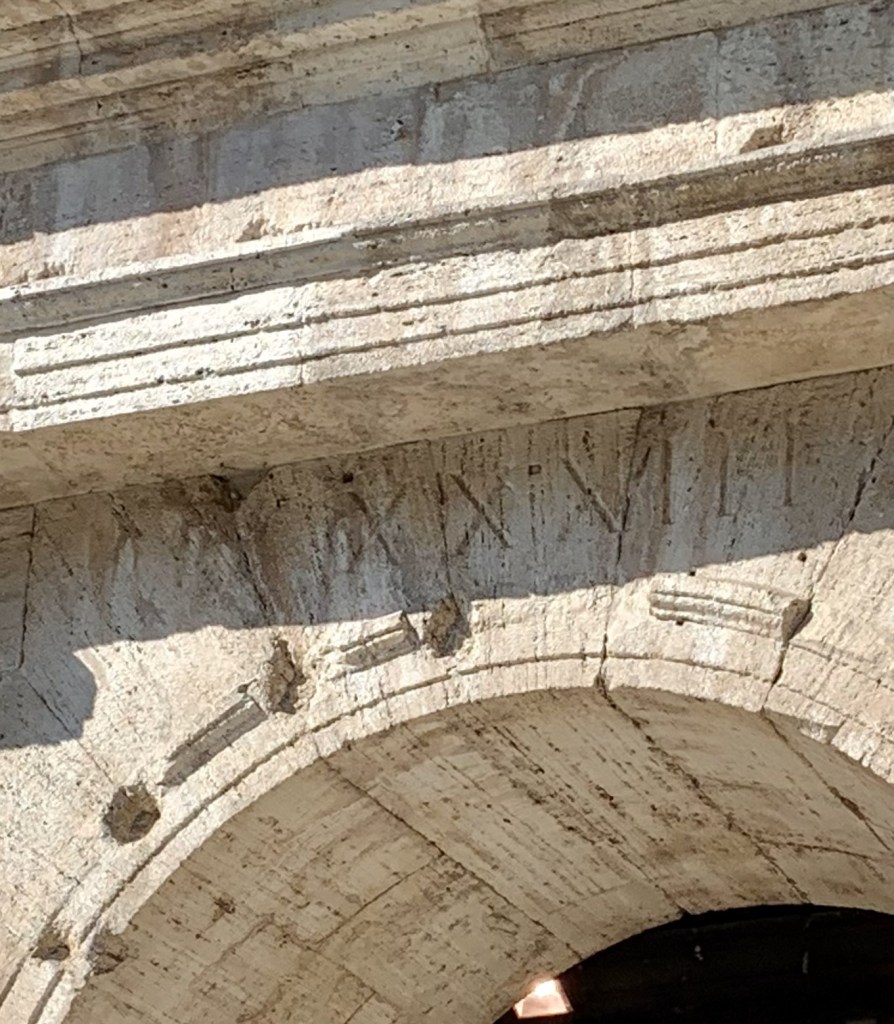
Excited citizens rush through archway thirty-three. They take their seats on marble slabs, cool to the touch this sweltering summer day. Lions roar. Giant bear paws rattle cages. Slaves strain, work a pulley system, lifting up beasts on stone slabs. Trap doors open. The crowd gasps, then screams approval. Eighty thousand men lusting to see lion against tiger, grizzly bear against bear, or prisoner against beast. These to-the-death spectacles, the opening acts.
Last bout of the day, stirs the crowd to mad frenzy. Two gladiators trained to fight, slaves by night, warriors by day. They leave their training complex across the road, make their way through dark, dank tunnels connected to the Colosseum. One a slave with wealthy master, fights to earn his freedom, bout by bout. The other slave, a wealthy man’s business investment, simply tries to stay alive.
Entering the arena, they pause, adjust to glaring sun. The adjudicator signals and the battle begins. When deep wounds pore blood and exhaustion sets in, one man is declared a winner. Both barely alive, they are carted off the field as the crowd roars its approval. Back across the road, medical treatment given, they collapse in their cells. Crowds file out of the Colosseum. A day’s respite with excellent entertainment. Who can ask for anything more?
Written for dVerse, the virtual pub for poets around the globe, where it was Open Link Night on Thursday, August 24. I’m a day late posting. BUT, it’s also Open Link Night LIVE, coming up on Saturday, August 26th from 10 to 11 AM EST. Hope you can join us! You’ll find the link to on the dVerse home page,HERE!
We already had OLN LIVE on Thursday and had folks from Sweden, the UK, Jerusalem, Pakistan, Michigan, Iowa, Vermont, New Jersey; Portland, Oregon, Missouri, Washington, and Trinidad Tobago reading a poem of theirs aloud, and chatting with each other. We’re a friendly and appreciative bunch! So do join us on Saturday if you can!
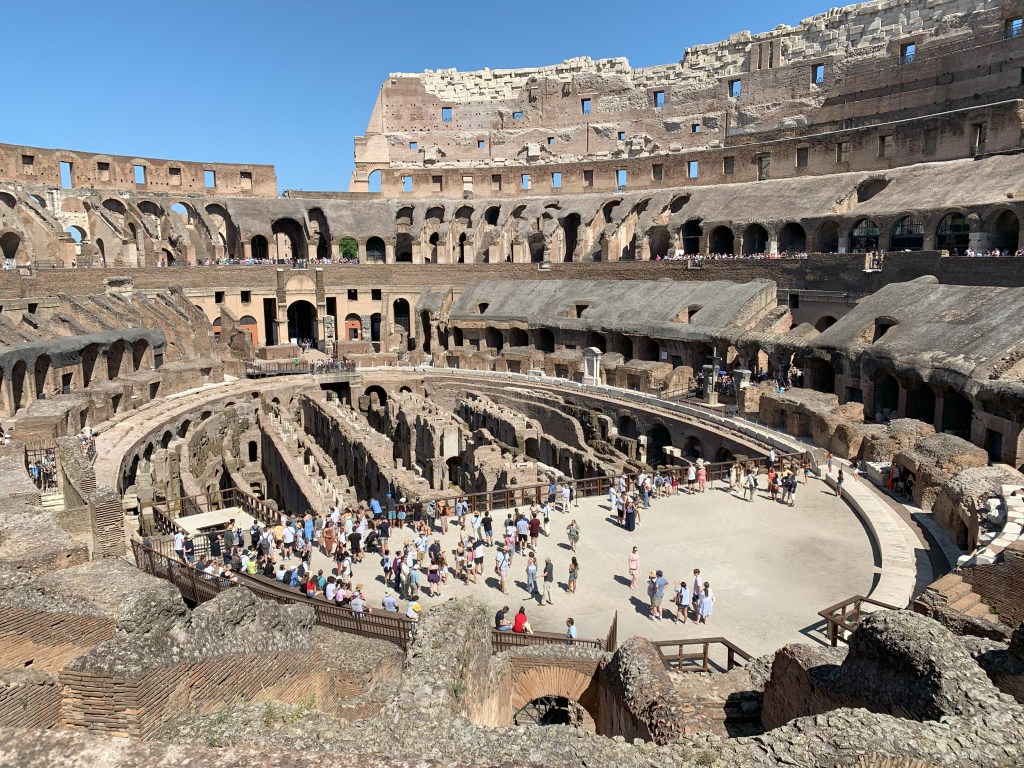
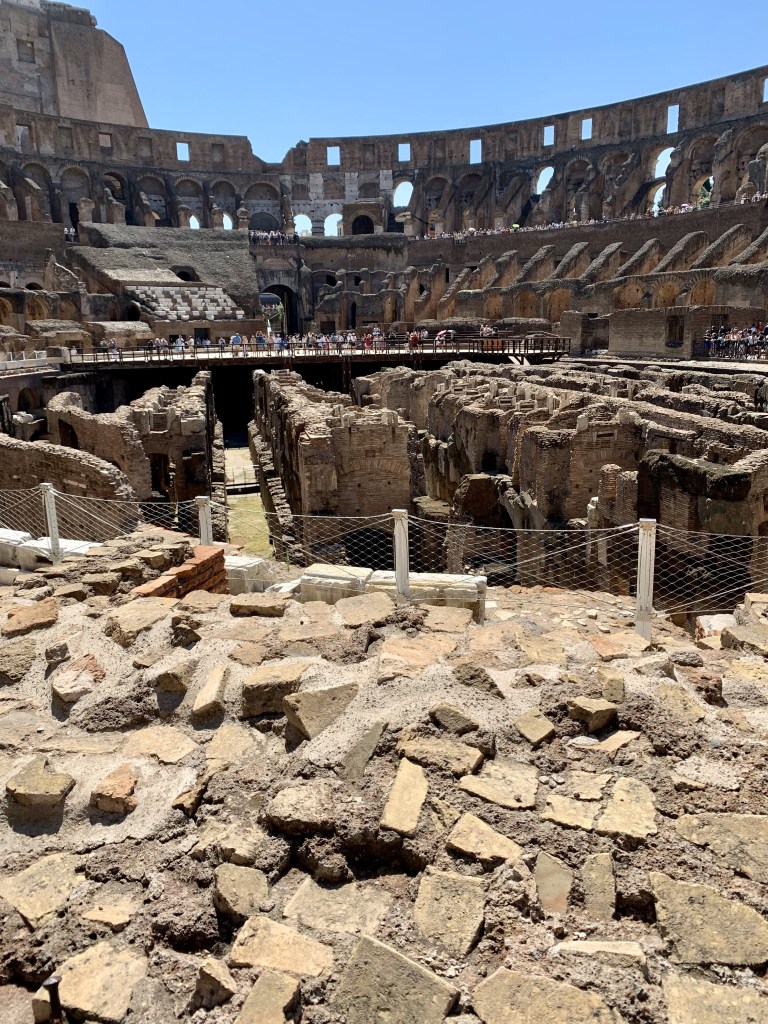
Yes, these are PHOTOS from July when we were on our month-long trip. First stop was Rome and its antiquities. We had a day’s tour with an archeologist which began with an extensive visit to the Colosseum. Everything I’ve written about here is what it was like back in the day! And yes, you can still see the original XXXIII on the archway where folks who had seats in this area entered. The photo bottom left shows part of the floor rebuilt, and you can see the circular shape with the tiers of seats. Photo bottom right shows the partitioned off “rooms” or “cells” where the animals were kept. And yes, there were trap doors in the floor and animals were raised up to suddenly appear on the colosseum floor. It turns out that animal to animal fights were always to the death of at least one animal. Animal to prisoner would most likely end in death to the prisoner. But the real gladiators, unlike in the movies, who fought here, never fought to the death. There was an adjudicator who called the contest and named a winner. The gladiators were actually slaves and had a “school” literally across the road from the colosseum where they trained by day and were locked in their cells by night. As slaves, they were a business investment, owned by wealthy people. When you learn that, you understand why they didn’t fight to the death. Some slaves had the opportunity to earn their freedome by winning X number of battles. Sometimes they managed to do that, but not often. An incredible place to see.Construction on the Colosseum, the largest amphitheater ever built, began in 72AD and was completed in 80 AD. It held 50 to 80,000 people. And there was indeed a “gladiator school” across the road. There was daily entertainment here, provided to the citizens free of charge, and sponsored by the Emperor.
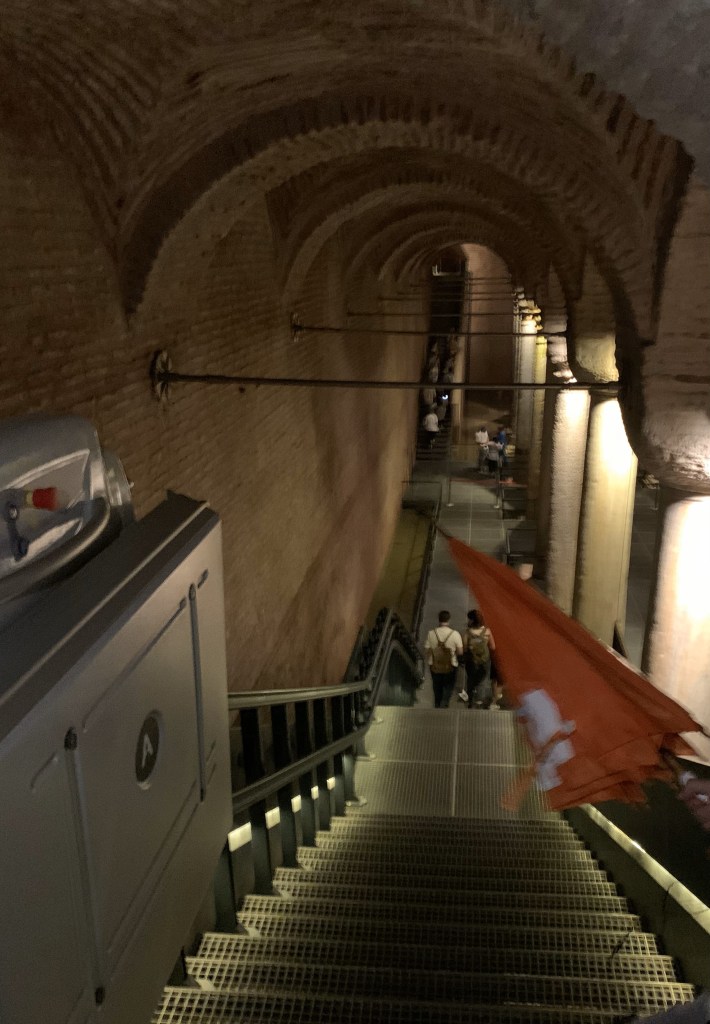
Walk down with me, into this dark ancient place. Sixth century engineering feat. Wander round three hundred thirty-six columns, sentinels to Constantinople’s water supply. Discover Medusa’s inverted head carved into marble base. Outside, sun blazes. Istanbul’s teeming streets jolt us back to present time.
Written for dVerse, the virtual pub for poets around the globe. Today we’re to use the word “water” within the body of a quadrille: a poem of exactly 44 words sans title.
I’m home again and back to writing after a month’s hiatus, traveling the Mediterranean on three back-to-back-to-back cruises with two overnights in Istanbul, Turkey. I’d been to Istanbul a number of times with my job before I rejuvenated in December 2012 (never say re-tired). It was a thrill to finally share Istanbul with my husband.
Istanbul’s Basilica Cistern was built in 532 AD, during the reign of Byzantine Emperor Justinian. It is slightly west of the Hagia Sophia and literally down the street from the old hotel I used to stay at during my sojourns in Istanbul. According to ancient texts, seven thousand slaves were involved in building the cistern. Many of its columns were salvaged from ruined temples. It provided a water filtration system for the Topkapi Palace and other buildings on First Hill in Constantinople. After the Ottoman conquest in 1453, Constantinople became Istanbul. Locals drew water from the cistern until 1565. The Cistern was featured in the 1963 James Bond movie, From Russia With Love, where it was fictionally located under the Soviet Consulate.
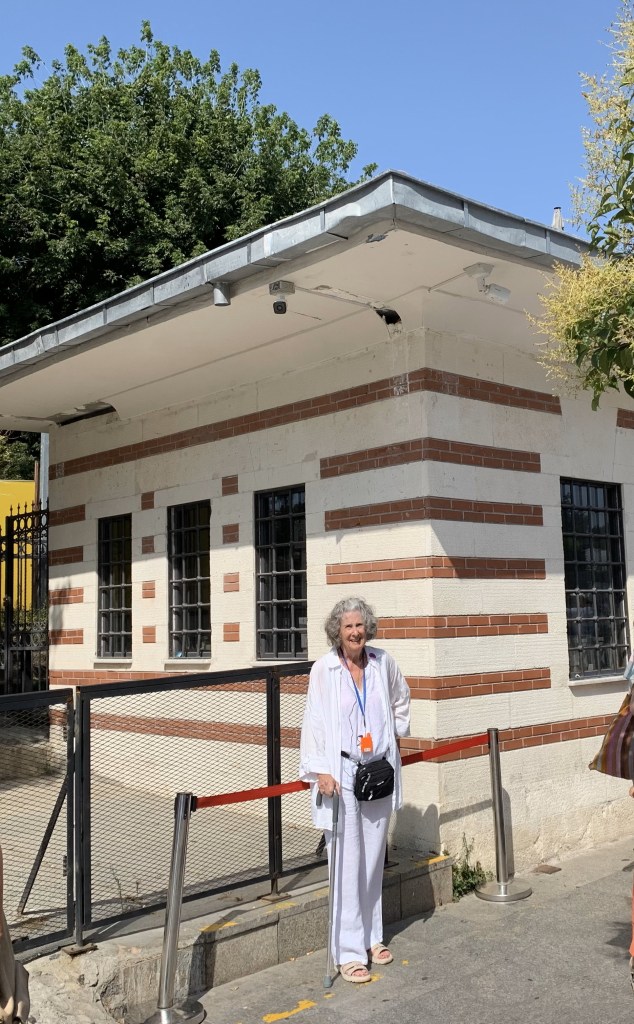
All photos from our visit there last week. Last one shows me standing outside the bland entrance to the Cistern.
Beatrice caterpillared her way through life, cocooned away in a dune shack on Provincetown’s National Sea Shore. Aware of her eccentricities, town criers and town folk alike let her live her reclusive life.
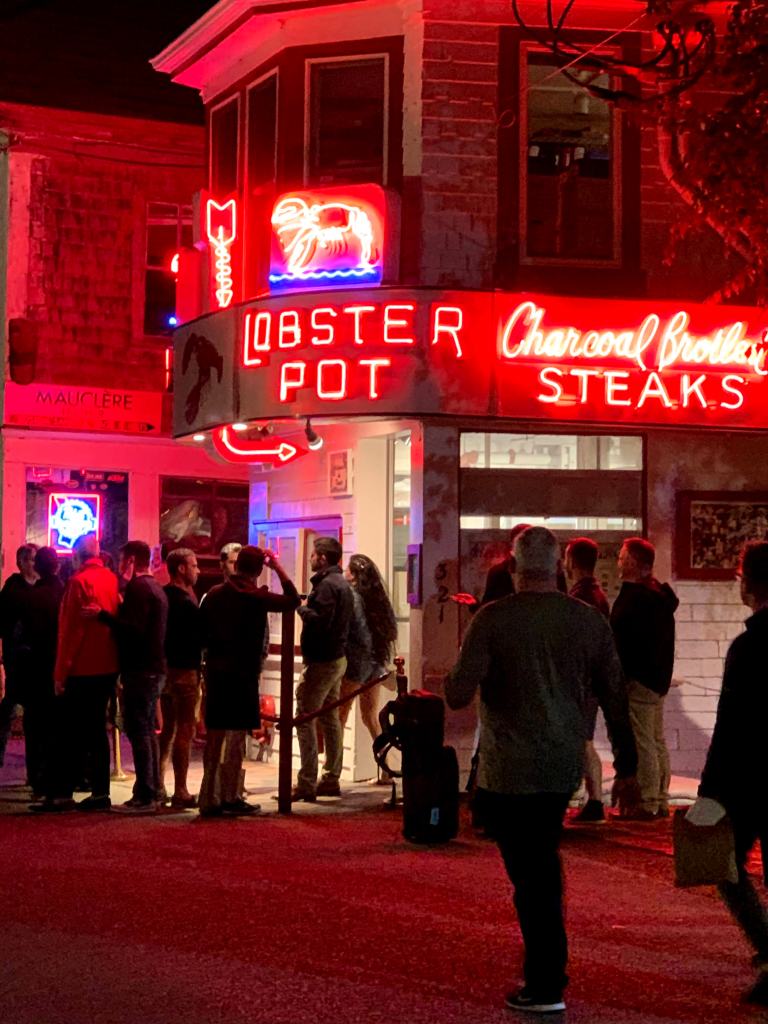
In the summer of nineteen seventy-nine crowds gathered outside the Lobster Pot, salivating at the new restaurant in town. Suddenly, mouths agape, they gawked at the brightly clad gal who fluttered out its door.
Dressed in beaded striped chemise gauzy wings mysteriously attached, she looked vaguely familiar. She smiled tossing menus to the crowd, sand clinging to ginger ringlets, long eyelashes and sunburned knees.
Beatrice had left the beach and butterflied her way into town.
Written for dVerse, the virtual pub for poets around the globe. Today Sarah asks us to write a poem in which we verbify an animal or two. Among the examples she gives are dogging someone’s footsteps and badgering someone. She provides us with a list of animals to verbify, or we may choose our own. I chose the caterpillar and butterfly.
Photo is from one of our many annual two-week stays in Provincetown, on the very tip of Cape Cod. The “sandgrains of truth” in this tall tale of a poem are 1) the Lobster Pot first opened in Provincetown in 1979; and 2) there are indeed dune shacks on the National Seashore in Provincetown. People still use them today and they are considered by many as historical treasures. At different times, Jackson Pollock, E.E.Cummings, Norman Mailer, Jack Kerouac and Tennessee Williams lived in them.
Image blurs reality. One long gone, etched in charcoal, hangs on wall. Me frozen, living within his frame. Trick of lighting, reflection merges life and death. Imagine all the people livin’ life in peace.
I meander through gardens, gardens he skipped through as a child. Strawberry fields forever. My words, set to this page, meaningful to me. His words, set to music, reverberate round the world.
Imagine what words died within him, unborn, silenced by those bullets. Creativity treasured by so many, silenced by that gun. Children. Adults. Their voices treasured by friends, family, silenced too. By guns. Those bullets. Their velocity rips through humanity. Bullets sprayed in schools, grocery stores, churches, movie theaters, at concerts and in prayer, on streets, on porches, in homes.
Image blurs reality. The living stand with dead loved ones. Framed in happiness on a shelf, a dresser, hanging on a wall. Reflection merges life with death as we think, sing within our heads. Imagine all the people livin’ life in peace. Oh dear God, please let it be.
Written for dVerse, the virtual pub for poets. Will share and read aloud at OLN LIVE on Saturday, May 20th, from 10 to 11 AM EST. Come join us to hear and see poets from around the globe. Click here, and then on the link for Saturday’s session with audio and video connection.
We did a Beatles themed excursion on a recent British Isles cruise. It included a visit to Liverpool and the actual Strawberry Fields that John Lennon wrote about. Strawberry Fields was and is the name of a facility run by the Salvation Army for children. It’s surrounded by gardens. When Lennon was a small boy, estranged from his mother, he lived with his aunt within walking distance of Strawberry Fields. He often went through the red gates to play with children in these gardens. While visiting the gardens and a building that includes information about John Lennon’s relationship with the facility, and the actual piano he composed Imagine on, we viewed an artist’s exhibit of charcoal paintings including the first image at the top of the page. This image was the motivation for my poem today. John Lennon was assasinated; shot 5 times outside the gates to his New York City apartment. My poem refers to his assasination, as well as the Beatles song, Strawberry Fields Forever; and Lennon’s song, Imagine, written and recorded after the Beatles broke up.
World slips away, hands-free sailing the seas. Unbroken expanse lulls calm into being. Softly undulating waves stretch from ship’s edge to straight line – where pastel blue sky caps azure blue waters. Sparse, feather-edged clouds gently smudge the scene. My mind, my body, sigh in unison. I wish this peace for everyone.
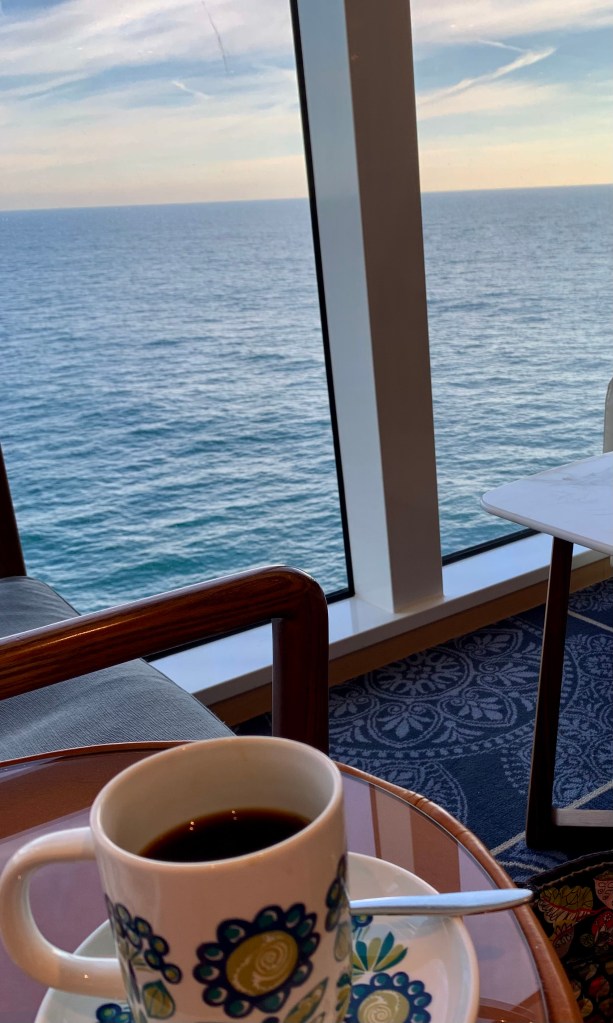
Up earlier than most, I so enjoy sitting in a quiet space with a cup of coffee, contemplating the vast calm ocean before me. It is my muse this morning.By the time I took this photo, the scene had shifted a bit – but still it’s a quiet calming for me.
She lives her life as a barnacle would, clinging tenaciously to existence. A recluse without the vanities and banalities of everyday life. She escapes it all, lives in the far reaches of Cape Cod’s shifting dunes.
It is said she journals each day. Pecks words into being on an old Smith Corona, sounding every bit like gulls pecking again and again at stubborn crustacean shells. She imagines a kind of Victorian love, creating a lover of her design.
Humpback whales serenade her from the depths of Stellwagen Banks. Red fox slink past her, pay their respects with nary a sound. All maintain her privacy, be she substance of spirit or legend of yore.
Should you walk the beaches, search the National Seashore’s length in sunlight or by the path of a glistening moon, you shall never find her. She is known as the Lady of the Dunes to all who live on this spit of land.
She floats amidst the salted winds companion to the ocean’s ebb and flow. She is the past, the present and the future. She is the one who comforts Portuguese fishermen. Those brave men who disappeared many years ago as ships went down and women wailed.
She is the forever inhabitant of this land called Cape Cod.
Image from Pixabay.comI must admit poetic license here – the Lady of the Dunes legend is my creation
Written to share at OLN LIVE which will meet Saturday morning, April 22nd, from 10 to 11 AM EST. Come to https://dversepoets.com to find the link which will take you to a live session of poets from around the globe as they share a poem of their choice. Come to read a poem of your own, or just to listen. We’re a friendly bunch!
January takes us to San Diego, California for two months. We trade in Boston’s winter for sunshine, temperatures in the sixties and seventies, and enjoy living in a small apartment rental. It will be our fourth year so we no longer feel like tourists. With our Senior pass in hand, we ride the buses and take commuter trains and trolleys around the city like seasoned San Diegans. Shopping at the local farmers market for fresh fruits and vegetables and fresh fish is a favorite Sunday pastime. And of course, that turns into delicious dinners in our home-away-from-home. We especially enjoy strolling the coastline, weekly visits to the world renowned San Diego Zoo, and listening to live outside concerts at Balboa Park.
So here’s to leaving our down jackets, wool hats and mittens behind and boarding the plane on January fifth. California, here we come!
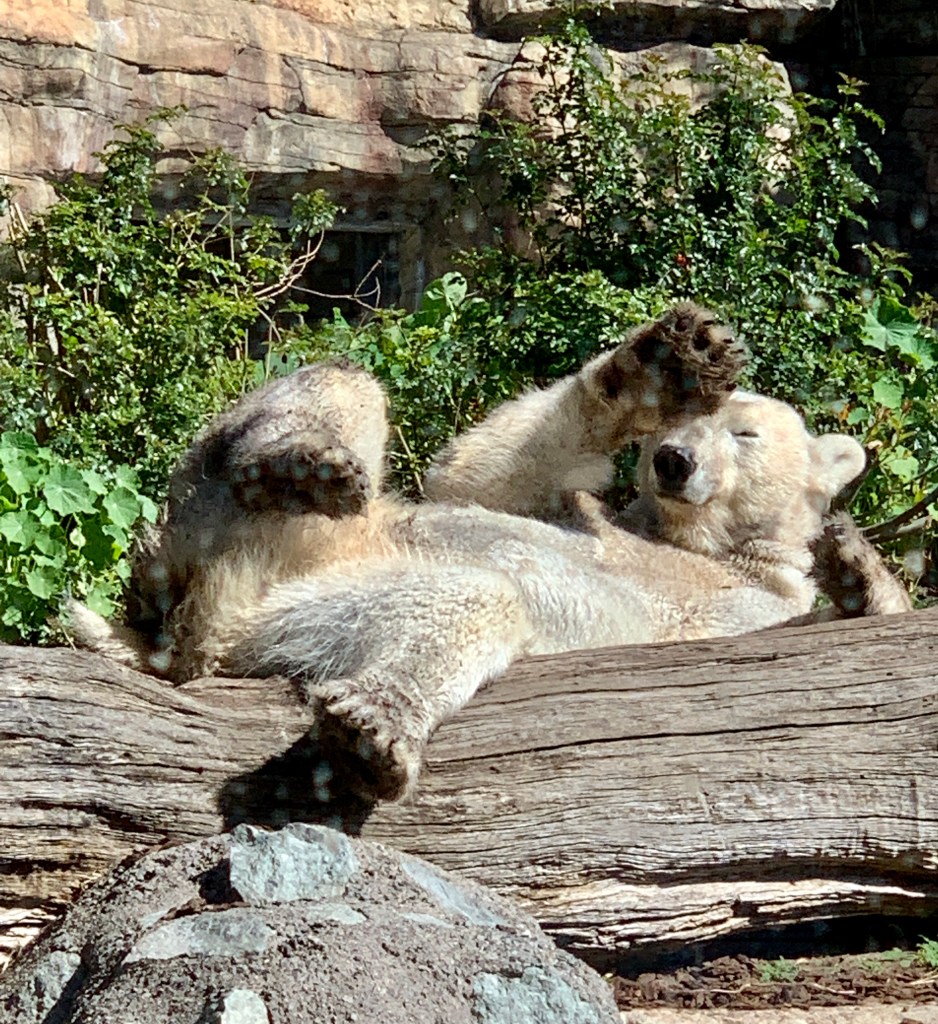
snoozing burly bear wakes up energized by sun lumbers out to play
Kim welcomes us back to dVerse and asks us to write about what January means to us, in this first haibun of 2023. Photo is from the San Diego Zoo last year.












 lillian the home poet