Mother sang about the man in the moon. I don’t understand how he can wax and wane. Like that maxim “love one another” seems to wax and wane if people are others instead of another. Reality morphs, contorts, always in flux. Except for you.
Written for Quadrille Monday at dVerse where today we’re asked to use the word “moon” in our poem of exactly 44 words sans title. Image from Pixabay.com.
I fell off the wagon tonight. Sprite at the holiday party just wasn’t merry enough. Only one Cosmopolitan, drinking with Santa tasted so good. then another another
an Alice-in-Wonderland night falling down, in to the rabbit hole another time yet again. I need help.
Written for Quadrille Monday at dVerse, the virtual pub for poets around the globe. Today I’m hosting and asking people to include the word “fall” or a form of the word, within their poem of exactly 44 words, sans title. Have no idea how Alice became an alcoholic….sometimes the muse just takes you down the rabbit hole! Image from Pixabay.com.
We are the baby-boomers, celebratory births conceived and born after World War II. We lived in our all white world, walked to elementary school in Mary Janes and white lacey ankle socks.
We were the oblivious ones riding from Chicago to Florida. Family vacations to grandma’s excited to buy Orange Blossom eau de cologne and praline candies at rest stops.
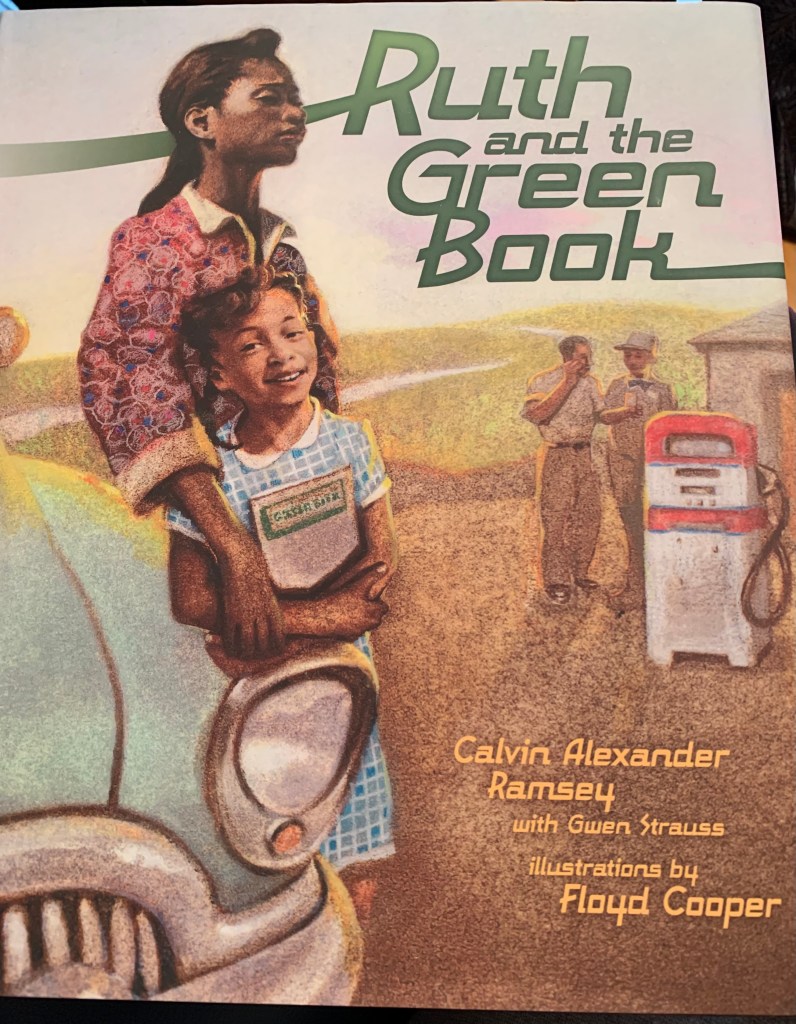
We had no idea Black families used The Green Book for the same trip. Dog-eared pages marked “friendly” towns. Listed cafes, motels, and gas stations where Negroes were welcome.
We didn’t know anybody named Jim Crow. As young kids, we blindly sipped from white-only fountains, sat where we wanted at diners along the route.
But we know now, or do we? – How many of us have seen or read the children’s book, Ruth and the Green Book by Calvin Alexander Ramsey?
How many of us have read The 1619 Project? Written by Nikole Hannah-Jones, winner of the Pulitzer Prize and a #1 New York Times bestseller.
What are we afraid of? We may not be Bible readers but we’ve all heard John 8: 31 and 32. “The truth will set you free.” Now is the time the truth be told.
Written for dVerse, the virtual pub for poets around the globe. Today Bjorn is hosting from Stockholm, Sweden and asks us to write a poem in the “collective” voice — we, our. Given the movement so rampant in parts of the US to ban books, I thought it important to write this poem. If you’ve not read either of the books I mention, they are well worth the read.
Quoting from the Calvin Alexander Ramsey at the end of his book: “In 1936, an African American living in New York City named Victor Green wrote a book to help black travelers. He made a list of all the hotels, restaurants, gas stations and businesses that would serve African Americans in his city. There was such a high demand for his book that he decided his next edition would include other towns in other states, as well. The Green Book was sold for a quarter in 1940 at black-owned businesses and at Esso stations, which were among the only gas stations that sold to African Americans. Esso was owned by the Standard Oil Company, which eventually provided funding and offices for Victor Green. The Green Book quickly became very popular and helped many businessmen on the road, as well as the families who needed and wanted to travel by car. By 1949, the price of the Green Book had grown along with its size – it cost 75 cents and was 80 pages. It covered all the United States, Bermuda, Mexico, and Canada! In the 1950s and early 1960s, civil rights leaders like Martin Luther King Jr. brought national and international recognition to the injustices suffered by African Americans. Jim Crow’s days were numbered. On July 2, 1964, President Lyndon Johnson signed the Civil Rights Bill into law. Among other things, this act made it illegal for hotels, restaurants, and gas stations to discriminate against customers.
Victor Green published the final edition of the Green Book that same year – 1964.”
i On the street corner used and discarded needles, broken bottles too. The downtrodden neglected, Mother Teresa long dead.
ii Bottled up feelings like a Molotov cocktail, stuffed and volatile. When circumstances throw him, he’ll blow his top like Etna.
iii Bottle tipped over, red wine stained white tablecloth. Lipstick on glass rim, her perfume scent still lingered. The filthy slut betrayed him.
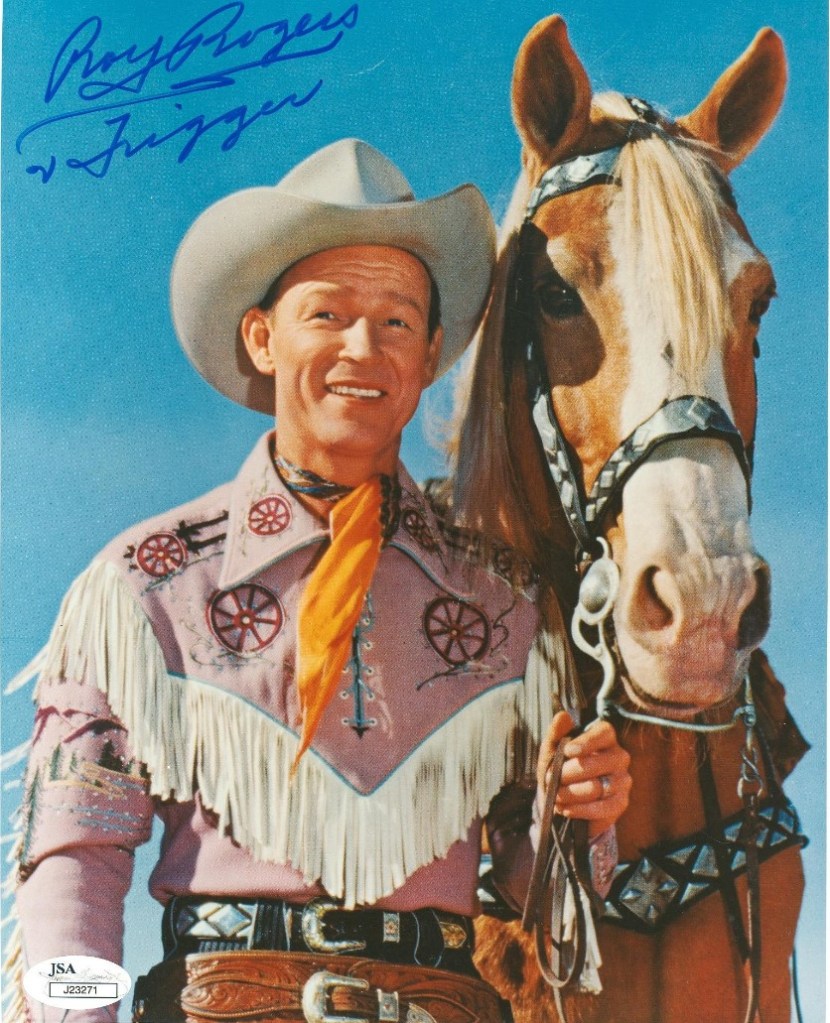
iv Glass milk jug bottles, Wonder Bread pb and js, Father Knows Best, Roy Rogers, saddle shoes and bobby sox. My fifties and sixties life.
Written for dVerse, the virtual pub for poets around the globe. Today, Grace asks us to write about bottles.
The Tanka form is a 5 line poem with the following syllabic content in each line: 5-7-5-7-7
Roy Rogers and Father Knows Best were very popular tv shows in the 1950s. Roy Rogers vied for viewers with Gene Autry and also the Lone Ranger. We always got glass milk jugs from the grocer….no such thing as waxed cardboard containers in those days. Wonder Bread is a spongey white bread, still sold in groceries today. Peanut butter and jelly sandwiches on Wonder Bread were always in my tin Lone Ranger lunch box!
Wrap it man, this ain’t no flash in the pan. People startin’ to see he’s a chump, that crookster, narcissistic Trump.
Rap it up man, Jack’s lined ‘em up. Thirty-seven counts along with hide-and-seek. No more Come on, I’ll give you a peek.
My boxes, my boxes, don’t touch my boxes. Who wants to man, when they’re in your john?
Except thousands of guests. Some of ‘em spies, some of ‘em minions, too many lummoxes, too near your boxes.
Everybody’s gotta pee, man. So show ‘em right in. Let ’em sit or stand. Maybe they’ll read while they use your throne.
Wrap it up man, you’re goin’ down. Documents as toilet paper just won’t do, even the Brits know, not in the loo.
Written for dVerse, the virtual pub for poets around the globe. Written for Lisa’s challenge to “choose a musical artist, song, or genre of music and write a poem inspired by it or them.” AND shared again for today’s OLN LIVE.
I thought this photo from Pixabay.com a good metaphor for Trump’s situation.If I’ve offended anyone, I apologize….and at the same time I ask you to read the indictment in its entirety. It’s a short read and is factual in its details. I do believe every person in this country should read the indictment and then make up their mind about this trial.Far too many demonstrators in Miami today, probably on both sides, have not even read the document and therefore are simply demonstrating from their partisan values rather than from an informed decision. Also, I urge everyone to recognize that the DOJ did not bring this indictment: a group of randomly selected Floridians on a Grand Jury brought the indictment after seeing and hearing evidence.
She led a paper doll life. Strived to meet expectations from so many. Put yourself together this way. Tabs turned down. Pieces in place.
But those over there said, It’s better this way. Snip snip. Glue applied till she was rearranged. Someone else said, Add this to your face. Minimize that part, emphasize this.
And all the hims over the years. He said, Do this. So she did. The last him said, Do what I say. Wear this, not that. Never that.
She cut herself up so many times. Attributes shed, shards left behind. Fragments added, ill fit though they were.
Until one day, someone gifted her a bouquet. A mixed bouquet with twelve different blooms.
Holding them close, she eyed them carefully. Curled up edges on the violet one. Red rose, sagged and drooped a bit, stem too thin for its weight.
Each flower beautiful in its own way, nestled together in soft silk ribbons. And at that moment, she decided. I will be me.
Written for dVerse, the virtual pub for poets around the globe where today, I’m hosting Tuesday Poetics.
Today’s prompt introduces writers and readers to Thorvald Hellesen (1888 – 1937). I was introduced to this artist at our recent visit to the National Museum of Norway in Oslo. Hellesen grew up and studied art in Kristiania (Oslo). His debut exhibit in 1919, in Kristiania, was met with much derision and he never showed his art in Norway again. He moved to Paris at age twenty-three where he joined the circles of Picasso and Fernand Leger, Cubists who turned the norm of what art should be upside down. He had successful exhibitions in Paris and in addition to his painting, went on to design posters, textile patterns and worked with interior design. 104 years after his fatal debut in Kristiania (Oslo), this is the first museum exhibition devoted to Norway’s first consistent Cubist.
Within the prompt, I provide five different portraits painted by Hellesen, three of which are in the Cubist tradition, including the one I’ve used and posted above, “Suitor. Figure with Bouquet” painted in 1917-1918. Writers must choose one of the five portraits as inspiration for a poem and, of course, give credit to Hellesen.
Gustav, cloak me in yellow. My golden mantle shimmers as does my heart in your embrace. Your mouth meets mine, a kiss divine.
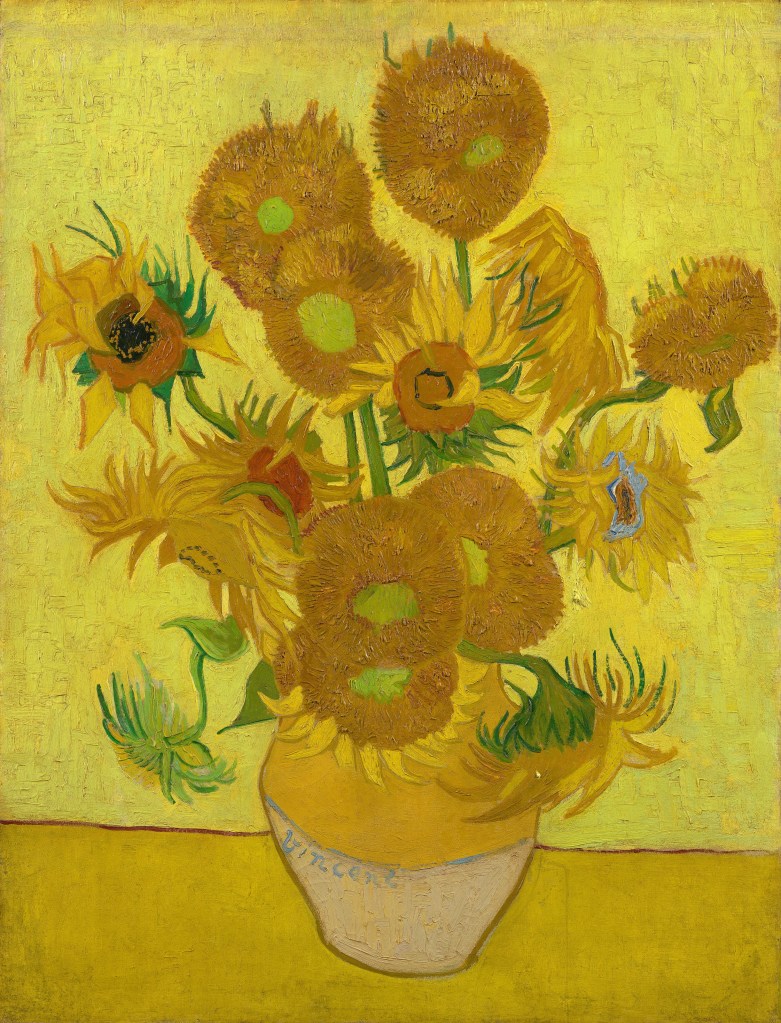
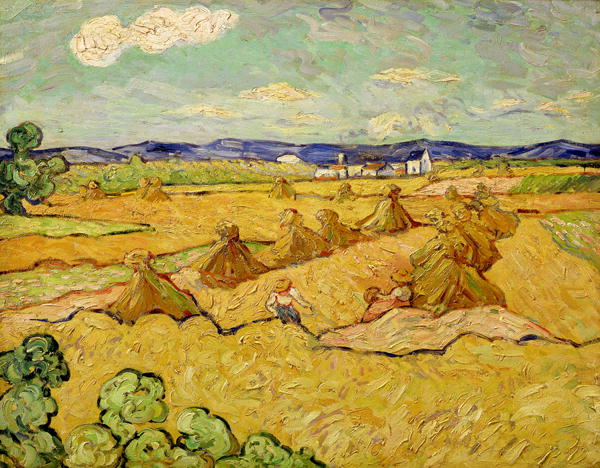
Surround me in yellow, Vincent. Bouquet me with sunflowers. Run beside me round yeasty haystacks. Worry not my darling, your works shall be loved
Dazzle me in yellow, William. Ease my loneliness, wander with me beneath cumulus clouds. Dance with me, as daffodils do, waving brightly in the hills we climb.
Someone, please, mesmerize us with yellow. Glaze our eyes in sunshine. Brush merriment into wildflower scenes. Blend colors into happiness upon your palette. Make this world a wondrous place.
Written for dVerse, the virtual pub for poets around the globe. Today Sarah asks us to consider the color yellow. My poem references The Kiss by Gustav Klimt; Sunflowers and Haystacks, both paintings by Vincent Van Gogh; and the poem Daffodils by William Wordsworth.
Art work images are in public domain. Daffodils image from Pixabay.com
Steeped in amniotic fluids, ejected from maternal womb – dropped into parents’ environment.
Simmered in their care, their beliefs, their modeling behaviors and aspirations. Children grow roots where they are planted. Tend your garden wisely.
Written for dVerse, the virtual pub for poets around the globe.
Today Bjorn hosts OLN LIVE from Sweden, from 3 to 4 PM Boston time. Click here between 3 and 4 PM EST for the link to join us live with audio and video.Come read a poem of your own or come just to listen. The more the merrier!
Occasionally, I think back to those times. Friendship spoiled like aged milk. Curdled putrid, far beyond its best-used-by date.
I was impressed at first, by your confidence, laughter, your louder-than-life self. We became best friends, roommates two years in school.
Slowly I realized you craved attention. Demanded the spotlight. Used people to make yourself the star.
Life’s circumstances sent us to different cities. We married, had children, successful careers. And then, we were thrown together again.
You relocated to where we were. Kids in the same school, same grades, same interests. Old times linked us in others’ minds, at church and kids’ events.
But you lived in the Heights, we lived in the Flats. You paraded that, flaunted it. I was okay with that, merely irritated.
Your husband exhausted by your demands, your goal to shine, became more than irritated. Driven to depression and anger, he fled to the arms of another.
So you, ever the diva, consumed by ego, picked up a knife, stabbed him. Just once. He gave you the spotlight. He died.
On parole, you called me. Went on and on about his indiscretion. Claimed it was self-defense. Practiced your defense on me.
I hung up that day. Done. You went to prison. I went on living, loving my husband, my family, and our life.
Just shows you I supppose, some friendships were never meant to be.
Written for dVerse where today we’re asked to a) write about friendship and b) begin our poem with the first line of another poet’s poem posted on dVerse. My first line, “Occasionally” is from Christine Bolton’s Senryu. Image by OpenClipart-Vectors from Pixabay
Moon is a sliver of silver; stars sparkle, shimmering steel in space; silky cirrus clouds slither across silent sky searching span for sanctuary.
Solitary soul seeks solace; a shield from shadows of secrets searing his serenity. Scanning skyward, he senses sanctuary in sacrament of silence, a sliver of silver shining still.
Written by Lindsey Ein and read aloud today at OLN LIVE, at dVerse, the virtual pub for poets around the globe. Image from Pixabay.com







 lillian the home poet