She enjoyed a staccato existence, never a sustained note ecstatically percussive. High on life, she jived from one gig to another town after town, no stage too small. Showmanship and flair, nothing static in her repertoire. Gender be damned, she was a one-man band.
Quadrille (poem of exactly 44 words, sans title) written for dVerse, the virtual pub for poets around the globe. Mish is hosting and asks us to include the word “static” within our poem. Note: I ecSTATICally included static twice!
When I think about myself there is a deep brooding. The day hangs heavy no sound falls. I see you, shadows on the wall just beyond my reaching.
Lying, thinking I almost remember when you came to me, unbidden. Your smile, delicate a young body, light, your skin like dawn. We saw beyond our seeming.
One innocent spring it occurs to me now, the dust of ancient pages.
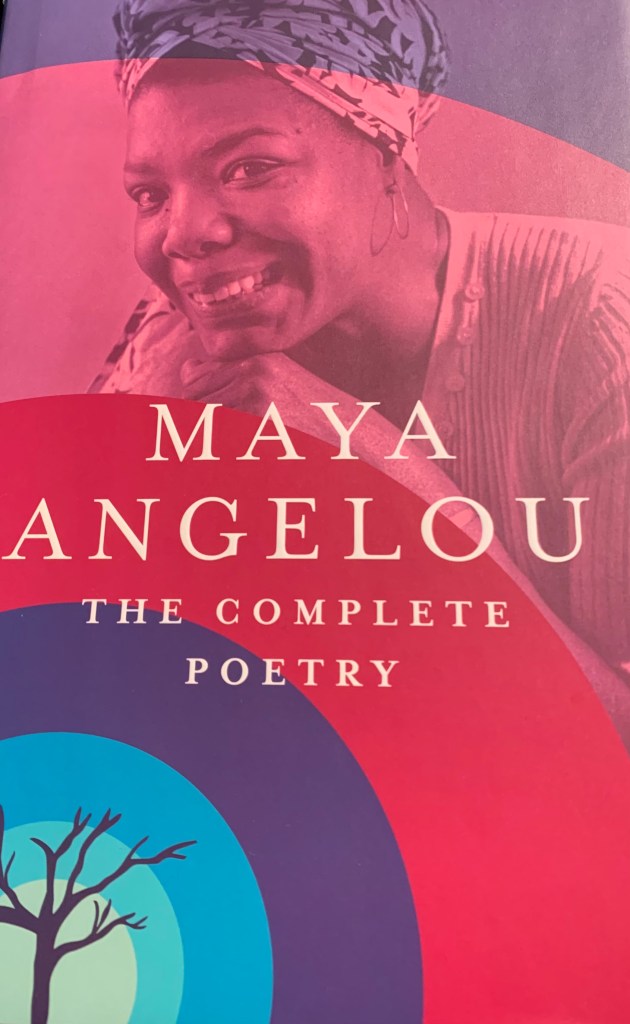
Every line in this poem, is the first line in one of Maya Angelou’s poems. The poems are listed below, in the order of their appearance:
When I Think About Myself My Arkansas Greyday After Thank You, Lord Life Doesn’t Frighten Me Slave Coffle Alone I Almost Remember When You Come to Me Woman Me To Beat the Child Was Bad Enough Passing Time We Saw Beyond Our Seeming Now Long Ago Changing Communication II: The Student
Today’s prompt: Today, I’d like to challenge you to write a poem in which you muse on the gifts you received at birth — whether they are actual presents, like a teddy bear, or talents – like a good singing voice – or circumstances – like a kind older brother, as well as a “curse” you’ve lived with (your grandmother’s insistence on giving you a new and completely creepy porcelain doll for every birthday, a bad singing voice, etc.). I hope you find this to be an inspiring avenue for poetic and self-exploration.
My life is like a fragile hourglass sand grains drop through. Some moments I savor slip past me before I can taste them. Other times lag behind move so slowly I can not stand it and so I open my mouth and scream aloud. I want to control each and every grain of my life, especially now in our winter season when the path ahead is far shorter than the glorious one we’ve been blessed to share.
Written for NAPOWRIMO, DAY 28. Today the prompt is to write a concrete poem, in which the lines are shaped in a way that mimics the topic of the poem. Also shared with dVerse, the virtual pub for poets, where today it’s OLN: Open LInk Night where we can share any one poem of our choosing.
Today, we have a tough prompt; what I call a sudoku prompt !
We are to write a duplex.Like a typical sonnet, a duplex has fourteen lines. It’s organized into seven, two-line stanzas. The second line of the first stanza is echoed by (but not identical to) the first line of the second stanza, the second line of the second stanza is echoed by (but not identical to) the first line of the third stanza, and so on. The last line of the poem is the same as the first.The only part of the requirements I did not follow was the bit about the last line. I like the way mine ended as is.
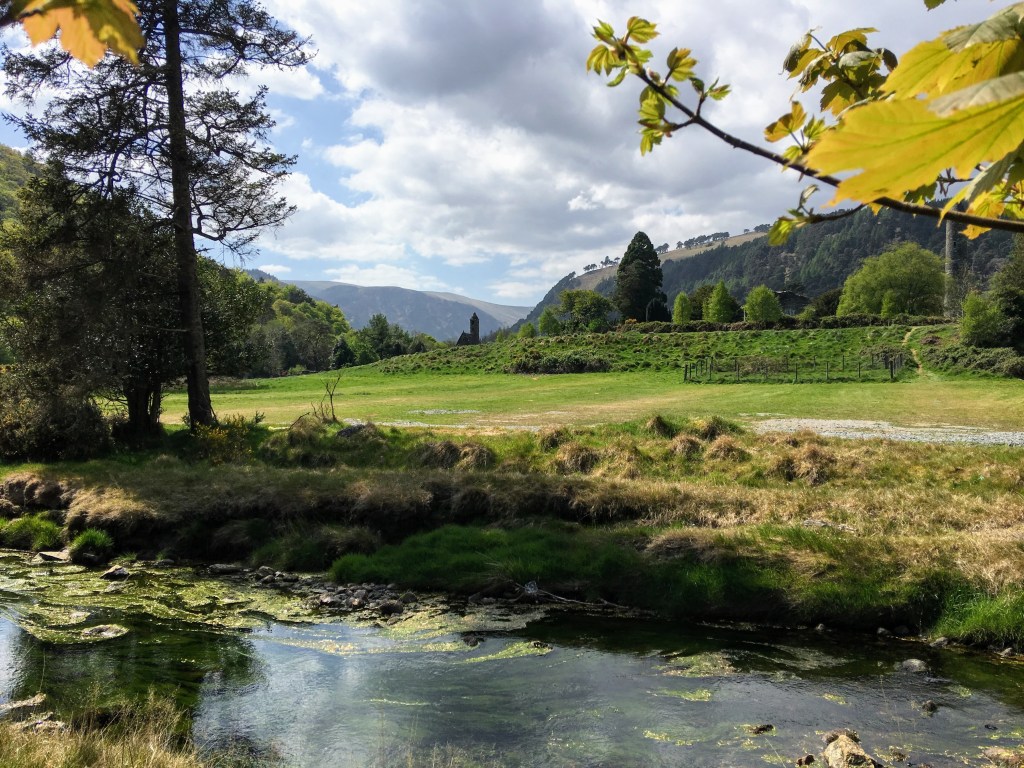
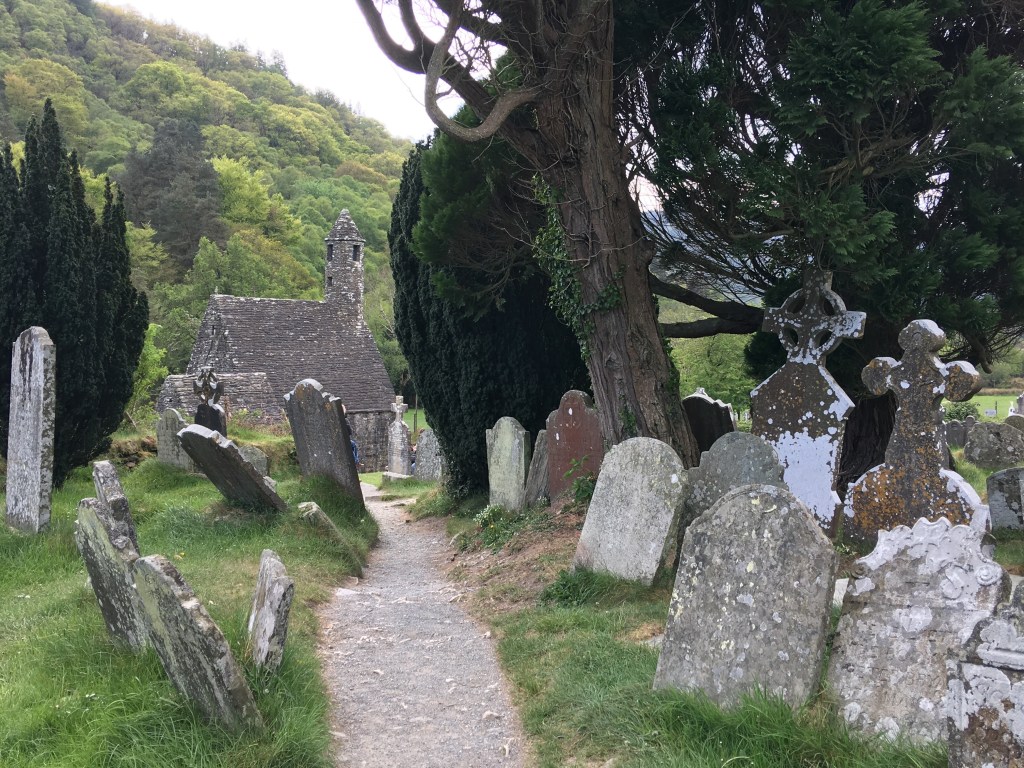
Photos taken some years ago when we visited Glendalough in Ireland. An absolutely beautiful and serene place. Saint Kevin is an Irish saint, known as the founder and first abbot of Glendalough in County Wicklow, Ireland. His feast day is June 3rd. He was born in 498 AD. After his ordination, he moved to Glendalough to live as a hermit in a partially man-made cave. His companions were the animals and birds around him. He lived as a hermit for seven years, wearing only animal skins, sleeping on stones and eating very sparingly. Soon others sought him out as a teacher and holy man. Glendalough grew into a renowned seminary of saints and scholars. Until his death around 618, Kevin presided over his monastary in Glendalough.
Caught in his maelstrom she survived a winter’s tale. Fighting against his blizzard of heartless demands, she left when the crocus bloomed.
Written for dVerse, the virtual pub for poets around the globe. Today, Ingrid asks us to consider the bard, William Shakespeare. We may choose a title from a list she gives us, a partial list of his plays. I’ve included A Winter’s Tale within my poem
I see her walking through peonies waiting patiently for the strawberry moon. She, the night traveler in my dreams. She bids me walk slowly, eyes open in my sleep, to explore her natural world. Together we soar on the wings of a hawk as goldfinches sing and wonder precedes us. Approaching Provincetown, we marvel at migrating wild geese making their cacophonous way to their winter’s resting place. As I begin to drift near rising she leads me past fields of goldenrod to a small pond bedecked in floating flowers, lily pads asleep and yet to bloom. Cool winds ruffle my eyelids like rustling leaves in a tree. The lilies break open over the dark water as my dream retreats into dawning sky. I awaken to a certain sharpness in the morning air ready to take up pen, inspired by this woman. She, the night traveler in my dreams.
Written for NAPOWRIMO, Day 25. Today we’re to write an aisling: to recount a dream or vision featuring a woman who represents the land/country on/in which the poet lives.
Mary Oliver moved to Provincetown in the 1960s and sets most of her poetry in and around this wonderful town. An avid walker, much of her poetry comes from her observances of the natural world. I’ve incorporated 9 titles of her poems in my Ode: Peonies Strawberry Moon The Night Traveler Hawk Goldfinches Wild Geese Goldenrod The Lilies Break Open Over the Dark Water A Certain Sharpness in the Morning Air
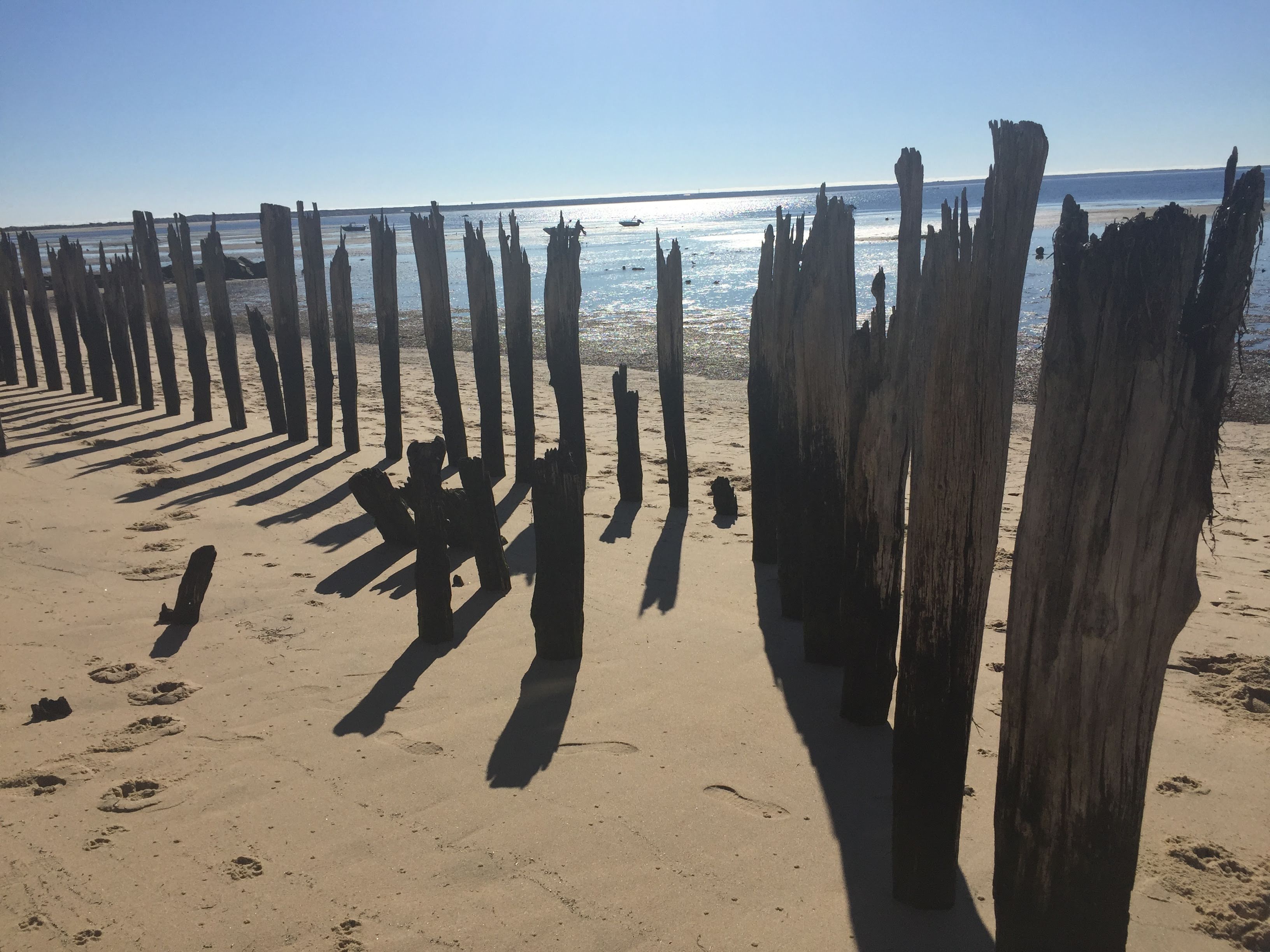
We’ve lived in Boston for the past twenty-five years and spend two weeks of every year in Provincetown, at the very tip of Cape Cod.Photos from our visits to P’town.
She lives her life as a barnacle would, clinging tenaciously to existence in the fast moving currents of today’s world. A recluse, without the vanities, the banalities of every day life, she escapes it all living in the far reaches of the dunes of Cape Cod. She journals each day. Pecking words into being from an old Smith Corona, sounding every bit like gulls pecking again and again at stubborn crustacean shells. She writes of Victorian love, placing herself in another world with a lover of her design. Her dreams inscribed on paper, ream after ream after ream. Like gossamer wings too ethereal to touch, to reach in any reality, but delectable none-the-less.
Written for NAPOWRIMO, Day 24. Today we’re asked to write in the style of Novelist Raymond Chandler who wrote hard-boiled detective novels known for their use of vivid similes. “Channel your inner gumshoe, and write a poem in which you describe something with a hard-boiled simile. Feel free to use just one, or try to go for broke and stuff your poem with similes till it’s . . . as dense as bread baked by a plumber, as round as the eyes of a girl who wants you to think she’s never heard such language, and as easy to miss as a brass band in a cathedral.” Photo from Pixabay.com
Quick wiggles brought giggles. Kissing us with sloppy licks, just one of her silly tricks. This peppy puppy stole our hearts in one short hour.
Written for NAPOWRIMO, Day 23. Today we are to write a poem in the style of Kay Ryan: short, snappy, lots of rhyme and sound play. Our daughter’s family went to “just look” at a litter of new puppies at a friend’s house. . .they now have a new bundle of energy in their home!
time ebbs and flows like sand sifting through a sieve like advancing waves crashing, rushing furiously to shore.
Emotions ebb and flow as we journey through later years, stopping to dally at sweet spots, speeding through dangerous curves.
Humanity ebbs and flows around us. People progressing forward, while others try desperately to stall and others slip backward to the way it was.
Much as we’d like to take control, place wooden rulers across our lives draw straight lines from point A to point B, we all remain in a fluid path as our lives continue to ebb and flow.
Written for NAPOWRIMO, Day 22. Today we’re asked to write a poem that includes repetition. Photo take some years ago when in Bermuda.