I fell off the wagon tonight. Sprite at the holiday party just wasn’t merry enough. Only one Cosmopolitan, drinking with Santa tasted so good. then another another
an Alice-in-Wonderland night falling down, in to the rabbit hole another time yet again. I need help.
Written for Quadrille Monday at dVerse, the virtual pub for poets around the globe. Today I’m hosting and asking people to include the word “fall” or a form of the word, within their poem of exactly 44 words, sans title. Have no idea how Alice became an alcoholic….sometimes the muse just takes you down the rabbit hole! Image from Pixabay.com.
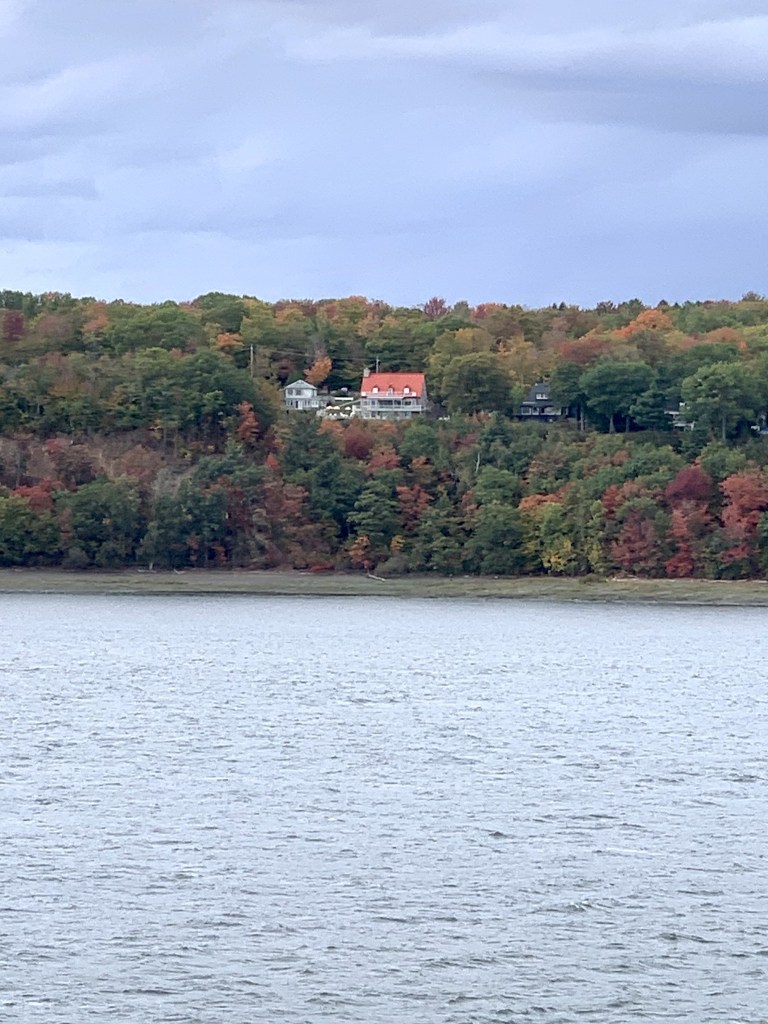
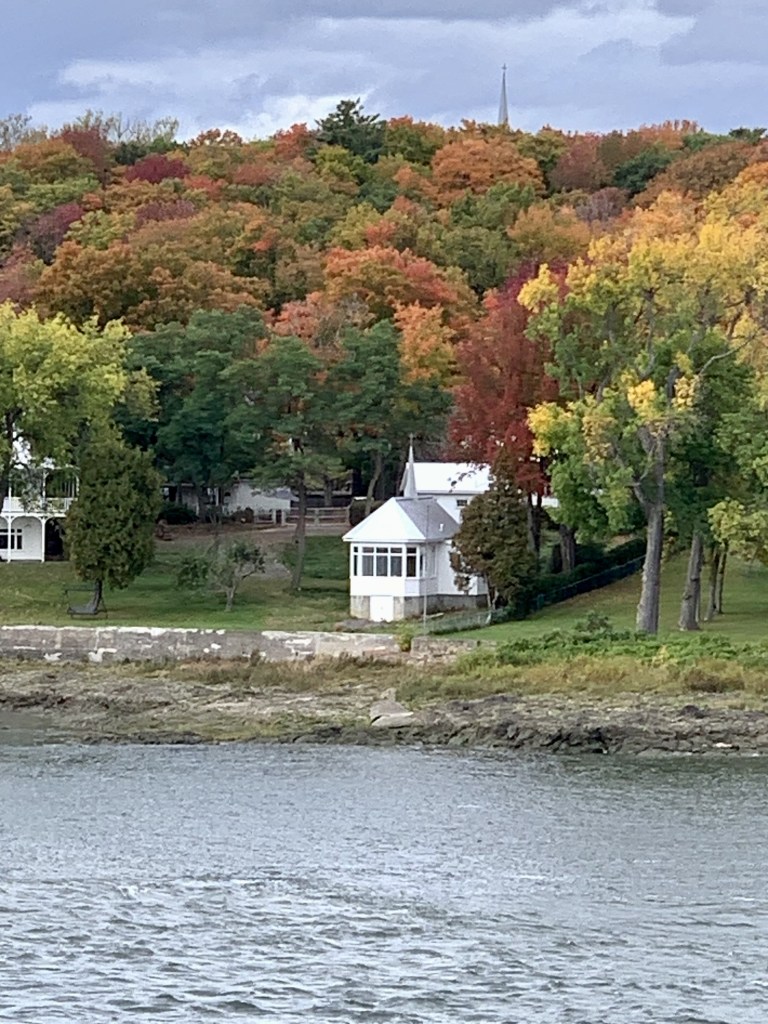
We left October 2nd on an eleven day fall foliage cruise from Boston, sailing up as far as Quebec, Canada. Stops heading north included Rockland, Maine; St. John, Bay of Fundy; Halifax, Nova Scotia; and Quebec City.
I learned about the process of autumn’s becoming from my science classes way-back-when. As temperatures cool and the sun lessens in intensity, trees stop making chlorophyll and leaves begin to change. Metaphorically speaking, I always thought they took on the look of Mother Nature’s cancan skirt! But sadly, in Boston and on this cruise, those magnificent crimsons, oranges, lemon and sunflower bright yellows were nowhere to be seen. Summer’s record high temperatures and extended heat-soaked days delayed the process. Finally, sailing into Quebec City along the St. Lawrence Seaway, disappointment turned to delight and quickly to awe. The coastal views reminded me of fall scenes from the October and November months on my grandmother’s wall calendars. I oohed and aahed at the glorious landscape. This was fall foliage indeed!
pumpkins sit on porch apple cider warms on stove leaf peepers delight
Written for Haibun Monday at dVerse, the virtual pub for poets around the globe. Today Frank asks us to write a haibun about the autumn season. A haibun is prose that cannot be fiction, followed by a haiku that includes a word or words that denote a season.
Photos taken two weeks ago on our fall foliage cruise, sailing up the St. Lawrence Sea Way into Quebec City.
We are the baby-boomers, celebratory births conceived and born after World War II. We lived in our all white world, walked to elementary school in Mary Janes and white lacey ankle socks.
We were the oblivious ones riding from Chicago to Florida. Family vacations to grandma’s excited to buy Orange Blossom eau de cologne and praline candies at rest stops.
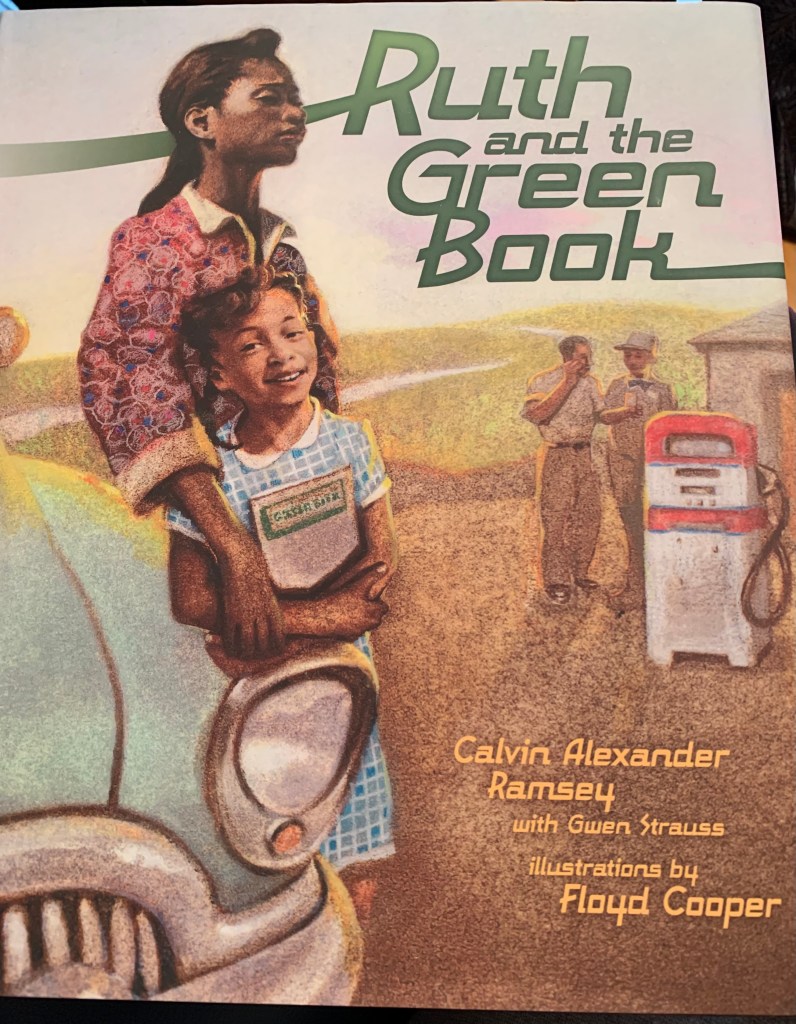
We had no idea Black families used The Green Book for the same trip. Dog-eared pages marked “friendly” towns. Listed cafes, motels, and gas stations where Negroes were welcome.
We didn’t know anybody named Jim Crow. As young kids, we blindly sipped from white-only fountains, sat where we wanted at diners along the route.
But we know now, or do we? – How many of us have seen or read the children’s book, Ruth and the Green Book by Calvin Alexander Ramsey?
How many of us have read The 1619 Project? Written by Nikole Hannah-Jones, winner of the Pulitzer Prize and a #1 New York Times bestseller.
What are we afraid of? We may not be Bible readers but we’ve all heard John 8: 31 and 32. “The truth will set you free.” Now is the time the truth be told.
Written for dVerse, the virtual pub for poets around the globe. Today Bjorn is hosting from Stockholm, Sweden and asks us to write a poem in the “collective” voice — we, our. Given the movement so rampant in parts of the US to ban books, I thought it important to write this poem. If you’ve not read either of the books I mention, they are well worth the read.
Quoting from the Calvin Alexander Ramsey at the end of his book: “In 1936, an African American living in New York City named Victor Green wrote a book to help black travelers. He made a list of all the hotels, restaurants, gas stations and businesses that would serve African Americans in his city. There was such a high demand for his book that he decided his next edition would include other towns in other states, as well. The Green Book was sold for a quarter in 1940 at black-owned businesses and at Esso stations, which were among the only gas stations that sold to African Americans. Esso was owned by the Standard Oil Company, which eventually provided funding and offices for Victor Green. The Green Book quickly became very popular and helped many businessmen on the road, as well as the families who needed and wanted to travel by car. By 1949, the price of the Green Book had grown along with its size – it cost 75 cents and was 80 pages. It covered all the United States, Bermuda, Mexico, and Canada! In the 1950s and early 1960s, civil rights leaders like Martin Luther King Jr. brought national and international recognition to the injustices suffered by African Americans. Jim Crow’s days were numbered. On July 2, 1964, President Lyndon Johnson signed the Civil Rights Bill into law. Among other things, this act made it illegal for hotels, restaurants, and gas stations to discriminate against customers.
Victor Green published the final edition of the Green Book that same year – 1964.”
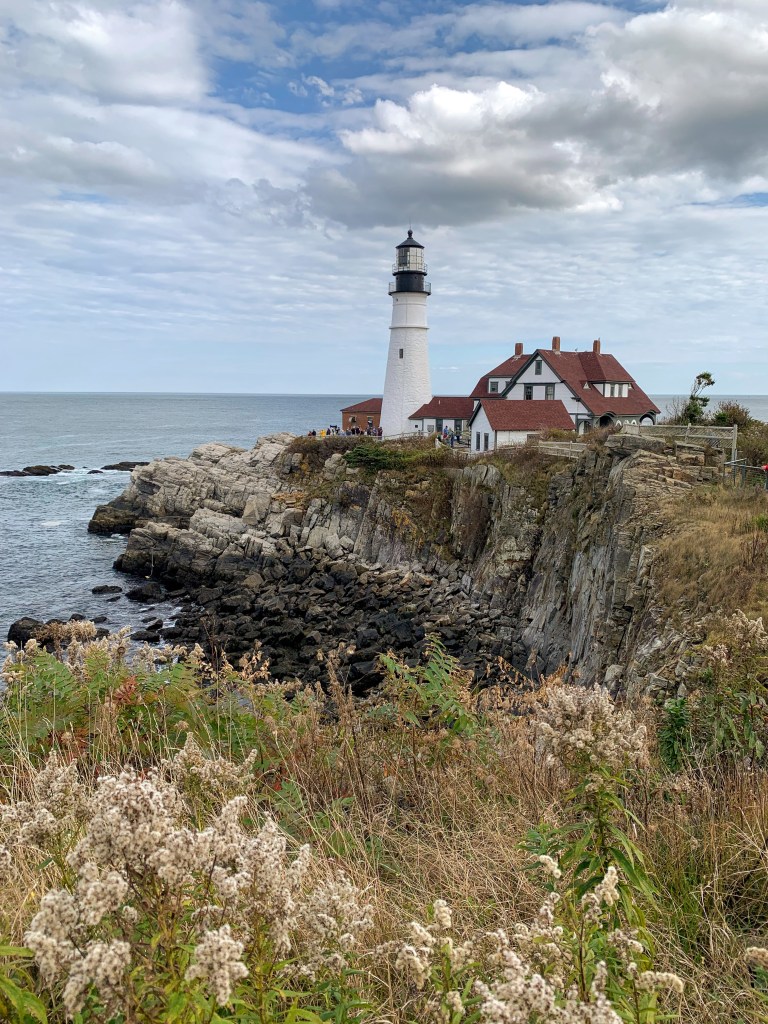
On craggy cliff she stands wind whipped hair obscuring view. Brushes dampened curls away, strains to see past white capped waves searching, praying, waiting not so patiently.
She dare not disturb the keeper again. Daily this past month she’d asked news of tides and his predictions. Fresnel lens flashes bright, her beacon of hope these rushing days.
Against her pa’s advice she’d married her sailor man. Now she prays for his return. Do not allow these ocean waters to stake their claim.
Hands clutch railing, winds gust strong. Swollen belly tantrum rolls, sharp quick little kicks announce time is drawing near.
She trudges slowly up the lane, returns to humble cottage. Coaxes crimson embers to flame again. Falls fitfully asleep in padded rocking chair dreaming dreams to will him home again.
Written for Open Link Night at dVerse, the virtual pub for poets around the globe.
I will read this aloud on Saturday, October 14th, at OLN LIVE. If you’d like to join us in our 1 hour live session from 10 to 11 AM EST, click here and then click on the appropriate link for Saturday’s LIVE session with audio and video.
Photo was taken on Thursday, October 11 on the last stop of our Boston/Maine/Canada cruise. This is Portland Head Light on Cape Elizabeth in Portland, Maine. Construction began in 1787. It was first lit on January 10, 1791 using 16 whale oil lamps. The first keeper’s house was erected in 1816 and the first Fresnel lens was used in 1864. The lighthouse was totally automated in 1989.
Interesting fact:Boston Light, built in 1716 on Little Brewster Island, is the oldest continually used and only staffed lighthouse in the United States. In November 1989, just as the Coast Guard was preparing to automate the light and remove personnel from the keeper’s house, the U.S. Senate passed a law sponsored by Senator Ted Kennedy requiring that Boston Light be permanently manned. The law also required that public access to Little Brewster be facilitated and in 1999, the island and lighthouse grounds officially opened to the public. Until 1998, the keeper climbed the stairs twice a day to maintain the light. Finally automated in 1998, the light is always “on”, ending the keeper’s need to climb the stairs. But a keeper still lives on Little Brewster, maintains the lighthouse and provides tours to the public.
I close my eyes face tilted to sun’s warmth. I listen with my entire being. Rhythmic ocean’s waves continually roll in. Their soothing sounds existed long before me. Will exist long after me. Sea breeze ruffles hair as closed eyes see glow. Darkness in any form cannot invade this moment’s grace. This place calms my soul. I breathe in this moment. I am embraced by sun and wind and ocean, afloat in serenity.
View from our deck in Provincetown – 23rd year we’ve rented here. Poem written this morning – and yes, it is just like this. I’ve always called it our happy place. I actually think it’s more about serenity and calm.
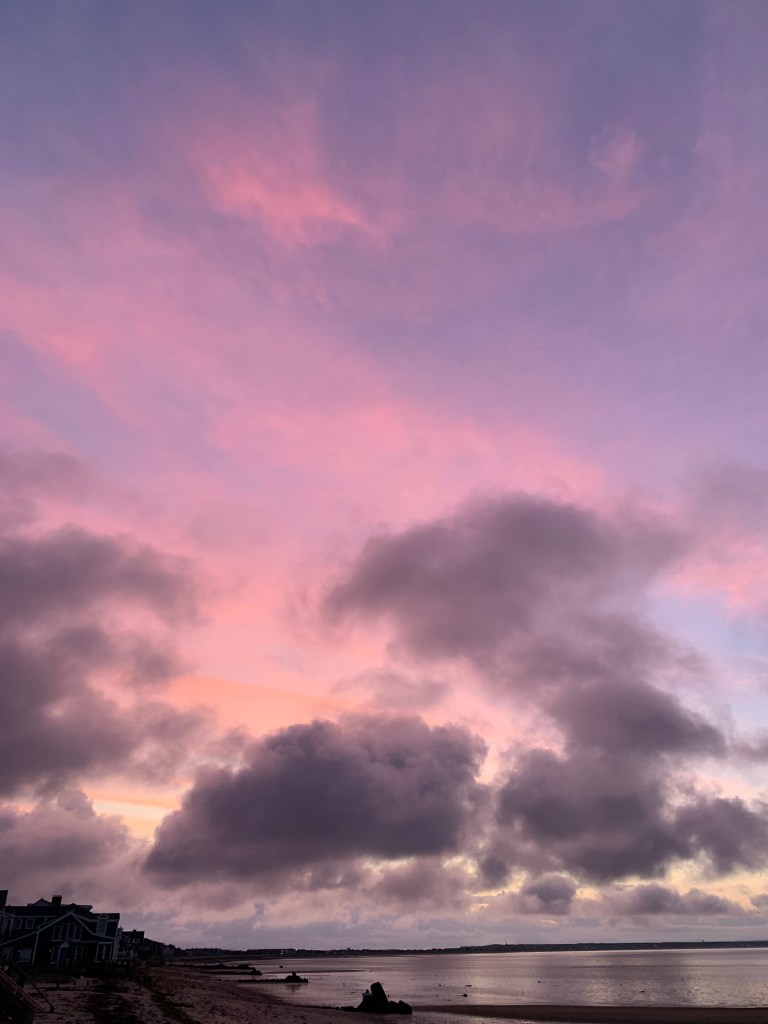
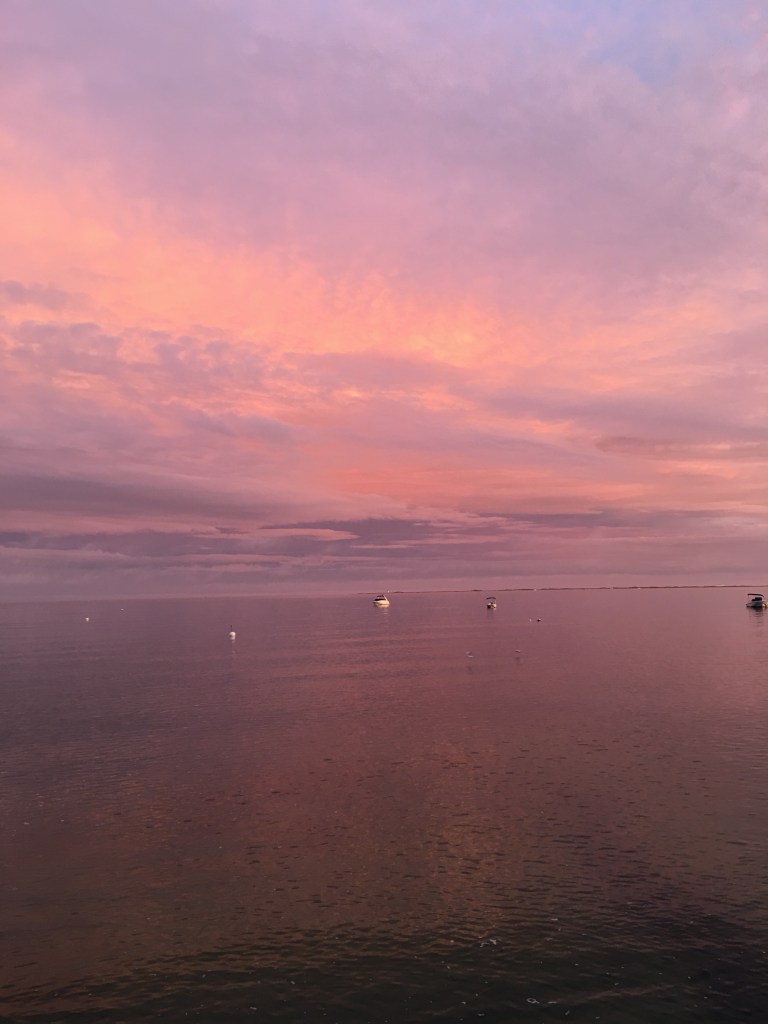
Provincetown’s prequel to dawn. Nature’s sky palette, her brush strokes divine. Palest of pastel pink ribbons and cotton ball fluffs, ombre into muted blues and greys. Profound quiet punctuated by gentle waves lapping shore. Day awakens as I gaze mesmerized by her calm. Her promise, a lovely day.
Written for dVerse, the virtual pub for poets around the globe. Today Lisa gives us three options as prompts for our poems. I chose the second: to write of an experience, preferably in the first person, where we’ve asked for a sign of something to come. Here in our beloved Provincetown for two weeks, I awaken each morning to watch the skies, wondering if we will have a clear, cloudy, or stormy day. No matter the weather, Ptown is always beautiful.
Photos taken this morning from our deck – those magical moments before sunrise. And it has indeed, been a beautiful day.
“I left the farm for the big city sixty-plus years ago. I embraced feminism and burned my bra. Then I met a guy and several months later I was shaving my legs and curling my eyelashes again! He was an English major so I became a romantic poetry sop. One night I even recited a line for him: ‘I want to be pretty for you. I have dropped two seeds of turnsole in the dark of both eyes.” I gravitated to him like sunflowers turning their heads to constantly feel the sun’s rays on their faces. Thank god I came to my senses and never looked back. Enough of this tangent. No more questions, Miss Parkander! Please call the Vice President and tell him he has to be at the Climate Accord meeting I’m hosting at Camp David. The Secretary of State as well.”
Written for Prosery Monday at dVerse, the virtual pub for poets around the globe. Today Sanaa asks us to include the line “To be pretty for you I have dropped two seeds of turnsole in the dark of both eyes” from the poem Garden by Isabel Duarte-Gray in our piece of flash fiction that is 144 words or less in length. Turnsole is a type of plant, like a sunflower, that turns its head or stem to follow the movement of the sun. And my question for you is, when will the US have a female President….so many qualified women out there!
Mist and fog ~ marauders of the night, muffle morning’s sun. Drip moisture on decks, lush grass, drooping hammocks and once tall hollyhocks. Grey ocean meets putty sky, nature’s pall like widow’s veil. But my view today? My spirits shall not be dampened nor my view dimmed of this wonderful place called Provincetown. I know the sun is there, simply biding her time to appear.
It is indeed a foggy morning in Provincetown today. I shall simply wipe down the table and chairs on our deck and sit outside to savor the myriad shades of grey presenting themselves between ocean and low hanging sky, all the while listening to the ebb and flow of waves lapping on to shore.
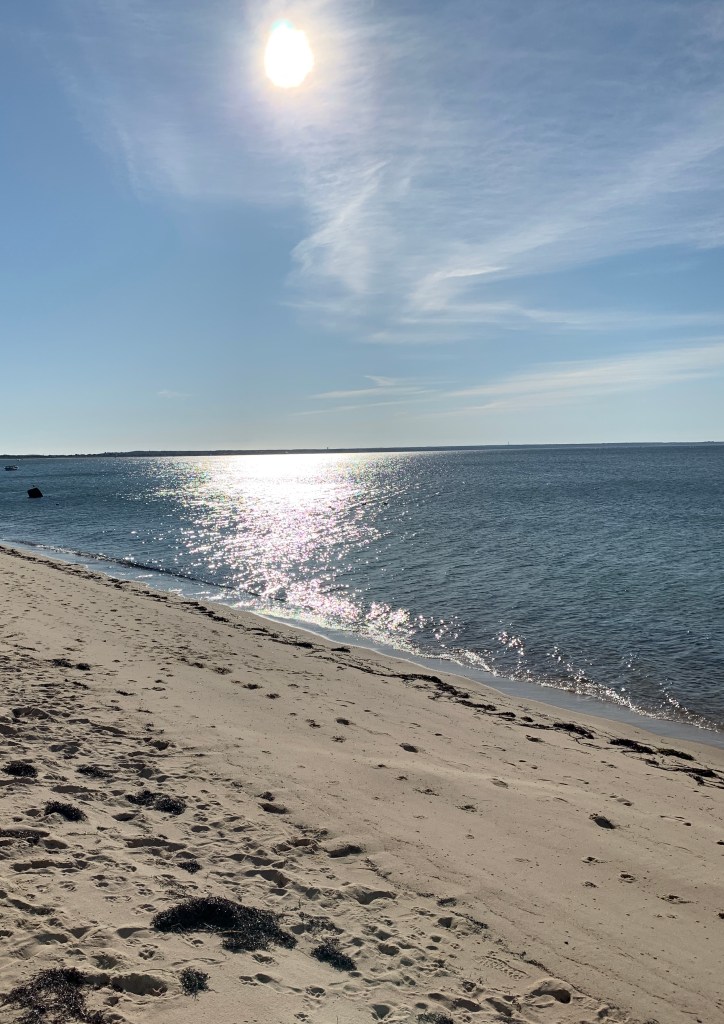
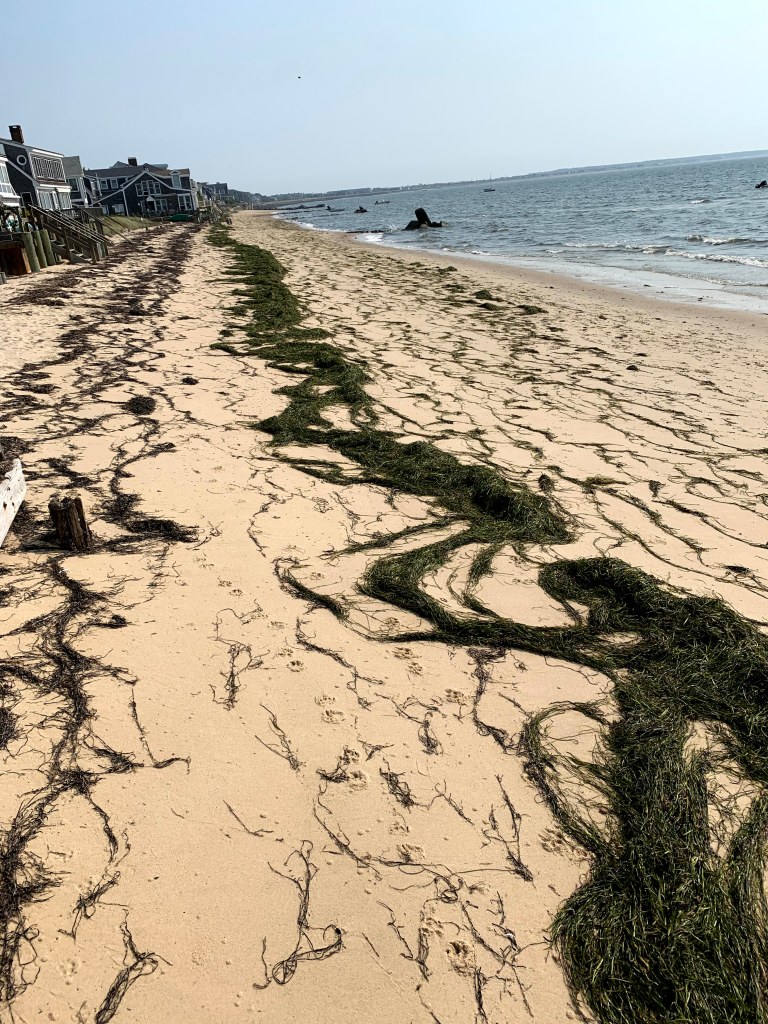
Walk with me along Provincetown’s shore. We’ll stroll through ripples of time, these oft etched sands. Some days smooth, some days ribbed like corduroy wale. Some days strewn with seaweed turned black from upheaval by tides in stormy rage. Walk by children’s sand castles, knowing that by night’s end waves will fill their moats, capture make-shift popsicle wrappers turned turret flags.
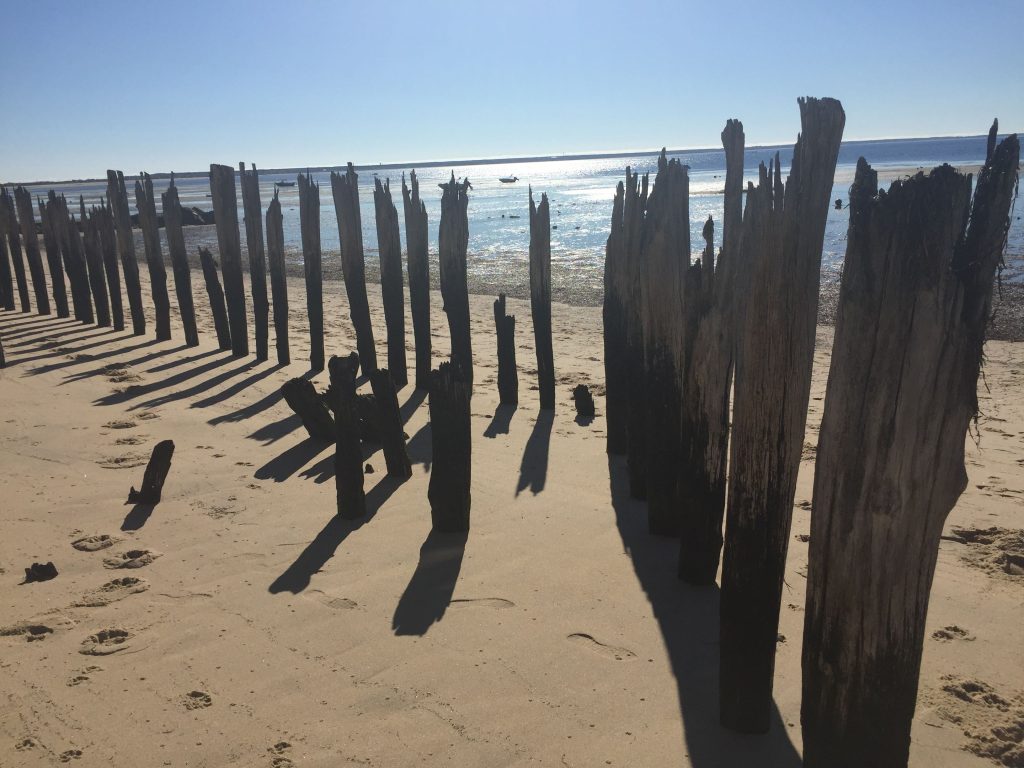
Farther down the coast remnants of wharves and docks once sentinels for Portuguese fishing boats, stand ghostlike in their dampened pallor. Imagine Wampanoags and Nausets here, long before pilgrims usurped their land. Think about artistic genius in this community: Eugene O’Neill, Norman Mailer, Jackson Pollock, Tennessee Williams, E.E. Cummings. More recently, Mary Oliver lived here for over fifty years, inspired by the raw beauty of this place.
And at night’s end, watch the sky with me, painted in pastels or crimson reds. Tip a glass of wine my friend, sit now and relax. Allow your muse to enjoy every sip.
Written for Tuesday Poetics at dVerse, the virtual pub for poets around the globe. Today I’m hosting and asking folks to take us on a walk in their poem! Come join us – my guess is we’ll be walking many enjoyable miles through the words of many!
Photos are from our many two-week sojourns to Provincetown – at the very tip – the very end of Cape Cod.
Listen. Tears fall like rain, the soft spring rain gentle, quiet cleansing the earth, the soul.
Rain begins like a tear beading on a rose petal trickling down to nourish the earth, one drop at a time.
Clouds thicken, skies turn dark. Rain falls harder and the earth is saturated, muddy.
Drops become streams. Overflowing banks. A flood of tears rises to wash away our dreams.
Sun breaks through Two rainbows arc across the sky Double surprise, double gift Slowing the tears.
Summer rain smells fresh; earth is nourished; tears are pierced by sunbeams.
Listen. Rain will fall again: On roses, on your parade, on Mondays. Will you walk in it or just get wet?
Written by dear friend, Lindsey Ein, for Tuesday Poetics at dVerse, the virtual pub for poets. Today I’m hosting and asking people to take us on a walk within their poem.







 lillian the home poet